
Google Analytics Consulting Services: How to Buy the Right Work
Google analytics consulting services for Singapore SMEs: what consultants do, indicative SGD costs, deliverables to demand and red flags. Buy the right scope.
From F&B to fintech, clinics to law firms, startups to enterprise. If your customers search on Google, we make sure they find you first, not your competitors.
One specialist team, focused only on the organic rankings that put you in front of ready-to-buy Singapore customers.
A clear, sequenced path from audit to rankings. You always know what we’re doing and why it matters for your leads.
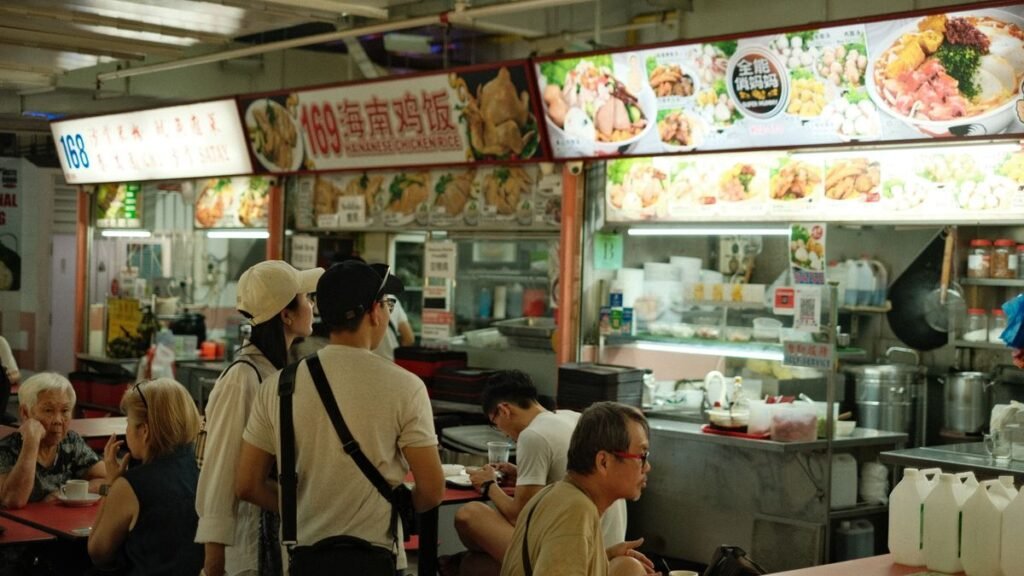
Quick answer: Restaurant SEO in Tampines is the work of making your eatery appear when nearby diners search Google for food. In a dense, mall-heavy town where three shopping centres sit on top of the MRT, the deciding factor is not your website alone. It is a fully optimised Google Business Profile that lands you in the local map results.
Tampines is one of the most competitive food markets in the east, and most restaurant owners here are fighting the wrong battle. They obsess over their website homepage while the actual decision happens somewhere else entirely: the three-result map box that Google shows when someone types “dinner near Tampines MRT” on their phone.
That map box is called the Local Pack, and in a town like Tampines it is where the vast majority of restaurant clicks go. With Tampines Mall, Century Square, and Tampines 1 clustered directly above the interchange, plus Our Tampines Hub a short walk away, diners are almost always searching on mobile, standing metres from a dozen options. Restaurant SEO in Singapore that ignores this reality is spending money in the wrong place. This guide walks through what actually moves the needle for a Tampines eatery, in the order it matters.
When someone searches “ramen Tampines” or “halal cafe near Tampines Hub”, Google does not send them to page one of the blue links first. It shows a map with three restaurants pinned, their star ratings, and a “Directions” button. Most diners never scroll past that box. In our experience working with Singapore food and beverage clients, the Local Pack captures the clear majority of mobile restaurant clicks, and Tampines amplifies this because footfall density is so high.
Ranking in that box is governed by three things Google weighs heavily: relevance (does your profile match what was searched), distance (how close you are to the searcher), and prominence (how established and well-reviewed you appear). You cannot change your distance from a searcher standing in Tampines Mall, but you have full control over relevance and prominence.
That is the core insight most Tampines owners miss. They cannot out-locate a competitor two units down, but they can out-optimise them. A profile with the correct cuisine category, complete opening hours, current photos, and a steady flow of recent reviews will consistently beat a closer competitor whose profile is half-filled. Local SEO is the discipline that closes that gap.
Here is the contrarian part. Most agencies will tell a restaurant to start with a website refresh. In Tampines, that advice frequently backfires because it burns the budget on the thing diners look at last. The profile comes first.
Start with your primary category. This is the single biggest lever and the most commonly wrong. A Japanese restaurant set to the generic “Restaurant” category will lose to one correctly set to “Japanese Restaurant” every time someone searches by cuisine. Set the primary category to your specific cuisine, then add secondary categories for anything genuinely relevant.
Then work through the completeness checklist:
A profile completed to this standard often lifts a restaurant into the Local Pack within weeks, with no website work at all. If you want a second pair of eyes, a free SEO audit will show exactly which fields are dragging you down.
Reviews do double duty. They reassure diners, and they feed Google’s prominence signal directly. In Tampines, where a single mall can hold twenty eateries, review velocity is often what separates the top three from the rest.
Volume, recency, and response rate all matter. A restaurant with 300 reviews and nothing new in six months looks stale next to one with 120 reviews and a fresh one every few days. We have seen this pattern across F&B accounts repeatedly: a simple, consistent ask at the point of payment moves review velocity more than any discount or gimmick.
Build a repeatable habit:
| Signal | Weak profile | Strong Tampines profile |
|---|---|---|
| Primary category | Generic “Restaurant” | Specific cuisine type |
| Recent photos | None in 6+ months | Fresh set monthly |
| Review velocity | Sporadic | Steady weekly flow |
| Owner responses | Rare | Every review, within 24h |
| Local Pack position | Page 2 map | Top 3 |
The profile wins the map. The website wins the searches with intent to book a table or a function. Someone searching “private dining room Tampines” or “birthday buffet near Tampines Hub” is deeper in the decision, and here your site does the work.
Two things matter most. First, speed on mobile, because Tampines diners are searching on the move and a slow menu page loses them. Technical SEO work that trims page weight and fixes Core Web Vitals directly affects how many of those searchers stay. Second, a dedicated page for each high-intent offer, so “function room” and “set lunch” each have a page to rank rather than being buried in a PDF menu.
For an independent operator, this does not need to be elaborate. A fast, clearly structured site with a page per key offer, built on the fundamentals in our small business SEO approach, is enough to compete with far larger chains in the Tampines search results.
Google does not read your Business Profile in isolation. It cross-checks your details against the rest of the web, and inconsistencies quietly drag down your local ranking. The foundation is NAP consistency, which stands for name, address, and phone number. These three details must be identical everywhere your restaurant appears online, down to the punctuation and the unit number.
For a Tampines restaurant, that means your listing on reservation and discovery platforms, your Facebook and Instagram pages, food directories, and any aggregator all show the exact same business name, the same Tampines address format, and the same phone number. When Google sees “Blk 201 Tampines” in one place and “201 Tampines Street” in another, it loses a little confidence in which is correct, and that uncertainty costs you position in the Local Pack.
Work through a simple citation checklist:
In a mall-dense town like Tampines, where diners cross-reference a restaurant across several apps before deciding, these citations also do direct persuasion work. A diner who sees consistent, complete information everywhere trusts you more than one who finds conflicting details. Our documented cafe SEO results show how much correcting inaccurate Google Business Profile details, such as wrong opening hours, can contribute to local visibility for a Singapore food business. Set aside an afternoon to audit and align every listing, and revisit it whenever your hours or contact details change.
Most restaurant owners judge SEO by gut feel, which leads to abandoning it too early or continuing bad work too long. Google gives you the data to judge properly, free, inside your Business Profile. Google Business Profile Insights shows exactly how diners are finding and acting on your listing.
Three numbers matter most for a Tampines restaurant. First, how diners find you, split between discovery searches (people searching a cuisine or category and finding you) and direct searches (people searching your name). Growth in discovery searches is the clearest sign your local SEO is reaching new diners rather than just regulars. Second, direction requests, which in a mall-adjacent town like Tampines are a strong intent signal, since a request for directions usually precedes a visit. Third, calls and website clicks, which show diners moving from looking to acting.
Set a baseline before you start, then review monthly. Healthy movement looks like rising discovery searches, more direction requests, and a steady climb in calls or clicks over three to six months. If discovery searches are flat, your profile or reviews need work. If discovery is rising but direction requests are not, your photos or reviews may be failing to convert interest into a decision. Reading these numbers turns SEO from guesswork into a measurable programme, and it is the single best habit an owner can build.
Order matters more than intensity. A Tampines restaurant that does the right things in the right sequence beats one that does everything at once and burns out. Here is a realistic 90-day plan.
Days 1 to 30, foundation. Claim and verify your Google Business Profile if you have not already. Set the primary category to your exact cuisine, complete every field, including hours, price range, and attributes, and upload a fresh set of photos covering the food, the interior, and the storefront as diners see it from the mall walkway. Align your name, address, and phone number across every platform. Record your baseline Google Business Profile Insights so you can measure progress.
Days 31 to 60, momentum. Launch a review habit: a QR code on the bill that opens the Google review form, plus a genuine ask from staff at payment. Respond to every review within a day. Refresh your photos once this month. Build your single most valuable intent page, which in Tampines is usually the function-room or set offer aimed at the mall crowd, and make sure it loads fast on mobile.
Days 61 to 90, compounding. Compare your Insights against the baseline. If discovery searches and direction requests are climbing, keep the habits steady and add a second intent page. Deepen your citations by claiming any stray directory listings. Use the discovery-search data to see which cuisine searches you are winning, and refine your categories and content toward the ones with the most demand. By day 90 you should have a complete, active profile, a steady review flow, and clear evidence in your Insights of whether the work is landing.
This sequence is deliberately achievable alongside running a busy kitchen. Consistency across these three phases beats any single burst of effort.
Field notes: In our cafe case study, a specialty coffee and brunch cafe in Tiong Bahru had incorrect opening hours, no photos uploaded in 11 months and a GBP post that was 7 months old. In month 1 we corrected the hours, fixed the primary category to “Specialty Coffee Shop” with “Brunch Restaurant” and “Cafe” as secondary categories, uploaded 68 new photos and launched a QR review programme. Its local pack position improved from 6-8 to 4-5 within that first month. No website rebuild was needed for that first step. Getting the profile basics right was doing the early work.
Our documented restaurant SEO results show the same pattern for a sit-down restaurant. The 65-cover modern Asian restaurant in Tiong Bahru started outside the top 10 of the local pack, with 14 reviews and just 3 photos. After a full GBP rebuild with 44 photos, a complete menu and 10 Q&As, QR code table cards for reviews, and citations across 25 Singapore F&B directories, it appeared in the top 3 for 3 Tiong Bahru dining terms by month 3. By month 5, reviews had grown from 14 to 78 and monthly reservations from organic search reached 23.
If you run a restaurant in Tampines and you are not sure why competitors keep outranking you in the map, we can show you. Singapore SEO Agency offers a free SEO audit covering your Google Business Profile, your site’s technical health, and the review gap between you and the top three. No commitment and no hard sell. Book your free audit and we will walk you through exactly what to fix first.
It’s also worth remembering that Tampines has a genuinely competitive food scene, with numerous eateries clustered around the same MRT interchange and mall complexes. Standing out in local search here means being deliberate about which specific dishes, cuisines, or unique selling points you emphasise in your Google Business Profile description and website copy, rather than using generic language that could describe any restaurant in the area.
In our experience, restaurants that respond to reviews within 24 to 48 hours give potential customers browsing their profile a clear signal, since a quick, genuine response shows an actively managed business. We’ve found that even short, personalised replies come across better than generic templated responses, and that responding consistently, rather than only now and then, is what keeps a profile looking current to both diners and Google.
Most independent Tampines eateries invest between $800 and $2,000 per month depending on how competitive their cuisine is and whether they need website work on top of local optimisation. Profile-and-reviews-focused engagements sit at the lower end. Restaurants competing in crowded categories like cafes or Japanese dining tend toward the upper end. You can see indicative tiers on our pricing page.
Google Business Profile improvements often show movement within four to eight weeks because the Local Pack responds quickly to profile completeness and review velocity. Website-driven rankings for higher-intent searches take longer, usually three to six months. Tampines is competitive, so consistency matters more than speed.
For map visibility, no. For the higher-value searches like function rooms, set lunches, and event catering, yes. Those searches convert into bookings and a profile alone cannot capture them.
The Local Pack is the box of three map results Google shows for local searches, above the normal blue links. For restaurants it is the single most valuable position because most mobile diners choose from those three without scrolling further.
Google ranks profiles, not food. A competitor with a more complete profile, more recent reviews, and better categories will outrank a superior kitchen with a neglected profile. The good news is that this is fixable and often quickly.
Delivery apps and SEO solve different problems. Apps charge high commissions and own the customer relationship. SEO brings diners directly to you and to your own booking, which protects your margin. Most Tampines restaurants benefit from both, weighted toward owned SEO over time.
Very. In a mall setting, diners recognise you from your photos on the walkway and in search. Fresh, real photos updated monthly improve both click-through and the impression of an active, trustworthy business.
The profile fundamentals, yes, and you should start there. Category, hours, photos, and a review habit are all owner-doable. Technical website work and competitive analysis are where an agency adds most value. If you want to start with a clear picture, our SEO services overview is the fastest way in.
In Tampines the ranking battle is won in the Local Pack, not on your homepage. Get your Google Business Profile right first, build a steady review habit, keep photos current, then let a fast website capture the higher-intent searches. Do those in that order and an independent eatery can consistently outrank larger competitors that have neglected their profile. When you are ready to see where you stand against the top three, learn about our approach and claim a free audit.
Natalie leads SEO strategy at Singapore SEO Agency, helping local and regional businesses build organic search programmes that drive qualified leads. She specialises in technical SEO and content-led authority building for Singapore SMEs.
Get a free SEO audit for your Singapore website — we'll show you exactly where you stand, what's holding you back, and what it would take to rank on page 1.
Get Your Free SEO Audit →Google analytics consulting services for Singapore SMEs: what consultants do, indicative SGD costs, deliverables to demand and red flags. Buy the right scope.

Bounce rate in GA4 is not the old Universal Analytics number. Learn what it measures now, why old benchmarks fail and how to judge each page by its job.

Yoast SEO helps most when its site-wide settings are right. See which settings to choose, what the traffic lights really mean and the mistakes to avoid.

Which free keyword research tool should a Singapore clinic, firm, contractor or tutor use? Combine five free tools to find your first 30-50 keywords. See how.

SEO vs SEM is usually the wrong question. Learn what the terms really mean and how to use ads and Search Console data to decide which searches to earn or buy.

Google Search Console login problems usually start with verification and ownership. Learn how to get in, fix access errors and offboard agencies safely.
Fast, no obligation. We reply within 24 hrs.
Singapore’s specialist SEO agency for SMEs. We rank your business on Google — and only Google. No distractions, just results.
© 2026 Singapore SEO Agency. All rights reserved.