
SEO vs SEM: Which Searches to Earn and Which to Buy
SEO vs SEM is usually the wrong question. Learn what the terms really mean and how to use ads and Search Console data to decide which searches to earn or buy.
From F&B to fintech, clinics to law firms, startups to enterprise. If your customers search on Google, we make sure they find you first, not your competitors.
One specialist team, focused only on the organic rankings that put you in front of ready-to-buy Singapore customers.
A clear, sequenced path from audit to rankings. You always know what we’re doing and why it matters for your leads.
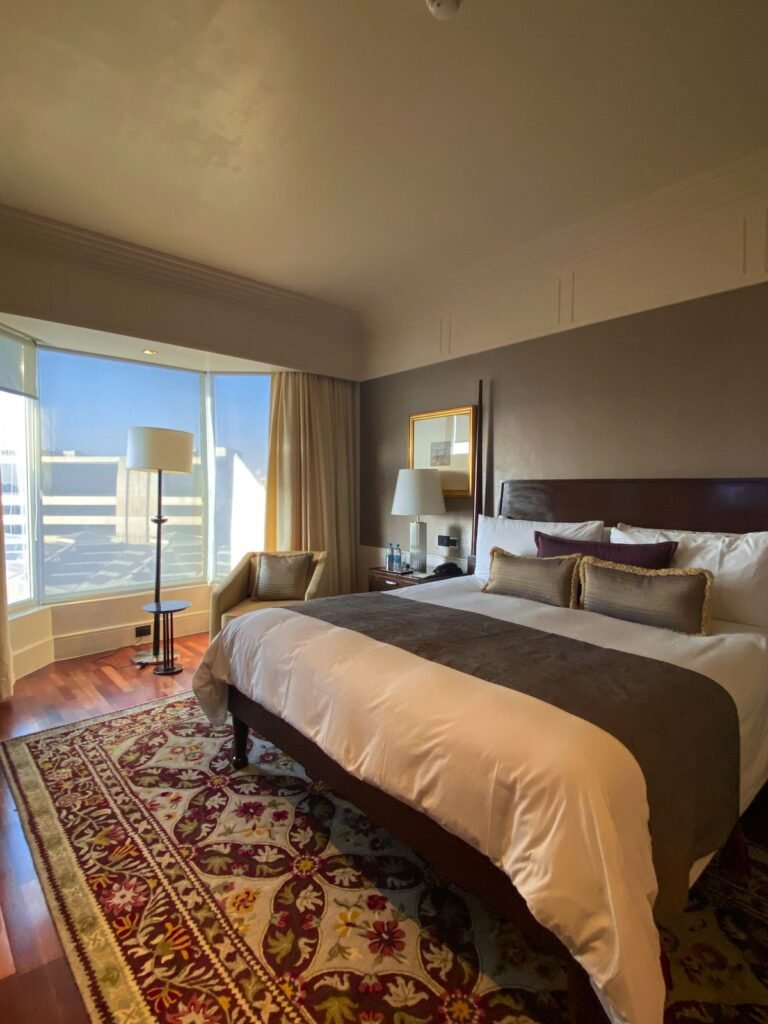
Quick answer: SEO for hotels Singapore means optimising your property’s website, Google Business Profile, and content so travellers searching for rooms, packages, or specific districts find you directly, without paying OTA commission on every booking. It combines local SEO, on-page fixes, reviews, and content, and works alongside, not instead of, Agoda and Booking.com listings.
Travellers rarely search “seo for hotels singapore,” they search “boutique hotel Tanjong Pagar,” “hotel near Sentosa with pool,” or “family hotel Orchard Road.” SEO for hotels Singapore is the umbrella discipline that captures all of that: making sure your property’s own website and Google Business Profile show up for the hundreds of hyper-specific, high-intent searches happening every day across Sentosa, Orchard, the CBD, and the wider island. This guide treats hotel SEO as the foundation that determines how much of your booking volume you keep instead of handing to an OTA (online travel agency such as Agoda, Booking.com, or Traveloka) as commission. We work with properties through our hotel SEO services and built this guide around the questions independent hotels and boutique properties ask most in their first month. For a broader view of how SEO functions across other Singapore industries, our industry SEO Singapore overview is a useful companion read.
OTAs typically charge commissions of 15% to 25% per booking, which means every reservation that comes through your own website instead of Agoda or Booking.com is pure margin recovered. Direct bookings (reservations made straight through your hotel’s own website rather than a third-party platform) depend almost entirely on your property being findable when someone searches for it, or for the kind of stay it offers, without an OTA in between.
In our experience working with Singapore hotel clients, most independent and boutique properties treat their website as a digital brochure rather than a booking channel that needs to earn visibility on its own. That gap matters because the Singapore Tourism Board (STB, the government statutory board responsible for developing and marketing Singapore’s tourism sector) reports that international visitor arrivals have continued climbing back toward pre-2020 levels, and a growing share of that demand researches accommodation directly on Google before ever opening an OTA app. A hotel invisible in that research phase loses the booking before the OTA price comparison even begins.
There is also a practical reason SEO matters more here than for many other local businesses: hospitality search sits at the intersection of local intent (a district, an MRT line, a landmark) and transactional intent (available dates, room types, price). Winning both requires a coordinated strategy across local SEO, on-page structure, and content, not a single fix.
Hotel SEO in Singapore breaks down into four connected areas, and neglecting any one of them tends to cap what the others can achieve.
Most properties focus heavily on the fourth area through occasional blog posts while neglecting the first two entirely. When we audited hotel websites, the majority had usable content sitting on pages Google could barely crawl properly, because of slow-loading photo galleries, missing meta tags, or booking engines built on platforms with weak technical foundations. Fixing the technical layer first is unglamorous, but it typically unlocks results from content that already exists. Our technical SEO work with hotel clients almost always starts here.
Most agencies will tell you hotel SEO is just local SEO with nicer photos. In Singapore, that advice frequently backfires because hospitality search behaviour is genuinely different: travellers compare your website against Agoda, Booking.com, and Traveloka simultaneously, often within the same browsing session, and your website needs to win on trust and clarity, not just visibility.
That changes what “good SEO content” looks like for a hotel compared with, say, a small business SEO client running a retail shop. Hotel content needs to answer transaction-specific questions directly on the page: cancellation policy, distance to the nearest MRT station, whether the property accepts late check-in, and what is genuinely walkable versus a taxi ride away. Generic “why choose our hotel” copy, the kind found on thousands of international hotel websites, does almost nothing for rankings because it carries no local specificity Google can use to differentiate the page from a competitor’s.
Our clients who see the fastest movement are usually boutique and mid-sized properties willing to publish genuinely specific content: named neighbourhoods, named MRT stations, and named nearby attractions, rather than vague references to “the heart of the city.” This is also where a hotel benefits from linking to a documented result. Our boutique hotel SEO case study shows one 22-room heritage property that reached #2 for “boutique hotel Kampong Glam” over a seven-month programme, with neighbourhood guide content around Arab Street, Haji Lane and the Sultan Mosque area as a central part of the work.
Not every property needs to outsource this work immediately. A small boutique hotel with a single property manager can often handle basic on-page fixes and Google Business Profile optimisation without outside help. Where DIY tends to break down is technical SEO on booking engine platforms and consistent content production across MICE, leisure, and transit segments simultaneously, which requires research time most hotel managers do not have between guest operations.
| Factor | DIY Approach | Agency-Managed |
|---|---|---|
| Time investment | 6-10 hours/week ongoing | Handled for you, monthly check-ins |
| Booking engine technical fixes | Limited without dev access | Included, ongoing monitoring |
| Content cadence | Inconsistent, often stalls after month 2 | 2-4 pieces/month sustained |
| Typical monthly cost | S$0 (time cost only) | S$1,500-S$4,000/month depending on scope |
| Realistic timeline to see movement | 6-12 months, if consistent | 4-8 months for competitive terms |
Domain authority (a third-party score estimating how trustworthy and authoritative Google is likely to consider a website, based largely on its backlink profile) is the area where agencies almost always outperform DIY efforts, since building genuine local backlinks from Singapore travel blogs, attraction operators, or MICE event organisers takes relationships and outreach time most hotel managers cannot fit around daily operations.
Most agencies will tell you the biggest SEO mistake for hotels is not publishing enough content. In our experience auditing hotel websites, the more damaging pattern is usually structural: booking engine pages that block search engines from indexing individual room types, which means Google has almost nothing to show for the exact pages that would convert best.
Other recurring issues we see:
Field notes: In our hotel case study, the 45-room Sentosa property started with no structured data on any page, a mobile Lighthouse score of 51/100 and a GBP with 6 reviews. In months 1-2 we resolved 28 crawl errors, deployed LodgingBusiness and Hotel schema, and moved Core Web Vitals from failing to passing, and Google Hotels visibility began within 3 weeks. Fixing the technical foundation first gave every later content and GBP step something solid to build on.
If you are starting from close to zero, the sequence matters more than the individual tactics. Trying to fix everything at once is how most in-house attempts stall by month two.
Weeks 1-2: Fix technical foundations. Confirm your booking engine pages are indexable, your site loads in under three seconds on mobile, and Google Search Console (a free Google tool showing how your site performs in search and flagging indexing issues) is connected.
Weeks 3-4: Optimise your Google Business Profile completely, including accurate categories, an up-to-date photo set, and amenities listed in full. This is also the point to start a systematic review request process.
Weeks 5-8: Rewrite your homepage and top room-type pages with unique, locally specific content, proper title tags, and header structure. Remove any generic template copy shared across similar properties.
Weeks 9-12: Begin publishing original content: neighbourhood guides, MICE-focused pages if relevant, and comparison content against nearby attractions. Start light outreach for local backlinks, such as partnerships with tour operators or nearby F&B businesses.
We recommend properties track Google Search Console impressions weekly during this period, since impressions typically move before rankings do, and a rise in impressions with flat rankings is usually a sign the strategy is working but needs more time.
Many hotel managers reach a point around month three or four where the DIY effort has produced some early movement but has also revealed how much ongoing work is actually required to keep pace. This is a natural moment to weigh whether continuing in-house or bringing in specialist help makes more sense for the next stage.
The honest answer depends on capacity more than budget alone. A property manager running front desk operations, staffing, and guest relations rarely has the bandwidth to research keywords, write content, fix technical issues, and chase citations every month on top of daily operations. Properties that come to us after a stalled DIY attempt usually describe the same pattern: strong initial motivation, an early burst of content in the first few weeks, and then a long plateau once operations picked back up.
An agency handling this work does not remove the need for your input entirely. The most successful engagements we run still involve the property team providing genuine local knowledge, which attractions guests actually ask about, which MRT exits are least confusing, while the agency handles technical execution, content structure, and ongoing optimisation. Our SEO services overview covers what a fuller engagement typically includes, alongside our about page if you want more background on how we work with Singapore hospitality clients specifically.
We recommend approaching the first twelve months of hotel SEO with a staged view of what success looks like, since expecting page-one rankings for competitive district terms within two months sets almost any property up for disappointment and premature strategy changes.
A realistic first-year trajectory typically looks like early technical and profile fixes producing visible impressions growth within the first two months, neighbourhood content and on-page rewrites producing early ranking movement for long-tail terms by month four to six, and genuinely competitive positions for primary district-level terms emerging between month six and twelve, assuming consistent monthly effort throughout. Properties that change strategy every few weeks in search of faster results usually reset progress rather than accelerate it, since search engines reward consistency and penalise erratic, thin content published in bursts.
SEO does not operate in isolation from the rest of a hotel’s visibility stack. Google Hotel Ads (Google’s metasearch product that displays live room rates directly within Search and Maps, pulled from your booking engine or OTA feeds) and TripAdvisor both compete for the same traveller attention that organic search is trying to capture, and treating them as entirely separate channels usually wastes effort.
A property with strong organic SEO but a neglected TripAdvisor profile is leaving trust signals on the table, since many travellers cross-reference TripAdvisor even after finding a hotel through Google. Similarly, a property spending heavily on Google Hotel Ads without a well-optimised website behind that click is effectively paying to send travellers to a page that will not convert as well as it could.
In our experience working with Singapore hotel clients, the properties that perform best treat these channels as reinforcing each other: a strong Google Business Profile feeds organic Maps visibility, a well-optimised website supports both organic rankings and the landing experience for any Hotel Ads clicks, and an actively managed TripAdvisor profile adds a third layer of trust that neither Google nor your own website can fully replace on its own. Building SEO in isolation from these adjacent channels tends to produce a website that ranks reasonably well but converts poorly, simply because it was never built with the full comparison a traveller actually makes in mind.
It covers technical fixes to your booking engine, on-page optimisation of titles and schema markup, local SEO through Google Business Profile and citations, and content that demonstrates genuine expertise in your specific neighbourhood, whether that is Sentosa, Orchard, or the CBD. All four work together, and skipping one usually limits what the others can achieve.
Most properties see early movement, more search impressions and slight ranking improvements, within 8-12 weeks. Meaningful position changes for competitive district-level terms typically take 4-8 months with consistent agency-managed work, or 6-12 months for a well-run DIY effort.
Yes, because OTAs dominate generic terms like “hotel Singapore,” but rarely dominate branded, hyper-local, or long-tail searches such as “boutique hotel near Chinatown MRT” or a specific property’s name. That is exactly the space a hotel’s own website can win, and every booking won there avoids OTA commission entirely.
A small property with time to spare can handle basic on-page and Google Business Profile work. Booking engine technical SEO and sustained content production over a year are where most in-house attempts stall, which is where an agency typically adds the most value.
Agency-managed hotel SEO in Singapore typically runs S$1,500-S$4,000 per month depending on property size, competitiveness, and scope. Our pricing page breaks down what is included at each tier.
Yes. MICE tourism (Meetings, Incentives, Conferences and Exhibitions) searches tend to be planned further in advance and often include terms like “hotel near Suntec” or “conference hotel CBD,” which respond well to dedicated content and local SEO, often with less competition than pure leisure search.
In most audits we run, fixing booking engine indexability and adding proper hotel schema markup produces the fastest visible change, often within five to seven weeks, because it directly affects how Google can interpret and display your property in search results.
Indirectly, yes. SEO does not remove OTA commission on bookings made through OTAs, but it grows the share of bookings that come directly through your own website, which carries no commission at all. Properties with strong direct booking channels typically see a meaningfully lower blended commission cost over time.
For properties targeting regional visitors from mainland China, Malaysia, or Indonesia, targeted Mandarin or Bahasa content for high-intent pages can capture demand English-only competitors miss, though it should be well-written and specific rather than a blanket site-wide translation.
If you are not sure where your property’s website currently stands, Singapore SEO Agency offers a free SEO audit covering technical health, on-page structure, and local search visibility. No commitment, no sales pressure, just a clear picture of what is working and what is not. Book your free audit.
SEO for hotels Singapore is not one tactic, it is the sum of technical health, on-page structure, local presence, and genuinely specific content working together to win bookings your website deserves to keep from OTAs. Properties that treat it as a content-only exercise tend to plateau quickly, while those that fix the technical and local foundations first tend to see content perform far better than it otherwise would. Whether you handle this in-house or bring in help, the sequence matters as much as the individual actions. If you want a second opinion on where your property stands today, reach out directly via our contact page.
Natalie leads SEO strategy at Singapore SEO Agency, helping local and regional businesses build organic search programmes that drive qualified leads. She specialises in technical SEO and content-led authority building for Singapore SMEs.
Get a free SEO audit for your Singapore website — we'll show you exactly where you stand, what's holding you back, and what it would take to rank on page 1.
Get Your Free SEO Audit →SEO vs SEM is usually the wrong question. Learn what the terms really mean and how to use ads and Search Console data to decide which searches to earn or buy.

Google Search Console login problems usually start with verification and ownership. Learn how to get in, fix access errors and offboard agencies safely.

The click through rate formula is clicks divided by impressions. Learn what each platform counts, the averaging trap and how to set it up in Google Sheets.

A click through rate means nothing on its own. Learn to compare CTR by position, query type and SERP features, and see what low CTR is really telling you.

What a google analytics certification proves, what it misses, how to verify one and the practical questions to ask before you hire a marketer or freelancer.

A domain authority checker only helps when you compare your site with the pages ranking for your searches. Learn to read Moz, Ahrefs and Semrush scores.
Fast, no obligation. We reply within 24 hrs.
Singapore’s specialist SEO agency for SMEs. We rank your business on Google — and only Google. No distractions, just results.
© 2026 Singapore SEO Agency. All rights reserved.