
SEO vs SEM: Which Searches to Earn and Which to Buy
SEO vs SEM is usually the wrong question. Learn what the terms really mean and how to use ads and Search Console data to decide which searches to earn or buy.
From F&B to fintech, clinics to law firms, startups to enterprise. If your customers search on Google, we make sure they find you first, not your competitors.
One specialist team, focused only on the organic rankings that put you in front of ready-to-buy Singapore customers.
A clear, sequenced path from audit to rankings. You always know what we’re doing and why it matters for your leads.
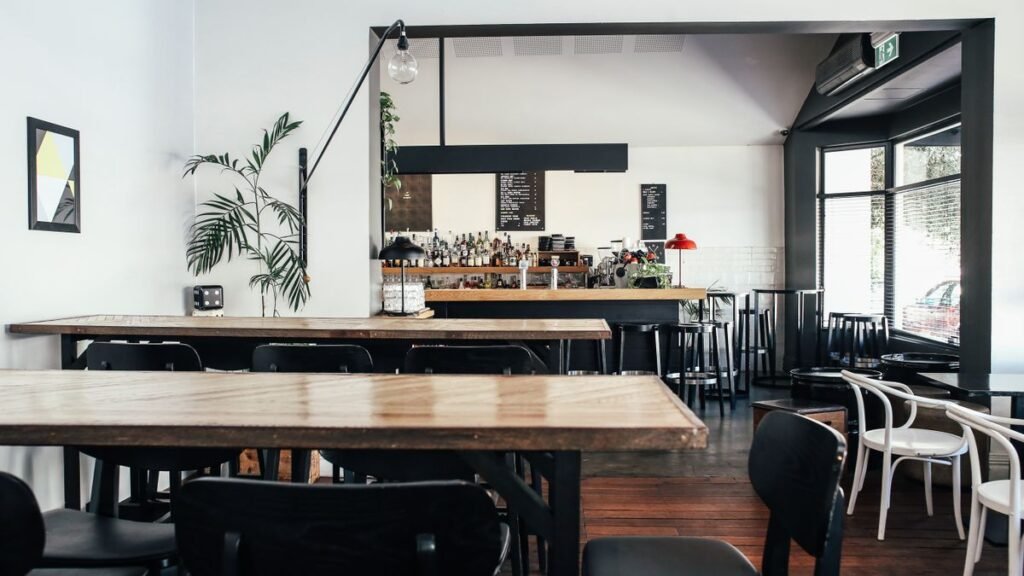
Many Singapore restaurant owners have been told to “post more content” as part of their digital marketing. They publish a few Instagram captions on the website, add a news page with one article about their anniversary promotion, and wonder why it has not moved their Google ranking.
Quick Answer: An SEO content strategy for Singapore restaurants means planning cohesive content around cuisine, location, and dining occasion keywords rather than publishing random, disconnected posts. A structured plan targeting genuine search demand consistently outperforms sporadic Instagram captions repurposed as blog content.
Content without an SEO strategy is visibility without direction. Publishing content that does not target specific search queries your customers are already making is the digital equivalent of printing flyers in a language nobody reads.
An SEO content strategy for restaurants in Singapore starts with a different question: not “what should we write about?” but “what exact phrases are Singapore diners typing into Google before they book a table or choose a restaurant?” The answer to that question determines your entire content plan.
This guide lays out a practical, repeatable content strategy framework built specifically for Singapore F&B businesses, from hawker stalls to fine dining restaurants. It connects directly to the technical and local SEO work covered in our restaurant SEO Singapore service. It covers keyword research, content types, publishing cadence, and how to measure whether any of it is working.
For the technical foundations that support your content, visit our local SEO Singapore service page.
The most important step in any SEO content strategy happens before you open a blank document. A keyword map is the document that lists every search query you want to rank for, grouped by intent, and paired with the specific page or content piece that will target it.
For a Singapore restaurant, your keyword map will typically span three levels:
Level 1: Core money queries These are the high-intent searches that lead directly to a booking. Examples: “Japanese restaurant Orchard Road,” “halal dim sum Singapore,” “private dining room Singapore for 20 pax.” These should be targeted by your homepage, your cuisine/menu pages, and your individual location pages, not by blog posts.
Level 2: Occasion and intent keywords These are queries tied to a specific event or need. Examples: “restaurants for birthday dinner Singapore,” “business lunch Raffles Place,” “family restaurant near Tampines MRT.” These sit one layer of intent below the core money queries and are often best targeted by dedicated landing pages (e.g., “Private Dining Singapore” as a standalone page).
Level 3: Informational and discovery queries These are the questions people ask before they decide where to eat. Examples: “what is omakase Singapore,” “best wagyu beef restaurant Singapore 2025,” “is [restaurant name] halal certified?” These are best targeted by blog content, FAQs, and guide pages.
In our experience working with Singapore restaurant clients, the most common content strategy mistake is targeting Level 3 queries with your homepage and Level 1 queries with your blog. They are mapped the wrong way around. A blog post cannot rank for “Japanese restaurant Orchard Road” because it does not have the commercial intent signals. A homepage cannot rank for “what is omakase” because it does not have the informational depth.
Spend one week building your keyword map before publishing a single new piece of content. Tools like Google Search Console, Google Keyword Planner, and Ahrefs (paid) will give you search volume data. For a full keyword mapping exercise as part of your broader strategy, our SEO consulting and audit service includes this as a deliverable. See our full SEO services for the complete picture.
Not all content is equal in search. For Singapore restaurants, four content types consistently produce the best SEO return.
1. Location and neighbourhood pages
If your restaurant is near an MRT station or in a specific district, a dedicated page targeting “[cuisine] restaurant [neighbourhood/MRT]” is often faster to rank than a broader cuisine page. Examples: “Italian Restaurant Near Clarke Quay,” “Halal Korean BBQ Tampines.” These pages combine commercial intent with geographic specificity, which is a strong signal for local search.
2. Occasion pages
“Birthday dinner Singapore,” “corporate lunch venue Raffles Place,” “hen party restaurant ideas Singapore” are high-intent queries with clear commercial value. Each deserves its own dedicated page with full content, not just a paragraph on your homepage. In our experience, an occasion page built with correct on-page SEO can reach Page 1 for medium-competition queries within a few months, far sooner than a homepage paragraph ever will.
3. Guide and FAQ content
This is the informational layer. “What to eat at a Singapore hawker centre,” “guide to Peranakan cuisine Singapore,” “how to book a private dining room in Singapore” are discovery queries from users who are not yet ready to book but are actively researching. Ranking for these queries builds brand awareness and earns backlinks from food bloggers and media who cite authoritative guides.
4. Seasonal campaign content
Chinese New Year reunion dinner, Good Friday seafood deals, Hari Raya open house catering, Great Singapore Sale promotions, National Day set menus. Singapore’s calendar is dense with F&B-relevant events. Publishing seasonal content 6-8 weeks before each occasion gives Google time to crawl, index, and rank it before the peak search window opens.
In our restaurant case study, seasonal menu pages (festive set menus and chef’s seasonal specials) were published as indexed HTML, replacing PDFs that Google could not read. By Months 4-5 that seasonal content was indexing and capturing festive dining searches, and monthly organic reservations reached 23, up from about 2 at the start. Seasonal pages only pay off if they are live and indexed before demand peaks.
To see how SEO has played out for a Singapore F&B business, see our cafe SEO case study.
Once you know what to write, the structure of each piece matters as much as the topic.
Every SEO content piece for a Singapore restaurant should follow this structure:
Title and H1: Include your primary keyword. Be specific. “Best Japanese Restaurant Near Orchard MRT: Our Guide for 2025” is better than “Japanese Restaurants in Singapore.”
Opening paragraph: Answer the search intent in the first 100 words. Do not bury the lead. If someone searches “halal restaurants Jurong,” your opening paragraph should immediately confirm that your article covers halal-certified dining options in the Jurong area.
Subheadings (H2, H3): Use subheadings to organise content around related keywords. A guide to “Peranakan restaurants Singapore” might have H2 subheadings for “History of Peranakan Cuisine,” “What to Expect on the Menu,” “Best Occasions for Peranakan Dining,” and “How to Book.” Each subheading can target a secondary keyword cluster.
Internal links: Link to your own relevant pages within each piece. A guide page about birthday dinners should link to your private dining booking page. A guide to halal cuisine in Singapore should link to your halal certification page. Never publish a piece of content that is an island with no internal links to or from it.
Contrarian view: The standard SEO advice is to hit a word count target, typically 1,500 words or more, for every blog post. In our experience, a tightly written 600-word piece that directly answers a specific question and links correctly to commercial pages outperforms a padded 2,000-word generic article every time. Length should be driven by what the query requires, not by a number.
For more on how content connects to your full SEO investment, read our guide on how much SEO costs for a Singapore restaurant.
Strategy without a publishing system is just theory. A content calendar is the operational document that turns your keyword map into a publishing schedule.
Here is a simple 12-month framework for a Singapore restaurant:
| Month | Content Priority | Why |
|---|---|---|
| November | CNY set menu pages, reunion dinner guides | 8 weeks before CNY peak |
| December | Valentine’s Day dining guides | 6 weeks before Feb 14 |
| January | CNY promotions, new year dining round-up | CNY final push |
| February | Hari Raya pre-season content (if applicable) | 8 weeks ahead |
| March | Mid-year evergreen guides (cuisine, occasion) | Build year-round authority |
| April | GSS preparation content | 8 weeks before GSS |
| May | GSS dining deals, summer F&B guides | GSS peak |
| June | National Day content prep | 8 weeks ahead |
| July | National Day set menus, Singapore-themed dining | National Day push |
| August | Evergreen location and occasion pages | Consistent foundation |
| September | Deepavali content (if applicable), year-end planning | 8 weeks ahead |
| October | Christmas and year-end dining guides | 8 weeks before peak |
Aim for 2-4 new pieces per month at a minimum. Consistency of publishing is a stronger signal than occasional large bursts followed by months of silence.
Use Google Search Console monthly to see which queries are driving impressions, identify content gaps where you rank on Page 2 or 3, and prioritise updates to existing pages over creating new ones where improving an existing ranking is more efficient.
For case study evidence of how a content strategy compounds over time for Singapore businesses, visit our restaurant SEO case study page.
The original conclusion of this guide: a Singapore restaurant’s content strategy should be built from the search index outward, not from the owner’s communication preferences inward. Start with what people are searching for, map it to the right content type at the right level of intent, build a seasonal calendar that stays 6-8 weeks ahead of every peak, and publish consistently.
Done well, this approach converts your website from a brochure into a 24/7 reservation-generating asset.
Our team works with Singapore restaurants to build content strategies from keyword mapping through to ongoing production. Get in touch with Singapore SEO Agency to discuss your restaurant’s content needs.
A content strategy is only as good as its maintenance schedule. Menu and location pages should be reviewed every few months, not because the food changes constantly, but because seasonal specials, price updates, and new dishes all need to be reflected for the content to stay accurate and for Google to keep seeing the page as actively maintained. A menu page that’s a year out of date, still listing a dish that’s been discontinued or missing a new signature item, sends a weak signal to both diners and Google. The restaurants that hold their rankings treat this as a recurring task: updating seasonal offerings, adding fresh photos each quarter, and expanding thin sections once analytics show which parts of a page get skipped.
Assigning a specific team member to own this refresh cycle, rather than leaving it to whoever remembers, is what keeps the plan alive past the first few months.
Your restaurant website should be generating reservations while you sleep.
Singapore SEO Agency builds SEO content strategies for Singapore F&B businesses, from keyword mapping and content calendars to fully written and optimised blog posts and landing pages.
Talk to Singapore SEO Agency about an SEO content audit and find out exactly which content gaps are costing you reservations.
We recommend Singapore restaurants review content performance every quarter rather than waiting for an annual review, using three simple signals: which pages are gaining organic traffic, which pages are converting that traffic into bookings or orders, and which topics from the content calendar have not been published yet. A content calendar that looks complete on paper but is not producing bookings usually means the topics were chosen based on what seemed easy to write, rather than what customers were actually searching for before choosing a restaurant.
In our experience, the restaurants that get the most value from their content strategy are the ones willing to retire underperforming content types after a quarter or two of data, rather than sticking to the original plan out of habit. If neighbourhood guide posts are driving bookings but seasonal menu posts are not, the calendar should shift to reflect that, even if it means writing fewer of the content types the business originally assumed would work best.
In our experience, Singapore restaurants with no existing content strategy get the best early results by starting with one strong pillar page per core cuisine or dish category, then building supporting neighbourhood and occasion-based pages around it, rather than trying to launch all four content types described above at once. A focused start that gets one content type genuinely right produces better SEO results within the first few months than a scattered start across everything simultaneously.
Restaurants running both an always-on content strategy and seasonal campaigns should map the two together on the same calendar rather than planning them separately, since publishing a generic blog post in the same week as a major festive promotion tends to split attention and dilute both efforts. We recommend scheduling always-on content around, rather than during, the two or three biggest seasonal pushes each year.
An SEO content strategy maps the content your restaurant publishes to the specific search queries your potential customers are typing into Google. Without a strategy, you publish content that gets no organic traffic because it does not target real search demand. With a strategy, every blog post, guide, and landing page you create has a specific query to rank for, a specific intent to satisfy, and a measurable organic traffic goal attached to it.
There is no fixed number. What matters is that each piece of content targets a specific, researched keyword and is built to satisfy the intent behind that keyword. A restaurant with 15 well-optimised, keyword-targeted content pieces will consistently outrank one with 100 generic posts. Focus on quality and intent match, then scale quantity once your content publishing process is working.
For most Singapore restaurant clients, English content covers the largest search volume. However, if your core demographic skews toward Mandarin-speaking customers, Mandarin-language content targeting simplified Chinese queries can capture a meaningful incremental audience, particularly for concepts like reunion dinner, dim sum, and zi char. Building multilingual content adds complexity and cost, so prioritise English first, then evaluate Mandarin as a second phase based on your restaurant’s customer profile.
New content on a restaurant website with minimal existing SEO authority typically takes 3-6 months to rank for low-to-medium competition queries. High-competition queries like “best restaurant Singapore” may take 12 months or more regardless of content quality, because they require both content quality and significant domain authority. Targeting long-tail, neighbourhood-specific queries first produces faster results and builds the authority base needed to compete for broader terms later.
You can write your own content if you are willing to invest time in keyword research and on-page SEO structure. The key skills needed are: identifying the right target keyword before you write, structuring the piece correctly with an optimised title, H1, and H2 subheadings, and linking it correctly to your commercial pages. Many Singapore restaurant owners start by producing their own content with SEO guidance and bring in agency support when volume or quality demands exceed their capacity.
Keyword mapping is the process of listing every search query relevant to your restaurant, grouping them by intent (commercial vs. informational), and assigning each to the page or content piece that should target it. Start with a brainstorm of queries: your cuisine type plus location, occasion types, dish names, FAQs customers ask. Then use Google Search Console to find queries you already receive impressions for, and Google Keyword Planner for volume data on new targets. The output is a spreadsheet with one row per target keyword and a mapped URL for each.
Very important. Your meta title is the clickable headline in Google Search results. If it does not clearly communicate what the page is about and why someone should click, even a Page 1 ranking will produce low traffic. Meta descriptions do not directly affect ranking, but they influence click-through rate, which indirectly affects ranking. For every piece of content you publish, write a meta title under 60 characters that includes your target keyword, and a meta description under 165 characters that ends with a clear benefit or call to action.
Both, but with a priority framework. If an existing post ranks on Page 2 or 3, updating and improving it is typically faster and more efficient than creating a new post targeting a similar query. If an existing post ranks on Page 1, update it annually to maintain freshness. Only create a new post when you have a keyword target with no existing content mapping to it. Many Singapore restaurant websites have more to gain from improving ten existing posts than from publishing twenty new ones.
Natalie leads SEO strategy at Singapore SEO Agency, helping local and regional businesses build organic search programmes that drive qualified leads. She specialises in technical SEO and content-led authority building for Singapore SMEs.
Get a free SEO audit for your Singapore website — we'll show you exactly where you stand, what's holding you back, and what it would take to rank on page 1.
Get Your Free SEO Audit →SEO vs SEM is usually the wrong question. Learn what the terms really mean and how to use ads and Search Console data to decide which searches to earn or buy.

Google Search Console login problems usually start with verification and ownership. Learn how to get in, fix access errors and offboard agencies safely.

The click through rate formula is clicks divided by impressions. Learn what each platform counts, the averaging trap and how to set it up in Google Sheets.

A click through rate means nothing on its own. Learn to compare CTR by position, query type and SERP features, and see what low CTR is really telling you.

What a google analytics certification proves, what it misses, how to verify one and the practical questions to ask before you hire a marketer or freelancer.

A domain authority checker only helps when you compare your site with the pages ranking for your searches. Learn to read Moz, Ahrefs and Semrush scores.
Fast, no obligation. We reply within 24 hrs.
Singapore’s specialist SEO agency for SMEs. We rank your business on Google — and only Google. No distractions, just results.
© 2026 Singapore SEO Agency. All rights reserved.