
Domain Authority: A Practical Guide to Reading It in Sales Pitches
Domain authority is a useful filter for weak sites but a poor sales promise. Learn why scores move on their own and what to ask before you buy links or SEO.
From F&B to fintech, clinics to law firms, startups to enterprise. If your customers search on Google, we make sure they find you first, not your competitors.
One specialist team, focused only on the organic rankings that put you in front of ready-to-buy Singapore customers.
A clear, sequenced path from audit to rankings. You always know what we’re doing and why it matters for your leads.
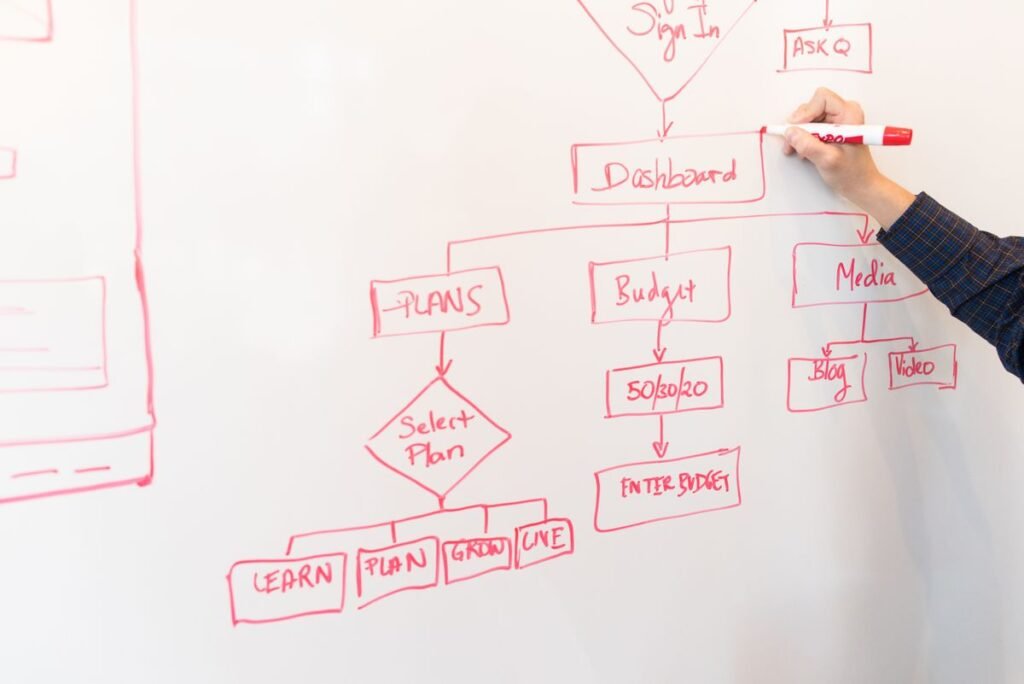
Quick answer: A complete seo blueprint retail singapore shop owners can follow runs through five sequenced phases: audit and Google Business Profile foundation, technical and on-page fixes, content and product page depth, review and link building, then sustained monthly maintenance. Skipping the sequence, especially starting with content before fixing foundations, is the most common reason retailers stall on page 2.
Most retail SEO advice online reads like a scattered list of tips rather than an actual plan: fix your title tags, get reviews, write blog posts, build links, all presented with no clear sequence or sense of which matters most first. A genuine seo blueprint retail singapore businesses can actually follow needs a defined order of operations, because doing the right things in the wrong sequence wastes effort and delays results. This guide lays out that sequence in full, tied to our SEO services overview, which structures every retail engagement around exactly this five-phase approach. In our experience working with Singapore retail clients, the shops that reach page 1 fastest are rarely the ones working hardest across every tactic simultaneously. They are the ones following a deliberate sequence that builds each phase on a solid foundation from the one before it.
Every effective retail SEO blueprint starts with an honest audit, not a guess about what needs fixing. This means reviewing current keyword rankings, checking which product and category pages are actually indexed by Google, auditing the Google Business Profile’s completeness, and identifying the two or three biggest structural issues holding the site back before spending a dollar on content or links.
For retailers with a physical presence, completing the Google Business Profile sits in this first phase because it is one of the fastest, lowest-cost fixes available, and often produces the earliest visible movement of the entire programme. This means completing every category, attribute, and description field, not just the basics filled in at initial claiming.
Most agencies will jump straight into content production as the first visible deliverable of a new engagement. In Singapore, that sequencing frequently backfires because content built on top of an unaudited, technically weak foundation underperforms what the same content could achieve on a properly prepared site. A month spent auditing and fixing foundations before any content is published consistently outperforms skipping straight to content in our own experience running retail engagements this way.
Once the audit identifies specific issues, phase two addresses the technical and on-page foundation the rest of the blueprint depends on. This includes fixing site speed problems, particularly image optimisation for retail sites carrying heavy product photography, implementing or correcting schema markup (structured code that helps Google understand product, review, and business details), resolving duplicate URL issues from product variants, and ensuring the site is genuinely mobile-friendly given how mobile-dominant Singapore retail search behaviour is.
This phase also covers correcting the most obviously duplicated or thin product descriptions, particularly on the highest-traffic pages identified during the audit, since these pages already carry some existing visibility and often respond faster to improvement than starting entirely new content from zero.
Field notes: In our ecommerce case study, the first phases were crawl and index repair in Months 1 to 2 and Product schema in Months 2 to 3, before category content began. Product page indexation had moved from 34% to 79% by the end of Month 2, before any new content had been published, and rich results showing price and stock status appeared within 6 weeks of schema deployment.
With foundations in place, phase three builds out genuine content depth: rewriting remaining thin or duplicated product descriptions across the wider catalogue, strengthening category pages with useful, differentiated content, and beginning a sustainable cadence of supporting content like buying guides or comparison pages for categories where commercial investigation search intent genuinely exists.
Content prioritisation in this phase should follow search intent rather than arbitrary topic selection: transactional pages (products and categories) first, since they carry the most direct commercial value, followed by commercial investigation content that supports those pages, with purely informational content treated as a lower priority unless a specific business reason justifies it.
Our ecommerce SEO case study follows a similar sequence. The Singapore home and lifestyle store spent Months 1 to 2 on crawl and index repair, then added Product schema, before category content work began in Month 3. Once 15 category pages had been rewritten as content-first landing pages in Months 3 to 5, keywords on page 1 climbed from 12 to 38 and the first category page reached position 4. By Months 6 to 9, two category pages had reached #1, monthly organic visitors had grown from 1,200 to 4,640, and organic revenue rose from S$12,400 to S$28,600 a month in that final period.
Phase four layers in the trust and authority signals that compound the value of everything built in the earlier phases. Review generation, through a consistent point-of-purchase request system for physical shops or post-purchase prompts for online orders, builds the prominence signals that support both Local Pack ranking and shopper trust once they land on your listing or website.
Link building (earning backlinks from other credible websites, which Google treats as a vote of trust in your site) should focus on genuinely relevant, quality sources rather than volume: local business directories, industry-relevant publications, and any newsworthy angle your shop has that might earn organic coverage. Our ecommerce SEO services build phase four activity into an ongoing monthly cadence rather than a one-off push, since sustained, consistent review and link growth outperforms a single aggressive burst followed by silence.
Physical retailers running this same phase should weight it toward local citation building and review generation instead, an approach our local SEO services page covers separately for that specific business model.
Sequencing this phase after phases one through three matters because reviews and links compound the value of a site that is already technically sound and content-rich. The same review and link building effort applied to a technically weak, thin-content site produces a meaningfully smaller return than when applied after the foundation has already been strengthened.
| Blueprint Phase | Typical Duration | Key Focus |
|---|---|---|
| Phase 1: Audit and GBP foundation | Weeks 1-4 | Diagnosis, quick wins, profile completion |
| Phase 2: Technical and on-page fixes | Weeks 3-10 (overlapping) | Speed, schema, duplicate content fixes |
| Phase 3: Content and product depth | Months 2-5 | Product/category rewrites, supporting content |
| Phase 4: Reviews and link building | Months 3-6, ongoing | Trust signals, domain authority |
| Phase 5: Maintenance and expansion | Month 6 onward, ongoing | Sustained growth, seasonal readiness |
The blueprint does not end once page 1 rankings are achieved. Phase five is ongoing, covering monthly monitoring of rankings and traffic, continued content production at a sustainable pace, technical health checks to catch any regressions, and seasonal preparation ahead of GSS, 11.11, and 12.12, when search behaviour shifts sharply and retailers who prepare weeks in advance capture more of the resulting spike than those who react during the sale itself.
We often see this when we review retail accounts: rankings achieved through a properly sequenced programme, then allowed to decline over the following year because the business assumed the work was complete once page 1 was reached. Google’s algorithm continuously reassesses relative quality against every competing page, meaning a shop that stops improving while competitors keep working will see its relative position erode over time, even without any external cause.
Treating phase five as a permanent, ongoing part of the business rather than a temporary final step is what separates retailers who hold their rankings for years from those who see a strong first year followed by a slow, frustrating decline in year two. You can learn more about our long-term retention approach on our about page.
Our pricing page outlines what ongoing phase five maintenance and expansion work typically involves for retail clients at this stage.
The five-phase sequence applies to every retail business type, but the weighting within each phase should shift based on how the business actually operates. A single-location physical shop with minimal online sales should weight phase one and phase four heavily toward Google Business Profile and review generation, since these carry the most direct impact for a business depending primarily on foot traffic and local visibility rather than direct online transactions.
An online-only retailer should weight phase two and phase three most heavily, since technical health and product page depth across a full catalogue drive the majority of value for a business with no physical Local Pack presence to lean on. Omnichannel retailers need the fullest version of all five phases, sequenced carefully to avoid overwhelming a smaller internal team or budget by attempting every phase simultaneously rather than building momentum through each one in order.
In our experience working with Singapore retail clients, the businesses that adapt this blueprint most successfully are honest about their own capacity from the outset, choosing a realistic pace rather than an aggressive but unsustainable one that burns out internal resources or budget within the first two months. A properly paced five-phase blueprint, even executed more slowly than the timelines above, consistently outperforms an unsustainable sprint that stalls out entirely by month three. Pacing the blueprint honestly against real capacity, rather than an idealised version of how much time or budget a business wishes it had, is ultimately what determines whether a retailer actually completes all five phases or abandons the effort somewhere around phase two once the initial enthusiasm fades and the ongoing discipline required becomes clear.
The most costly version of getting this blueprint wrong is not doing too little, it is doing a lot of the right individual tactics in the wrong order. A retailer who invests heavily in link building and content production while their Google Business Profile sits incomplete and their product pages remain thin and duplicated is not wasting their entire investment, but they are getting a meaningfully smaller return than the identical spend would have produced with the sequence followed correctly.
When we audited retail accounts that felt their previous SEO investment had underperformed, the issue was consistently the same: genuinely competent individual work, content that was well-written, links that were legitimately earned, sitting on top of an unaddressed technical or profile foundation that capped how much value any of that work could ever realistically produce. This is a frustrating pattern to diagnose after the fact, because none of the individual work was actually bad, it was simply built on an incomplete foundation that limited its ceiling from the start.
This is also where the case for a structured blueprint over an ad hoc list of tactics becomes clearest. A retailer working through a checklist of “SEO best practices” with no sense of sequence risks investing real time and budget into tactics that cannot yet reach their full potential, while a retailer following a properly sequenced blueprint ensures every subsequent phase of work benefits from, rather than fights against, the foundation built in the phases before it.
A common question from retailers reviewing this blueprint for the first time is how much time or budget each phase genuinely requires, since the phases clearly vary significantly in scope. Phase one, the audit and Google Business Profile foundation, typically requires the least ongoing resourcing but the most concentrated initial attention, often achievable within 20 to 30 hours of focused work for a single-location shop, or professional support over 2 to 4 weeks.
Phase two, technical and on-page fixes, varies most by starting condition. A relatively modern, well-built website may need only a handful of targeted fixes, while an older, custom-built or heavily outdated site may require substantially more developer time to resolve speed, schema, and structural issues properly. Phases three and four are genuinely ongoing rather than one-off projects, and retailers should budget for these as a sustained monthly commitment rather than a fixed-scope task with a defined end date, since content and review generation compound in value the longer they are sustained consistently rather than attempted in a single concentrated burst.
Retailers planning their own internal resourcing, rather than engaging an agency for the full blueprint, should be realistic about which phases genuinely fit around existing staff capacity. Phase one and phase four are the most feasible for a busy owner-operator to handle personally with consistent effort, while phases two and three often benefit from dedicated support, simply because they require a different skill set and more sustained focused time than most retail staff have available alongside their day-to-day operational responsibilities.
Following the sequence produces the most reliable results, since later phases depend on the foundation built earlier. Skipping ahead to content or link building before fixing technical and profile foundations typically produces weaker results than the same effort applied after those foundations are in place.
A realistic timeline runs 6 to 12 months for the first four phases to reach meaningful maturity, with phase five continuing indefinitely as ongoing maintenance. Highly competitive categories may need longer, while niche or specialty retailers can sometimes move through the phases faster.
Yes, particularly phases one and four, which rely more on time and consistency than significant financial investment. Phases two and three, involving technical fixes and content depth, often benefit from professional support, especially for retailers with larger catalogues or limited technical skills.
Phase one, the audit and Google Business Profile foundation, is skipped most often, usually because retailers want to see visible content or marketing activity immediately. This is also the phase most responsible for slower-than-expected results when skipped, since later work builds on a weaker base.
The five phases apply broadly, but the relative weighting shifts by category and business model. A specialty retailer with lower competition may move through phases faster, while a highly competitive category like fashion or electronics may need a longer, more sustained version of phases three and four.
An honest audit is the clearest way to determine this. A business with an incomplete Google Business Profile and significant technical issues is still in phase one or two, regardless of how much content or link building has already been attempted, since those efforts are unlikely to have gained full traction yet.
To some degree, yes, particularly phases one and two, which often overlap in practice. Running phase three heavily before phase two’s technical fixes are addressed, however, tends to waste content effort on pages that cannot yet perform to their full potential due to unresolved technical issues.
Rankings typically begin eroding gradually as competitors continue their own ongoing work, since Google continuously reassesses relative quality rather than rewarding past effort permanently. This is why phase five, ongoing maintenance, is treated as a permanent part of the blueprint rather than an optional final step.
Yes, phase five should include specific seasonal readiness work 6 to 8 weeks ahead of major shopping festivals, covering content, technical stress-testing for traffic spikes, and Google Business Profile updates, since these events reward retailers who prepare in advance far more than those who react during the sale window itself.
If you want a personalised blueprint sequenced specifically for your shop’s current stage, Singapore SEO Agency offers a free SEO audit that identifies exactly which phase you should start with. Book your free audit.
Reaching page one for a retail business in Singapore is rarely about working harder across every SEO tactic at once, it is about following a deliberate sequence: audit and profile foundation first, technical and on-page fixes second, content depth third, reviews and links fourth, and sustained maintenance as an ongoing fifth phase that never really ends. Retailers who respect this order consistently outperform those chasing whichever tactic feels most urgent in the moment. This blueprint is not a shortcut, it is simply the sequence that produces the most reliable, durable results across the hundreds of retail audits and engagements we have run. Get in touch with our team to map this blueprint against your own shop’s current stage.
Natalie leads SEO strategy at Singapore SEO Agency, helping local and regional businesses build organic search programmes that drive qualified leads. She specialises in technical SEO and content-led authority building for Singapore SMEs.
Get a free SEO audit for your Singapore website — we'll show you exactly where you stand, what's holding you back, and what it would take to rank on page 1.
Get Your Free SEO Audit →Domain authority is a useful filter for weak sites but a poor sales promise. Learn why scores move on their own and what to ask before you buy links or SEO.

Paying for an SEO keyword research tool? Test its Singapore data on 20 keywords you know, see why KD differs by vendor, and pick one tool you can stick with.

Whats bounce rate, and how is it different from exits, engagement time or dwell time? Learn what each one really answers and what to ask your SEO agency.

Google Analytics website traffic is a consented sample, not a head count. See where visits come from, why tools disagree and which number to trust each month.

Google analytics consulting services for Singapore SMEs: what consultants do, indicative SGD costs, deliverables to demand and red flags. Buy the right scope.

Bounce rate in GA4 is not the old Universal Analytics number. Learn what it measures now, why old benchmarks fail and how to judge each page by its job.
Fast, no obligation. We reply within 24 hrs.
Singapore’s specialist SEO agency for SMEs. We rank your business on Google — and only Google. No distractions, just results.
© 2026 Singapore SEO Agency. All rights reserved.