
Yoast SEO: A Practical Guide to Setting It Up Once and Writing for People
Yoast SEO helps most when its site-wide settings are right. See which settings to choose, what the traffic lights really mean and the mistakes to avoid.
From F&B to fintech, clinics to law firms, startups to enterprise. If your customers search on Google, we make sure they find you first, not your competitors.
One specialist team, focused only on the organic rankings that put you in front of ready-to-buy Singapore customers.
A clear, sequenced path from audit to rankings. You always know what we’re doing and why it matters for your leads.
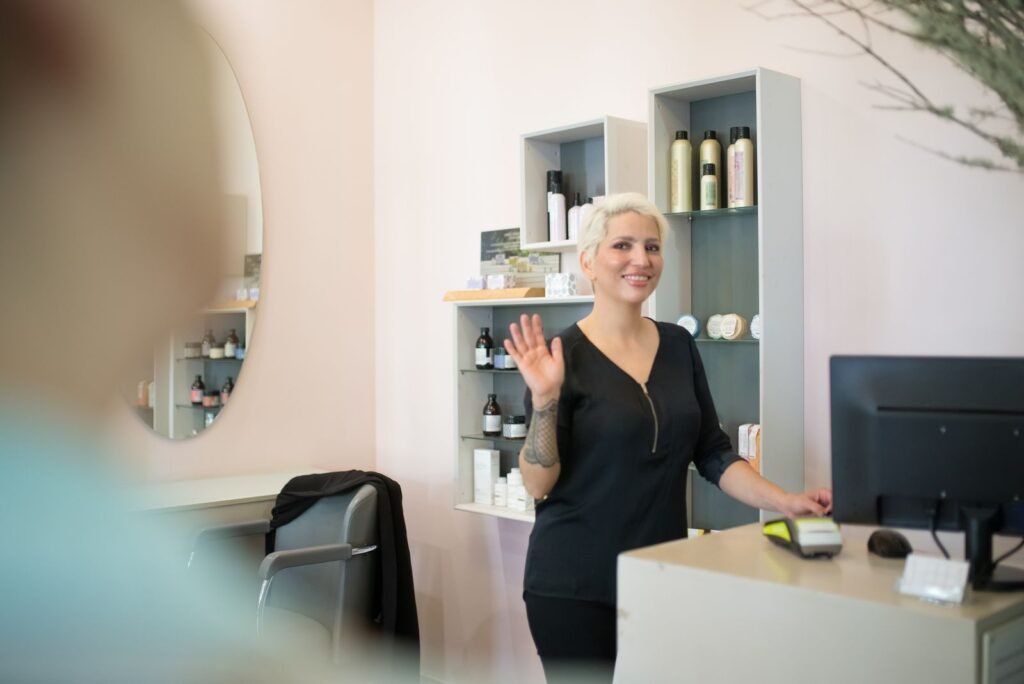
Quick answer: Google reviews for beauty & wellness businesses in Singapore should be requested ethically after a completed appointment, never through gated or incentivised systems, which violate Google’s policies. Responding to every review, especially negative ones, and maintaining a steady flow of new reviews each month builds both Local Pack ranking and genuine client trust.
Reviews carry more weight for beauty & wellness businesses in Singapore than for almost any other local business category, because the decision to book a facial, a massage, or a haircut is inherently personal and risk-sensitive. A bad haircut or a poorly done gel manicure is visible, sometimes for weeks, and prospective clients know this. That makes review volume, recency, and how a business responds to criticism unusually influential in both Google Maps ranking and the searcher’s final decision. This guide covers how to generate Google reviews for beauty & wellness businesses in Singapore the right way, how to handle negative feedback in a reputation-sensitive category, and where the compliance line sits around incentivising reviews. In our experience working with Singapore salon and spa clients, review strategy is one of the areas where well-meaning owners most often cross into risky territory without realising it.
Unlike a one-off purchase, a beauty or wellness service creates an ongoing relationship. A client who loves their hairstylist becomes a repeat client for years, and that same client is far more likely to leave a detailed, positive review than someone who visited a hardware shop once. This means review content itself becomes a form of social proof that goes beyond the star rating, since prospective clients read specific reviews mentioning a particular stylist, treatment, or outcome before booking.
Reviews also influence Google Maps ranking directly, feeding into the prominence signal alongside citation consistency and general site authority. A studio with steady, recent reviews typically outranks a comparable studio with a stagnant review profile, even when both offer similar service quality.
The most effective review requests happen shortly after a completed appointment, while the experience is still fresh and positive. A simple WhatsApp or SMS follow-up message sent within a day or two of the appointment, thanking the client and including a direct link to leave a review, consistently outperforms a generic sign asking for reviews at the counter that most clients simply ignore.
Timing matters, but so does making the process frictionless. A direct Google review link, ideally accessed through a QR code at the counter or a link in a follow-up message, removes the extra step of searching for the business on Google manually, which is where many well-intentioned review requests quietly fail.
Google’s review policies explicitly prohibit incentivised or gated reviews, meaning businesses cannot offer a discount, free service, or gift in exchange for a review, and cannot selectively filter which clients are asked to leave a review based on how satisfied they appeared to be during the visit. This is worth stating plainly because it is a genuinely common practice in Singapore’s beauty industry, and it carries real risk: Google can remove reviews it identifies as incentivised, and in more serious cases can suspend a Google Business Profile entirely, which is a far more damaging outcome than a slower, honest accumulation of reviews.
The safer, compliant approach is to ask every client who completes an appointment, without filtering by how the visit went, and to never tie the request to a reward. This produces a more honest review profile overall, which paradoxically tends to be more persuasive to prospective clients than a suspiciously perfect one.
Field notes: In our restaurant case study, review growth came from a structured, unfiltered request routine: staff invited feedback at the end of the meal and QR code table cards linked straight to the review form. No incentivised reviews were used at any point, and reviews grew from 14 to 78 by month 5 with the average rating held at 4.7. Asking everyone, consistently and without a reward, is both safer and effective.
Every review deserves a response, and negative reviews deserve the most careful one. A calm, specific, non-defensive response to a negative review often does more to build trust with future readers than the negative review itself does to damage it, because it demonstrates the business takes feedback seriously rather than ignoring it.
The most common mistake we see is either ignoring negative reviews entirely or responding defensively, disputing the client’s account in a way that reads as combative to anyone else reading it later. A better approach acknowledges the specific concern, offers a genuine resolution where appropriate, and avoids getting drawn into a public argument, since the response is really being written for every future prospective client reading it, not just the original reviewer.
| Review Scenario | Recommended Response Approach | What to Avoid |
|---|---|---|
| Positive, detailed review | Thank by name, reference the specific service mentioned | Generic copy-paste replies |
| Negative, specific complaint | Acknowledge, offer resolution, keep it brief | Defensive or dismissive tone |
| Vague low-star review, no detail | Politely invite them to share more, offer to discuss directly | Ignoring it entirely |
| Review mentioning a specific staff member | Personalise the response, avoid singling out staff publicly for criticism | Naming staff in a negative context |
A review process that depends entirely on an owner remembering to ask clients individually tends to collapse the moment the business gets busy, which is precisely when review generation matters most. We recommend building the request into an existing operational step, such as the checkout process or the appointment confirmation message, rather than treating it as a separate task competing for attention against everything else running a salon involves.
A simple, sustainable system usually looks like this: a short, warm follow-up message triggered automatically or manually within a day or two of the appointment, a direct link removing any friction in finding the business on Google, and a light second reminder a few days later for clients who have not yet responded, sent once and not repeated further to avoid becoming a nuisance. Front-of-house staff mentioning the request naturally at checkout, in addition to the digital follow-up, consistently improves response rates beyond what either channel achieves alone.
Our audits show that businesses relying solely on a printed sign or counter card without any digital follow-up generate meaningfully fewer reviews per month than those combining a light-touch digital nudge with an in-person mention, since a sign is easy to notice and just as easy to forget by the time a client reaches their car or the MRT station.
Reviews carry value beyond the listing itself once a client has given permission for their feedback to be reused. A particularly detailed, specific review mentioning a treatment outcome or a stylist by name can be pulled, with the client’s consent, into a relevant service page or a social media post, reinforcing the same social proof across multiple places a prospective client might encounter the business.
Our clients who actively cross-promote strong reviews onto their website and social channels, rather than leaving them stranded solely on the Google listing, tend to build a more consistent trust signal across every touchpoint a prospective client sees before booking, which matters in a category where the decision is inherently personal and reputation-sensitive.
One frequently overlooked practice is reviewing your own review response time. A business that takes three weeks to respond to a negative review looks noticeably less attentive than one responding within a day or two, and prospective clients notice the gap.
Another overlooked area is using review content in other marketing, such as pulling a strong, detailed review into a service page or social post with the client’s permission. This reinforces the same social proof across multiple touchpoints instead of leaving it stranded only on the Google listing.
A third overlooked practice is training front-of-house staff to mention the review request naturally at checkout rather than leaving it purely to an automated message, since a genuine, warm in-person mention noticeably improves response rates for businesses that do both.
Track new reviews per month as a rate rather than focusing only on the cumulative total, since a business needs to see whether its current process is actually generating fresh reviews or has stalled. Monitor average rating trends over rolling quarters, and track response time to new reviews, aiming to reply within 48 hours wherever possible. For businesses running a structured request process, compare the number of appointments completed against reviews received to understand your actual conversion rate, since even a well-run process rarely converts more than a modest share of clients into reviewers.
Most agencies treat review strategy as a single, one-size-fits-all checklist, and that advice frequently backfires once a business grows past one location, because a review process built for a single owner personally following up with clients does not scale cleanly to five outlets run by different front-of-house teams. A single-outlet salon or studio can usually manage review generation with a simple, consistent habit: a follow-up message sent personally or through a basic booking-platform automation, timed within a day or two of each appointment. This is realistic for most owners to run themselves, and our small business SEO service is scoped for businesses operating at exactly this stage, where the priority is building one solid, sustainable habit rather than a complex system.
A multi-outlet spa or salon chain needs something closer to an actual process document: a standard message template, a defined timing window, and a way to confirm every outlet is actually following the same practice rather than the flagship location doing it well while newer branches let it slide. Review quality and volume can vary noticeably between outlets of the same chain for exactly this reason, and inconsistent review velocity across locations is one of the more common gaps our local SEO service uncovers when auditing a growing beauty or wellness business for the first time.
Businesses genuinely unsure whether their current review practices are both effective and fully within Google’s policy guidelines are usually better served by a direct review than by guessing. Our about page covers more on how we assess review practices as part of a broader SEO check, our case studies page shows how structured review work has played out across multiple Singapore industries, and our pricing page outlines how this kind of engagement is typically scoped and structured for businesses of different sizes.
Whatever the business’s size, the ethical line covered earlier in this guide, no gating, no incentives, a request sent to every client, does not change. What changes is how much process and oversight is needed to make sure that standard is actually being followed consistently across every touchpoint a client might experience.
It is also worth distinguishing between a business with a genuine review problem and one that simply has not built a habit yet. A studio with a handful of negative reviews and an otherwise thin profile usually has a generation problem, not a reputation problem, and the fix is a consistent request process rather than anything defensive. A studio with a strong review count but a noticeably declining average rating over the past few months has a service consistency problem that review strategy alone cannot fix, since no request process or response template compensates for a genuine, repeated decline in service quality. Recognising which situation actually applies before investing in a review campaign saves considerable wasted effort chasing the wrong fix.
A related question owners raise often is whether a handful of very old reviews, sometimes years old, are worth deleting or flagging for removal. Generally not, unless a specific review violates Google’s content policies outright, such as containing hate speech, spam, or an obviously fake account with no genuine transaction behind it. A studio’s oldest reviews still contribute to the overall count and to the sense of an established, real business, even if their content feels dated compared to more recent feedback. The better use of energy is almost always generating a steady stream of new reviews going forward rather than trying to prune the historical record, since Google gives limited weight to review age alone as long as recent activity remains healthy and consistent.
Owners new to structured review management sometimes also underestimate how much a single, well-handled negative review can help rather than hurt, once responded to properly. A prospective client reading a business’s reviews is rarely looking for a spotless record, they are looking for evidence of how the business behaves when something goes wrong, since that tells them far more about what to expect than another five-star review ever could.
If you are unsure whether your current review request process is both effective and fully compliant with Google’s policies, Singapore SEO Agency offers a free review process check covering timing, wording, and response practices. No commitment, no sales pressure. Get in touch to arrange it.
Yes. Google’s review policies explicitly prohibit incentivised reviews, including discounts, free services, or gifts offered in exchange for leaving a review. Businesses found doing this risk having reviews removed or, in serious cases, their Google Business Profile suspended.
The best window is shortly after the appointment, ideally within a day or two, while the experience is still fresh. A WhatsApp or SMS follow-up with a direct review link tends to perform better than an in-person request alone.
Yes, ideally. Even a brief, genuine thank-you response to a short positive review shows attentiveness, and responding to vague negative reviews with an invitation to share more detail demonstrates the business takes all feedback seriously.
Respond calmly and factually, acknowledging the client’s experience without being defensive or disputing details publicly. The response is read by future prospective clients as much as by the original reviewer, so tone matters more than winning the specific argument.
No, this is considered a form of review gating and violates Google’s policies. Requests should go out to every client who completes an appointment, without filtering based on how satisfied they appeared to be.
There is no fixed threshold, but a review count in the double digits with a healthy average rating and recent activity generally signals credibility. Consistency and recency matter more than reaching any specific milestone number.
Not usually, provided the overall pattern remains positive and the business responds professionally. A small number of negative reviews within a much larger set of positive, recent reviews rarely causes lasting damage, and can even add credibility by making the profile look genuine.
A neutral, unfiltered request sent to every client after their appointment, with no reward attached, is the safest approach. A QR code at the counter or a link in a follow-up message works well, provided it is offered to everyone equally.
Our beauty SEO case study shows how a structured local SEO programme moved one Singapore day spa’s visibility over a sustained engagement, with review generation forming one part of that broader effort.
For a full review of your current review process and Google Business Profile, our SEO consulting and audit service is a useful starting point.
In our experience working with beauty and wellness studios across Singapore, reviews influence both trust and ranking, and how a business responds to a negative one matters almost as much as the review itself.
Responding to a negative review promptly, calmly and specifically gives the best chance of reassuring the unhappy client, and it also shows every prospective client reading the exchange later how the business handles a problem.
We recommend using a polite response template as a starting point but personalising every single reply so it doesn’t read as automated, and our team applies this same sequence on every beauty and wellness studio account we manage, adjusting the specifics for a facial studio in Tanjong Pagar or any other beauty and wellness studio depending on their starting position.
This pattern holds regardless of size: a single-outlet beauty and wellness studio and a multi-location group both benefit from the same sequence, though a multi-location group usually needs an additional 4 to 6 weeks to standardise Google Business Profiles and content across every location before results compound consistently. If you want to see how this applies to your specific starting point, our team is happy to walk through it during a short consultation.
Natalie leads SEO strategy at Singapore SEO Agency, helping local and regional businesses build organic search programmes that drive qualified leads. She specialises in technical SEO and content-led authority building for Singapore SMEs.
Get a free SEO audit for your Singapore website — we'll show you exactly where you stand, what's holding you back, and what it would take to rank on page 1.
Get Your Free SEO Audit →Yoast SEO helps most when its site-wide settings are right. See which settings to choose, what the traffic lights really mean and the mistakes to avoid.

Which free keyword research tool should a Singapore clinic, firm, contractor or tutor use? Combine five free tools to find your first 30-50 keywords. See how.

SEO vs SEM is usually the wrong question. Learn what the terms really mean and how to use ads and Search Console data to decide which searches to earn or buy.

Google Search Console login problems usually start with verification and ownership. Learn how to get in, fix access errors and offboard agencies safely.

The click through rate formula is clicks divided by impressions. Learn what each platform counts, the averaging trap and how to set it up in Google Sheets.

A click through rate means nothing on its own. Learn to compare CTR by position, query type and SERP features, and see what low CTR is really telling you.
Fast, no obligation. We reply within 24 hrs.
Singapore’s specialist SEO agency for SMEs. We rank your business on Google — and only Google. No distractions, just results.
© 2026 Singapore SEO Agency. All rights reserved.