
Google Analytics Website Traffic: Why the Numbers Never Match
Google Analytics website traffic is a consented sample, not a head count. See where visits come from, why tools disagree and which number to trust each month.
From F&B to fintech, clinics to law firms, startups to enterprise. If your customers search on Google, we make sure they find you first, not your competitors.
One specialist team, focused only on the organic rankings that put you in front of ready-to-buy Singapore customers.
A clear, sequenced path from audit to rankings. You always know what we’re doing and why it matters for your leads.
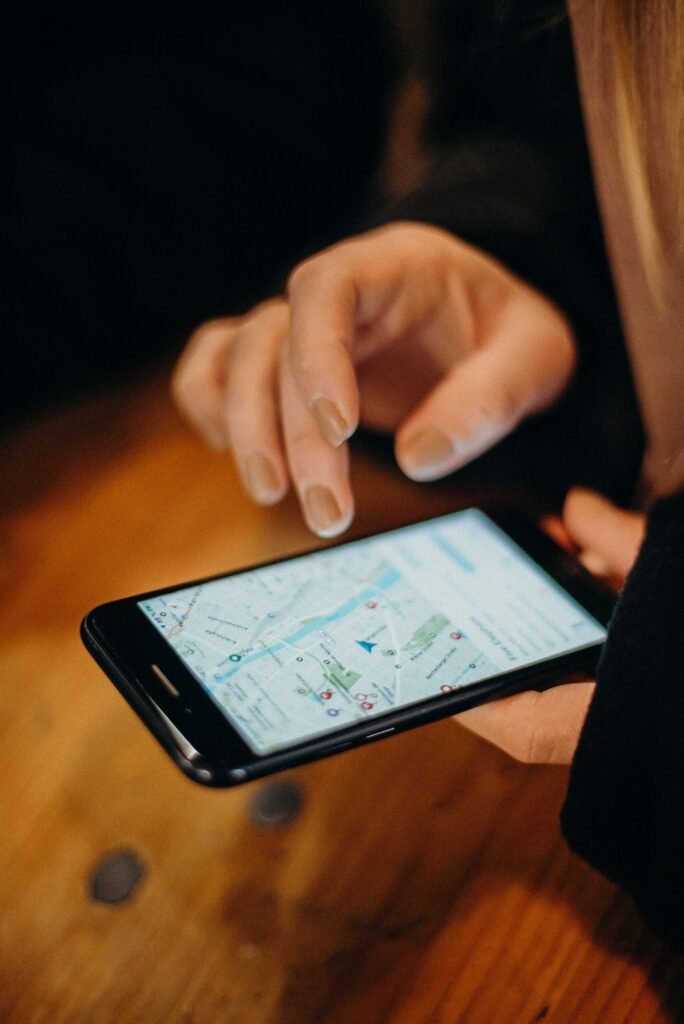
Quick answer: Google Maps ranking for retail Singapore depends on proximity, relevance, and prominence: how close a searcher is to your shop, how well your Google Business Profile matches their search, and how strong your reviews and citations are. Optimising all three consistently is what moves a shop into the Local Pack.
Every time someone searches “electronics shop near me” or “bookstore Bukit Timah” on their phone, Google shows a map with three pinned businesses above the regular results. That block is called the Local Pack, and for retail businesses in Singapore, appearing in it is often worth more than ranking first on the regular organic results below it. Shoppers trust the map results because they show distance, ratings, and opening hours at a glance, and most never scroll past them. This guide covers exactly how google maps ranking retail singapore works and what retailers can do to earn a spot. We also cover this in depth as part of our local SEO services. In our experience working with Singapore retail clients across apparel, electronics, and homeware categories, Maps ranking is one of the most misunderstood parts of SEO, and also one of the fastest to improve when approached correctly.
Google’s Local Pack algorithm evaluates three main factors for every Maps search: proximity, relevance, and prominence. Proximity is simply how close your shop is to the person searching, or to the location they typed into the search box. This factor is largely outside your control, but it explains why a shop in a heartland neighbourhood can outrank a bigger Orchard Road store for a searcher standing nearby.
Relevance measures how well your Google Business Profile (the free business listing that controls your Maps and Search appearance) matches the search term. This is where category selection matters enormously. A shop categorised simply as “Store” is far less relevant to a search for “electronics repair shop” than one categorised specifically as “Electronics Repair Shop.” Most agencies will tell shop owners to just pick the closest matching category and move on. In Singapore, that advice frequently backfires because Google allows multiple secondary categories, and retailers who leave these blank are leaving relevance signals on the table that a five-minute fix would capture.
Prominence covers how well-known and trusted Google considers your business, based on review count, review recency, backlinks, and general online mentions. A shop with 80 recent, detailed reviews will typically outrank a shop with 12 old, generic ones, even if the second shop is slightly closer to the searcher.
Beyond these three factors, behavioural signals also matter. Google tracks how often people click through to your listing, request directions, or call your number directly from Maps. A profile that consistently earns engagement tends to hold its position more reliably than one that ranks well but gets ignored.
Most retail Google Business Profiles in Singapore are incomplete, and incomplete profiles rarely rank well regardless of how good the shop itself is. Start with your primary category, which should be the single most accurate description of what you sell, not a broad catch-all. A shop selling running shoes and sportswear should use “Shoe Store” or “Sportswear Store” rather than the generic “Clothing Store,” if that more specific category exists and matches.
Add every relevant secondary category Google allows. A homeware shop that also sells gifts, for example, can add both categories to capture a wider range of relevant searches without diluting relevance for either.
Fill in attributes completely: payment methods accepted, accessibility features, whether the shop offers in-store pickup for online orders, and parking availability. These small details feed directly into how Google matches your profile to specific search filters shoppers apply.
Upload photos regularly, not just once at setup. Shops that upload new photos monthly, covering storefront, interior, staff, and products, tend to earn more profile views than shops with a handful of photos uploaded years ago and never updated. Use the Posts feature to share promotions, new arrivals, or GSS and 11.11 sale announcements directly on your profile, since these posts appear to searchers browsing your listing.
We often see this on retail Google Business Profiles we audit: shops leave the “products” and “services” sections completely empty, missing an easy opportunity to list bestsellers with prices directly on the profile itself, which Google can surface in search results.
NAP stands for Name, Address, and Phone number, and consistency across the internet is one of the more overlooked ranking factors for retail Maps visibility. If your shop is listed as “ABC Electronics Pte Ltd” on your website but “ABC Electronics” on a directory and “ABC Electronics Store” on another, Google can struggle to confirm these all refer to the same business, which weakens your prominence signal.
Citations are mentions of your business name, address, and phone number on other websites, typically directories like Yelp, Yellow Pages Singapore, or industry-specific listings. Consistent citations across a reasonable number of relevant directories reinforce Google’s confidence in your business details. This does not mean submitting to hundreds of low-quality directories, which offers little benefit and can look spammy. Focus on accuracy across the directories that matter, and correct any old listings from a previous address or phone number, which is a common issue for retailers who have relocated.
| Local Ranking Factor | Typical Impact on Maps Position | Effort to Fix |
|---|---|---|
| Complete Google Business Profile | High | Low |
| NAP consistency across citations | Medium-High | Medium |
| Review volume and recency | High | Medium-High |
| Photo freshness | Medium | Low |
| Category accuracy | High | Low |
| Website relevance signals | Medium | Medium |
Your website plays a supporting role in Maps ranking that many retailers overlook. A dedicated location page for each shop, including embedded map, address, hours, and locally relevant content, reinforces the same signals Google reads from your Business Profile. Retailers with a single shop should still ensure their homepage or contact page clearly states the address in text (not just an image), since Google’s crawlers read text far more reliably than graphics.
For retailers with multiple outlets across Singapore, each location needs its own unique page rather than one generic “our locations” page listing all addresses together with no differentiation. When we audited multi-location retail accounts, the issue was consistently the same: one page tried to serve every location at once, diluting relevance for all of them instead of strengthening any single one.
Field notes: In our education case study, a Math and Science enrichment centre with two locations, Tampines and Bishan, started with no location-specific pages. The programme built 2 location pages and optimised a separate Google Business Profile for each centre, and combined reviews grew from 8 to 47 over the 5-month engagement. Multi-outlet retailers need the same structure: one page and one profile per location.
Structured data, specifically LocalBusiness schema (a standardised code format that tells Google exactly what your address, hours, and business type are), further reinforces these signals. Our technical SEO service implements this correctly, which is a common gap we find during audits of retail websites.
Reviews influence Maps ranking directly through the prominence factor, and indirectly through click-through rate, since shoppers are far more likely to click a listing with strong recent reviews. Retailers should build a consistent review generation habit rather than sporadic pushes. A shop that earns 3 to 5 new reviews per month steadily tends to outperform one that gathers 40 reviews in one aggressive campaign and then goes silent for a year, because Google weighs review recency alongside total volume.
Multi-location businesses follow the same principle. In our car dealer case study, an authorised Toyota dealership with 3 showrooms started with just 22 Google reviews combined across all three. Over six months, the programme optimised the Google Business Profile for each showroom, built 8 model landing pages and deployed schema. Combined reviews grew to 89 and monthly organic leads rose from 11 to 41. Those results came from the whole programme, not reviews alone, but they show what consistent per-location profile work supports.
For a deeper look at review strategy specifically, see our companion guide on Google reviews for retail businesses.
You can also explore our full ecommerce SEO results case study for a broader picture of online store performance, with organic revenue rising from S$8,400 to S$28,600 a month.
A single-location retail shop and a chain with five outlets across Singapore need meaningfully different approaches to Google Maps ranking, even though the underlying mechanics are the same. A single shop can focus entirely on building one excellent, fully optimised Google Business Profile without the added complexity of coordinating consistency across multiple listings.
A multi-location retailer faces a harder coordination problem. Each outlet needs its own profile, its own review generation habit, and its own set of accurate, location-specific details, and a mistake made once (an outdated phone number, an incorrect category, a missing attribute) often gets replicated across every location if the same team manages all of them without a checklist. In our experience working with Singapore retail clients running multiple outlets, the businesses that manage this well treat each location as its own mini-project with its own accountability, rather than applying a single blanket policy across every store and assuming it will work identically everywhere.
This is also where a broader SEO services approach matters, since Maps ranking rarely improves in isolation from the rest of a retailer’s online presence. A multi-location retailer with strong Maps visibility but a slow, poorly structured website will still lose a share of shoppers who click through from the map listing and then bounce off a frustrating site experience.
Occasionally a shop that was previously ranking well in the Local Pack suddenly disappears entirely, and the cause is rarely obvious without investigation. Duplicate listings are one of the most common culprits: a second, unmanaged Google Business Profile created accidentally (often by a previous employee, a franchise system, or an old data aggregator submission) competes with the correct listing and can confuse Google about which one is authoritative, sometimes suppressing both.
Suspended profiles are another cause, usually triggered by a policy violation such as using a virtual address that does not correspond to a genuine storefront, or having a business name in the profile that does not match the actual signage. Retailers should periodically search their own business name to confirm only one accurate, active listing appears.
Field notes: In our cafe case study, the Tiong Bahru cafe’s profile had wrong opening hours and no new photos in 11 months, sitting at position 6 to 8 in the local pack. Correcting the hours and uploading 68 photos in Month 1 moved it to 4 to 5. If visibility drops, check accuracy and duplicates first.
If your shop’s Maps visibility has dropped unexpectedly, reviewing our pricing page for a diagnostic engagement, or visiting our homepage to learn more about how we approach these investigations, is a reasonable next step before assuming the issue is unfixable.
Retailers frequently ask how to actually measure whether their Google Maps ranking work is succeeding, beyond a vague sense that “things feel better.” The most reliable approach combines a few specific measurements tracked consistently over time rather than a single snapshot check.
Rank tracking for your core local search terms, checked from a location near your shop (since Maps results vary by searcher location), gives you a baseline and ongoing comparison point. Pair this with Google Business Profile Insights, the built-in reporting Google provides showing how many people viewed your profile, requested directions, called your number, or visited your website directly from the listing. A rising trend in these numbers over 8 to 12 weeks is usually a more reliable early signal than ranking position alone, since ranking can fluctuate day to day for reasons outside your control.
About us page clarity on your website also feeds into this indirectly. Shoppers who click through from a Maps listing to learn more about a business before visiting often land on an about page, and a vague or outdated one can quietly undermine trust built by a strong Maps listing. Reviewing our own about page gives a sense of the kind of detail that helps a retail brand feel credible to a shopper doing exactly this kind of pre-visit research.
Retailers who track these metrics monthly, rather than only checking during a crisis, catch problems like a sudden ranking drop or a spike in negative reviews far earlier, when they are easier to correct.
Google Maps behaviour for retail shifts noticeably around Singapore’s major shopping periods, and retailers who plan for this in advance capture more of the seasonal search spike than those who treat every month identically. During GSS (Great Singapore Sale), searches combining “sale” or “discount” with a category or location term increase noticeably, and shops that update their Google Business Profile with a Posts entry announcing their GSS participation, along with fresh photos of sale signage or promotional displays, tend to see stronger engagement during the period than shops that leave their profile untouched.
The 11.11 and 12.12 shopping festivals skew more heavily toward online behaviour, but physical retailers with a showroom or pickup option should not assume Maps visibility is irrelevant during these periods, since a meaningful share of shoppers still research locally even when the eventual purchase happens online. Updating hours for any extended operating times during these events, and reflecting any in-store exclusive promotions directly in the profile, helps capture this cross-channel research behaviour rather than losing it entirely to competitors who prepared their listing in advance.
Retailers should also plan for Chinese New Year and other major local holidays, since operating hours changes around these periods are a common source of the outdated information that damages both trust and ranking signals if not updated promptly each year rather than being copied forward from the previous year without review.
Most retail shops see measurable movement within 6 to 12 weeks after fixing core Google Business Profile issues, provided reviews and citations are addressed alongside it. Highly competitive categories in dense areas like Orchard Road can take longer to break into the top three.
Yes. Google Maps ranking is built around physical location, so online-only retailers without a public storefront generally cannot compete for Local Pack visibility and should instead focus on organic website rankings and ecommerce SEO.
It is possible but difficult. Reviews are one of the strongest prominence signals Google uses, so a shop with zero or very few reviews will typically be outranked by nearby competitors with a healthy review base, even if other profile elements are strong.
Yes, each physical location should have its own individual Google Business Profile with its own accurate address, phone number, and photos. Combining multiple locations into a single profile confuses Google and usually suppresses ranking for all locations.
Add one accurate primary category and as many genuinely relevant secondary categories as apply to your shop, typically 3 to 8 for most retailers. Avoid adding categories that do not reflect what you actually sell, as irrelevant categories can hurt rather than help.
Responding to reviews, especially negative ones, does not directly boost ranking in a major way, but it improves prominence signals over time and strongly influences whether shoppers who read your reviews decide to visit, which indirectly supports your position through engagement.
The most common mistake is leaving the Google Business Profile largely incomplete, missing categories, attributes, and regular photo updates, while assuming the website alone will handle visibility. For most retail categories, the Business Profile carries more Maps ranking weight than the website.
Yes, for a single-location shop with time to dedicate to it. Completing your Business Profile fully, requesting reviews consistently, and fixing NAP consistency across directories can be done without professional help, though multi-location retailers usually benefit from dedicated management.
If your shop is not appearing in the Local Pack for searches you should be winning, Singapore SEO Agency offers a free SEO audit covering your Google Business Profile, citations, and review strategy. No commitment required. Book your free audit.
Google Maps ranking for retail businesses in Singapore comes down to getting proximity, relevance, and prominence working together rather than treating any single factor as a silver bullet. A complete, accurately categorised Google Business Profile, consistent NAP details, and a steady flow of genuine reviews will move most retailers into contention for the Local Pack faster than any other SEO investment. Shops that treat this as ongoing maintenance rather than a one-time setup consistently hold their position better over time. If you want a structured plan for exactly what to fix first, get in touch with our team for a walkthrough tailored to your shop.
Natalie leads SEO strategy at Singapore SEO Agency, helping local and regional businesses build organic search programmes that drive qualified leads. She specialises in technical SEO and content-led authority building for Singapore SMEs.
Get a free SEO audit for your Singapore website — we'll show you exactly where you stand, what's holding you back, and what it would take to rank on page 1.
Get Your Free SEO Audit →Google Analytics website traffic is a consented sample, not a head count. See where visits come from, why tools disagree and which number to trust each month.

Google analytics consulting services for Singapore SMEs: what consultants do, indicative SGD costs, deliverables to demand and red flags. Buy the right scope.

Bounce rate in GA4 is not the old Universal Analytics number. Learn what it measures now, why old benchmarks fail and how to judge each page by its job.

Yoast SEO helps most when its site-wide settings are right. See which settings to choose, what the traffic lights really mean and the mistakes to avoid.

Which free keyword research tool should a Singapore clinic, firm, contractor or tutor use? Combine five free tools to find your first 30-50 keywords. See how.

SEO vs SEM is usually the wrong question. Learn what the terms really mean and how to use ads and Search Console data to decide which searches to earn or buy.
Fast, no obligation. We reply within 24 hrs.
Singapore’s specialist SEO agency for SMEs. We rank your business on Google — and only Google. No distractions, just results.
© 2026 Singapore SEO Agency. All rights reserved.