
Yoast SEO: A Practical Guide to Setting It Up Once and Writing for People
Yoast SEO helps most when its site-wide settings are right. See which settings to choose, what the traffic lights really mean and the mistakes to avoid.
From F&B to fintech, clinics to law firms, startups to enterprise. If your customers search on Google, we make sure they find you first, not your competitors.
One specialist team, focused only on the organic rankings that put you in front of ready-to-buy Singapore customers.
A clear, sequenced path from audit to rankings. You always know what we’re doing and why it matters for your leads.
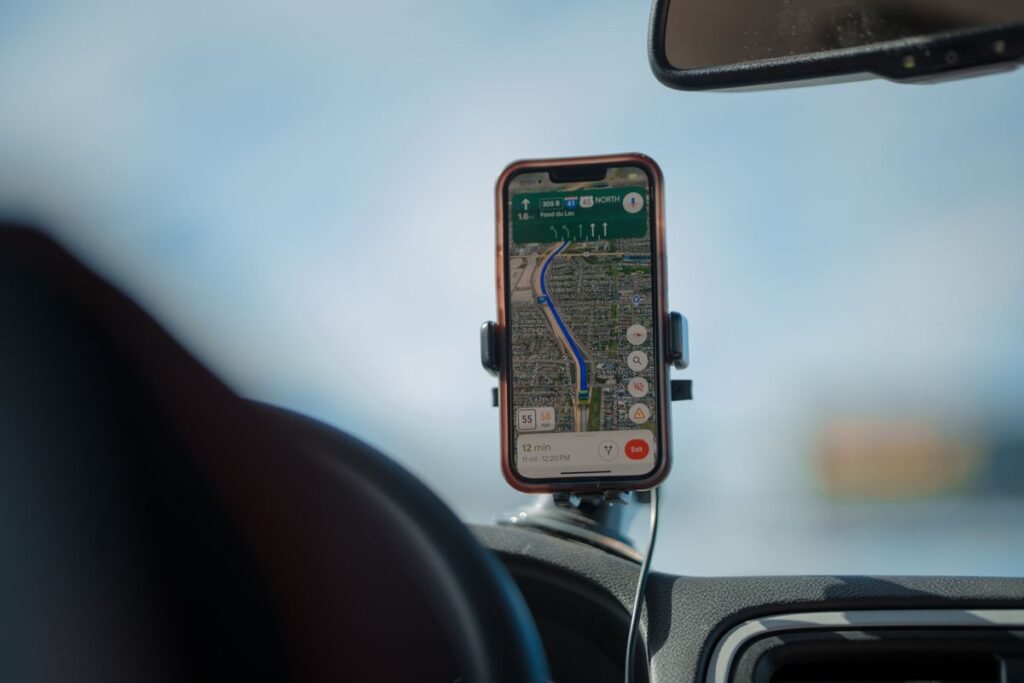
Quick answer: Google Maps ranking automotive Singapore results depend on three documented factors: relevance (how well your category and content match the search), proximity (how close your workshop is to the driver), and prominence (review volume, quality, and profile activity). Workshops that fix category accuracy and build a genuine review flow tend to see the fastest Maps movement.
When a driver types “workshop near me” or “tyre shop Sin Ming” into their phone at the roadside, the three or four listings in the Local Pack, the map-based results block sitting above the standard organic results, capture the overwhelming majority of clicks before anyone scrolls further. Google Maps ranking automotive Singapore results are decided by a specific, learnable set of factors rather than luck or advertising budget alone. Our local SEO services work with automotive clients starts by diagnosing exactly which of these factors is holding a listing back, since the fix differs depending on whether the issue is relevance, proximity, or prominence. This guide breaks down each factor and what workshops, tyre shops, and dealerships specifically need to get right, along with the mistakes that quietly hold otherwise solid businesses back.
Google’s Local Pack ranking runs on three documented factors: relevance, distance, and prominence. Relevance measures how well a profile matches what was searched, distance measures physical proximity between the searcher and the business, and prominence measures how well-known and trusted a business appears based on review signals, citations, and overall web presence. A profile weak in even one of these three areas typically underperforms, regardless of how strong the other two are.
For automotive businesses specifically, relevance issues most often trace back to category selection. A workshop listed under a generic “Car Repair” category struggles to surface for a specific search like “car aircon repair” or “wheel alignment Ubi,” because Google is matching search intent against the category and content on file, not inferring intent from years in business. Distance is largely fixed by physical location and cannot be gamed, but multi-outlet tyre chains sometimes hurt themselves by running one profile for several branches rather than a dedicated, accurate profile per genuine outlet.
Prominence is where most of the controllable improvement lives, and it is built primarily through consistent, genuine reviews, a complete and active profile, and citations, mentions of the business name, address, and phone number, across other reputable Singapore directories and automotive platforms like Motorist or sgCarMart’s workshop directory. Conventional wisdom holds that ranking on Maps is mostly a function of how long a business has been operating, but that is not the full story: a newer workshop with a sharper, better-maintained profile regularly outranks an older one that has never revisited its category or review flow.
Category mistakes are the single most common issue we find on new automotive GBP audits. A tyre specialist registered under the broad “Car Repair” category competes against every workshop nearby, while one registered as “Tyre Shop,” with “Auto Repair Shop” layered on as a secondary category, competes in a far narrower, more relevant field. The same applies to detailing studios often mislabelled simply as “Car Wash” instead of “Auto Detailing Service,” which materially undersells what the business actually offers.
Secondary categories deserve real attention too. A workshop offering both general servicing and aircon repair should add both relevant secondary categories rather than picking only one, capturing a wider spread of genuinely relevant searches without diluting the primary category’s focus. Most automotive businesses we review have never revisited their category selection since the profile was first created, often years before the current service mix existed.
We corrected exactly this category mismatch for a cluster of detailing studios in 2025 that had all defaulted to “Car Wash” during initial signup, despite each one running a clearly defined paint protection and ceramic coating specialism. Reassigning primary categories to match the actual core service, with the broader category kept as secondary, was a change that took under an hour per profile and meaningfully sharpened relevance for the specific searches each studio actually wanted to win.
Automotive businesses operating more than one location face a proximity challenge unique to their category. Each genuine outlet needs its own fully built profile, not a single head-office listing trying to represent branches across different industrial estates. Drivers searching by neighbourhood expect a result tied to the outlet nearest them, and a single consolidated profile confuses Google’s proximity matching as much as it confuses the driver trying to find the right branch.
For mobile tyre-fitting services or detailing operators without a genuine walk-in address, a service-area business profile, which hides the exact address while defining the districts served, can work better than forcing an address-based listing for a location that does not actually receive walk-in customers. Businesses with a real physical bay that customers visit, almost all workshops and tyre shops, should almost always use the standard address-based format instead, since accuracy here directly affects how Google represents the business to nearby searchers. Our car dealer SEO programme applies this same principle to dealerships operating more than one showroom location.
| Maps Ranking Factor | What Controls It | Fastest Fix Available |
|---|---|---|
| Relevance | Category accuracy, services listed, description | Category and services correction |
| Distance | Physical workshop location | Accurate per-outlet profile |
| Prominence | Reviews, citations, profile activity | Review generation, profile completeness |
Reviews sit inside the prominence factor, and for automotive businesses they carry extra weight because drivers actively read them as a proxy for whether a workshop will overcharge or do rushed work, not just as a star rating. Review count, recency, and response rate all factor into how prominent a profile appears, and a workshop with fifty recent, responded-to reviews consistently outperforms one with the same average rating built on a handful of old reviews nobody replied to.
In our experience working with Singapore automotive clients, the most reliable review moments are right after a completed job at the counter, or via a same-day WhatsApp follow-up, rather than a delayed generic request days later. Building this into an already-existing handover moment, rather than treating it as a separate task nobody quite owns, is consistently the change that makes review flow sustainable rather than sporadic. Our SEO consulting and audit work typically builds this exact routine into the first month of any automotive engagement.
Field notes: In our used car dealer case study, the single-location dealer on Ubi Avenue started with 17 Google reviews. In Months 3 to 6 we rebuilt its Google Business Profile and systemised review management, with a follow-up message sent to each buyer 2 weeks after purchase and a personalised response to every review. Reviews grew from 17 to 61 over the engagement, and the dealer began appearing in local pack searches for “used car dealer Ubi” and adjacent commercial clusters. That happened alongside the make/model pages, COE guides and financing content built in the same programme, so the profile and reviews were one part of the result.
Beyond categories and reviews, photo freshness and posting activity feed directly into how active and trustworthy a profile appears, supporting the prominence factor even without a documented direct ranking weight for either feature individually. Drivers specifically want to see the actual workshop bay, the equipment, and real work in progress, not generic stock photography, before trusting a car to a business they have never used.
Google Posts, short updates visible directly on the profile, work well for automotive businesses sharing a seasonal promotion, a new brand tyre now in stock, or a reminder about upcoming LTA inspection deadlines. Very few automotive businesses use this feature consistently, which means the ones that do stand out simply through visible activity competitors’ static listings lack entirely. Our technical SEO work often flags a stalled profile as part of a wider audit, since a profile untouched for months is usually a symptom of the same neglect showing up elsewhere on the site.
The most common mistakes we see, in rough order of impact, are: incorrect or overly broad category selection, an incomplete or duplicate profile for multi-outlet operators, a stalled review count with no active request system, and a profile left untouched for months with no fresh photos or posts. Fixing category and claiming an accurate, complete profile per outlet should come first, since both are low-effort, high-impact changes. Reviews and ongoing activity come next, since they take longer to build but compound over time.
Most automotive businesses try to fix all of this at once and lose momentum within a few weeks. A more realistic approach treats the first month as category and profile completeness work, then shifts into a lighter, sustained monthly routine covering reviews, photos, and posts. Our pricing page breaks down how this kind of phased rollout is typically structured and priced for automotive clients starting from a genuinely neglected profile.
Our car dealer SEO case study shows why each outlet needs its own presence. The authorised Toyota dealership operates three showrooms across Singapore, and as part of the engagement we optimised a separate Google Business Profile for each one: individual profiles, consistent NAP, and showroom-specific opening hours and services. A post-purchase review request, sent at vehicle delivery and personalised by showroom and sales consultant, grew combined reviews from 22 to 89 over six months, with each showroom’s rating maintained above 4.6. Those profile changes ran alongside model pages, COE content and schema, and together the programme took monthly organic leads from 11 to 41. Treating every outlet as its own listing is the starting point for any multi-outlet business.
Maps ranking work rarely stays fully separate from the rest of an automotive business’s SEO effort for long, since the same technical and content foundations that support Maps visibility also support general search rankings. A workshop with a strong, accurate Google Business Profile but a website riddled with broken links, slow load times, or thin content still underperforms its potential, because a driver who clicks through from Maps and lands on a confusing or slow site often bounces straight back to try a competitor instead. Our about page covers how our team approaches this kind of combined Maps and website work for Singapore automotive clients specifically.
Automotive search demand in Singapore is not flat across the year. COE renewal decisions cluster around specific bidding cycles, school holiday road trips to Malaysia create a pre-travel servicing rush, and the weeks before Chinese New Year reliably bring a spike in bookings as drivers want their cars checked before long journeys back to hometowns or extended family visits. A Google Business Profile that is well-optimised year-round handles these spikes far better than one that only gets attention when business is already slow, since Google’s ranking signals reward consistency rather than a sudden burst of activity right before a seasonal peak.
Workshops that plan ahead, updating photos, refreshing Google Posts with seasonal offers, and prompting extra review requests during naturally busy weeks, tend to capture a disproportionate share of this seasonal demand compared with competitors treating every month the same. We recommend building a simple seasonal calendar into the ongoing GBP routine: a note to refresh content and push a review reminder roughly two to three weeks before each known seasonal spike, rather than reacting once the rush has already started and bookings are already filling up elsewhere.
A less discussed but genuinely costly risk for automotive businesses is profile suspension, which happens when Google flags a listing for a policy violation, often an inaccurate category, a fake address, or a pattern of reviews that looks manipulated. A suspended profile disappears from Maps entirely, not just drops in ranking, which for a business relying heavily on Local Pack visibility can mean an immediate and painful drop in enquiries. Our clients occasionally come to us after a suspension has already happened, usually triggered by something well-intentioned but against policy, like a well-meaning attempt to list a service-area business at an address that does not receive walk-in customers.
Avoiding this starts with strict accuracy: the address, category, and services listed should exactly reflect the real business, and any past address or ownership changes should be updated promptly rather than left inconsistent across the profile and the website. If a suspension does happen, Google provides a reinstatement request process, but it can take weeks to resolve, which makes prevention through accurate, honest profile management the far better strategy for any workshop that depends on Maps for a meaningful share of its bookings.
Some workshops use templated, copy-pasted responses to every review regardless of content, which prospective customers can usually spot immediately. A response that references the actual service or specific detail mentioned in the review reads as genuine engagement rather than a box-ticking exercise, and this distinction matters to drivers reading through a profile’s reviews before deciding to book. Taking the extra minute to personalise each response, even briefly, meaningfully strengthens the trust signal a well-maintained review section provides.
Every factor covered in this guide, category accuracy, review flow, photo freshness, rewards consistency far more than a single burst of activity. Workshops that treat Maps optimisation as an ongoing habit rather than a one-time setup task tend to hold their ranking position more reliably over time, since Google’s own signals continue to measure activity and trust on an ongoing basis, not just at the moment a profile was first completed.
Relevance, distance, and prominence. Relevance measures how well your profile category and content match the search, distance measures physical proximity to the searcher, and prominence measures trust signals like reviews and citations. All three need attention for consistent Local Pack visibility.
Yes, often the single fastest fix available. A workshop switching from a generic category to a specific, accurate one frequently sees improved visibility for exact-match searches within weeks, since Google is directly matching search intent against the category on file.
There is no fixed threshold, but volume, recency, and response rate all matter more than a high average rating alone. A workshop with fifty recent, responded-to reviews consistently outperforms one with ten old reviews and no responses.
Several. Each genuine outlet needs its own dedicated, accurate profile. A single profile trying to represent multiple branches confuses Google’s proximity matching and makes it harder for drivers to find the correct nearby location.
There is no confirmed direct ranking weight for either individually, but both support the prominence factor by signalling an active, trustworthy profile. Workshops that post and upload regularly tend to stand out against competitors with static, neglected listings.
Yes, particularly at the neighbourhood level, where category accuracy, consistent reviews, and profile completeness can outweigh sheer size or marketing budget for searches happening within a short radius of the workshop.
A service-area profile, which hides the exact address while listing the districts served, usually suits mobile-only services better. Businesses with a real walk-in bay that customers visit should use the standard address-based format instead.
Many workshops see measurable Local Pack movement within 8 to 10 weeks of correcting category and building a consistent review flow, though competitive districts with several strong incumbents can take longer.
Yes. Inconsistent business name, address, or phone number across directories like Motorist or sgCarMart can weaken the prominence signal Google uses. Keeping citations consistent supports the same trust signals reviews contribute.
If your workshop or dealership is not showing up in the Local Pack for searches you should be winning, Singapore SEO Agency offers a free SEO audit covering your full Google Business Profile setup. No commitment, no sales pressure. Get in touch to arrange it.
Google Maps ranking automotive Singapore results reward businesses that get relevance, distance, and prominence right together, not any single factor in isolation. Category accuracy and a genuine review flow are the two most controllable levers, and fixing both tends to produce visible movement once the changes have had time to settle. Our used car dealer SEO case study shows how a Google Business Profile rebuild and a systemised review flow played out as part of a wider six-month programme.
Natalie leads SEO strategy at Singapore SEO Agency, helping local and regional businesses build organic search programmes that drive qualified leads. She specialises in technical SEO and content-led authority building for Singapore SMEs.
Get a free SEO audit for your Singapore website — we'll show you exactly where you stand, what's holding you back, and what it would take to rank on page 1.
Get Your Free SEO Audit →Yoast SEO helps most when its site-wide settings are right. See which settings to choose, what the traffic lights really mean and the mistakes to avoid.

Which free keyword research tool should a Singapore clinic, firm, contractor or tutor use? Combine five free tools to find your first 30-50 keywords. See how.

SEO vs SEM is usually the wrong question. Learn what the terms really mean and how to use ads and Search Console data to decide which searches to earn or buy.

Google Search Console login problems usually start with verification and ownership. Learn how to get in, fix access errors and offboard agencies safely.

The click through rate formula is clicks divided by impressions. Learn what each platform counts, the averaging trap and how to set it up in Google Sheets.

A click through rate means nothing on its own. Learn to compare CTR by position, query type and SERP features, and see what low CTR is really telling you.
Fast, no obligation. We reply within 24 hrs.
Singapore’s specialist SEO agency for SMEs. We rank your business on Google — and only Google. No distractions, just results.
© 2026 Singapore SEO Agency. All rights reserved.