
Yoast SEO: A Practical Guide to Setting It Up Once and Writing for People
Yoast SEO helps most when its site-wide settings are right. See which settings to choose, what the traffic lights really mean and the mistakes to avoid.
From F&B to fintech, clinics to law firms, startups to enterprise. If your customers search on Google, we make sure they find you first, not your competitors.
One specialist team, focused only on the organic rankings that put you in front of ready-to-buy Singapore customers.
A clear, sequenced path from audit to rankings. You always know what we’re doing and why it matters for your leads.
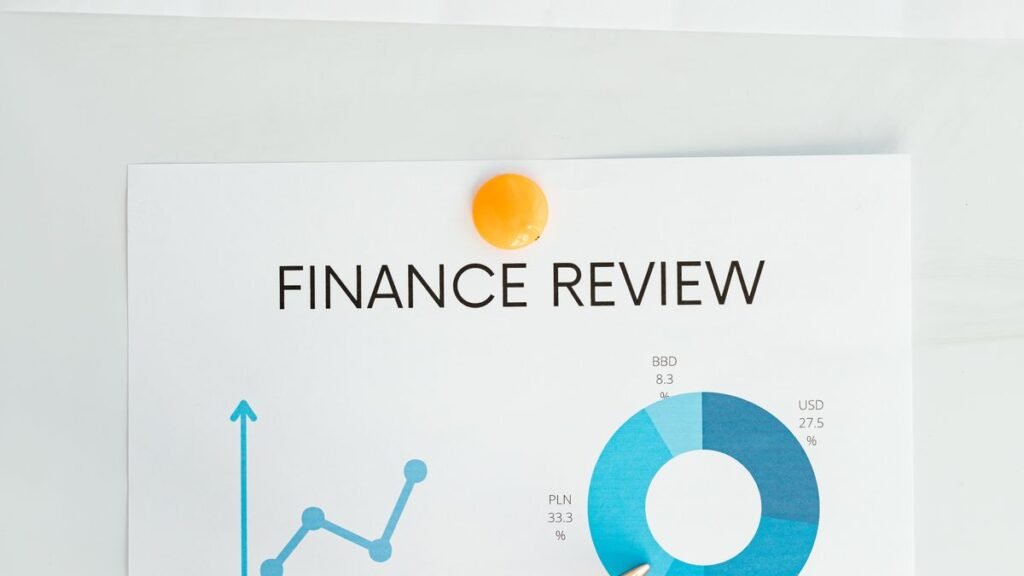
Quick Answer: A good SEO report template for Singapore SMEs should cover five core areas: organic traffic trends (sessions and users from search), keyword ranking movements for target terms, technical health indicators (crawl errors, Core Web Vitals, indexation), backlink profile growth, and conversion data tied to organic traffic. Reports without conversion data are incomplete regardless of how good the rankings look.
Every Singapore business paying for SEO deserves a report that actually tells them something useful. Yet the most common feedback we hear from new clients is that their previous agency’s reports were either overwhelming and uninterpretable, or so thin they contained no actionable information.
The SEO report – typically delivered monthly – is the primary accountability mechanism between you and your agency. A report that obscures rather than reveals is a problem. Whether you are evaluating a new agency’s reporting quality or trying to make sense of what you are currently receiving, this guide walks through exactly what a good SEO report template for Singapore looks like, section by section.
For context on what we include in our own client reports, see our SEO services overview. If you are concerned your current agency’s reporting is inadequate, our SEO audit service can include a review of your reporting setup.
A legitimate SEO report for a Singapore SME is not a data dump. It is a structured document that answers one question per section: are we making progress, and what did we do this month to drive it?
Here are the five non-negotiable sections:
1. Organic traffic summary
This should show month-on-month and year-on-year comparison of sessions, users, and new users arriving from organic search. Year-on-year is important because Singapore search behaviour has some seasonality – Chinese New Year, school holidays, and major retail periods (11.11, 12.12, GSS) affect traffic across many verticals. A drop in February that looks alarming month-on-month may be entirely normal year-on-year.
Source: Google Analytics 4 or Google Search Console (GSC). If your agency is not using both, ask why.
2. Keyword ranking report
A weekly or monthly snapshot of where your agreed target keywords rank, with movement indicated (up, down, no change). This section should only include keywords that matter commercially – terms people search when they are about to buy, enquire, or visit. Reporting on rankings for your brand name alone is not informative.
3. Technical health summary
A brief status update on your site’s technical condition: crawl errors detected in GSC, Core Web Vitals (page speed and user experience) scores, pages indexed versus submitted in your sitemap, and any manual actions or security issues. This section should include what was fixed this month, not just what exists.
4. Backlink profile report
New links acquired this month, total referring domains, and any lost links. The quality indicators should include the domain authority (DA) of referring sites – not as an absolute metric, but as a rough quality screen. A report showing “10 new links this month” with no quality information tells you nothing.
5. Conversion data
This is the section most Singapore SME owners forget to ask for, and the one most agencies omit. Ranking and traffic are inputs. What you actually care about is how many enquiry form submissions, phone calls, or purchases came from organic search this month. If your report does not include conversion data, you cannot evaluate whether your SEO investment is generating business.
| Report Section | Data Source | What Good Looks Like | Red Flag |
|---|---|---|---|
| Organic traffic | GA4 / GSC | Month-on-month + YoY comparison | Traffic only, no trend context |
| Keyword rankings | Rank tracker | Named KWs with position and change | Rankings for brand name only |
| Technical health | GSC / site audit | Fixed issues listed, not just found | Status report with no actions |
| Backlink profile | Ahrefs / Semrush | DA of sites, not just count | Link count with no quality data |
| Conversions | GA4 Goals | Organic-attributed enquiries or sales | Missing entirely |
A report is only useful if it changes what happens next. Before your next review call, write down the one decision you expect to make based on the numbers in front of you, whether that’s reallocating budget, dropping an underperforming page, or asking your agency to explain a metric that doesn’t add up. If a report can’t help you make that decision, it’s a status update, not a report.
The organic traffic section is often the first thing a client looks at, and it is frequently misread. Here is what to look for and what to ask.
A well-constructed traffic section shows you:
– Total organic sessions this month versus last month (absolute numbers and percentage change)
– Total organic sessions this month versus the same month last year (year-on-year)
– Breakdown of which pages are receiving organic traffic (top 10 landing pages by organic sessions)
– Geographic breakdown: are visitors from Singapore, Malaysia, or other markets? For most Singapore SMEs, you want Singapore traffic, not generic regional traffic.
The year-on-year comparison is particularly important in Singapore because of the bilingual search dynamic in some industries. Searches in English tend to be more consistent month-on-month. Searches in Mandarin Chinese often spike around specific cultural and commercial events. If your business serves a Chinese-speaking Singapore audience, a seasonality-aware report matters more than a simple month-on-month view.
In our experience working with restaurant clients, traffic drops during school term periods that look alarming month-on-month are entirely normal when compared to the same period the year before. An agency that does not contextualise this is either not paying attention or hoping you will not ask.
What good looks like in this section is narrative context alongside the numbers. Not just “organic sessions were 2,340 this month, up 12% from last month” but “organic sessions grew 12% month-on-month and 34% year-on-year, driven primarily by the three blog posts published in March now ranking in positions 4-7 for target keywords.”
The keyword ranking section is the most common source of confusion in Singapore SEO reports. Here is how to read it correctly.
Rankings are a leading indicator of traffic, but they are not the same thing. A site can rank on page one for ten keywords and still have low organic traffic if those keywords have low search volume. Conversely, a site with only three page-one rankings can have strong organic traffic if those keywords are high-volume.
A good keyword ranking section should include:
– The specific keyword (not a vague category like “SEO keywords”)
– Current position in Google Singapore search results
– Position last month (so you can see movement)
– Estimated monthly search volume for that keyword
– The specific page on your site that ranks for it
Our used car dealer case study shows why a ranking only matters when it is tied to searches that bring buyers. For a single-location used car dealer on Ubi Avenue, the case study reports page 1 rankings for make/model terms – the searches buyers actually run, such as “used Honda Jazz Singapore” – alongside sessions and enquiries. Make/model keywords on page 1 went from none to 11 over 6 months, organic sessions grew from 240 to 3,120 a month, COE content was driving 40% of organic sessions, and organic enquiries reached 37 a month. Without that context, a “page one ranking” tells you very little.
What you should push back on: rankings for your brand name (you will almost always rank first for your own brand, which tells you nothing), rankings for keywords not agreed during strategy, and rankings without volume data attached.
A healthy keyword report for a Singapore SME might track 15-30 keywords – a mix of 3-5 high-intent commercial terms (e.g. “digital marketing agency singapore”), 8-12 supporting category terms, and 5-8 long-tail question keywords. Each should have a volume figure attached and a page assigned to it. See how we track and report on keywords for clients across different industries in our case studies.
Most agencies include a technical health summary in their monthly report. The quality of this section varies enormously.
A poor technical health section looks like this: a list of detected issues with status indicators (red, amber, green or critical, warning, passed) and no information about what was done about them. If the same crawl errors appear in month 2, month 3, and month 4 without resolution, that is a problem the report should be addressing explicitly.
A good technical health section covers:
– Issues identified last month and whether they were resolved this month
– New issues found this month and the planned resolution timeline
– Core Web Vitals scores for mobile and desktop (this affects rankings directly – Google uses page experience as a ranking signal)
– Indexation: how many pages are currently indexed in Google versus how many you have submitted in your sitemap
– Any manual actions (Google penalty flags) or security alerts from GSC
For a deeper explanation of what technical SEO involves and why these metrics matter, see our technical SEO service page.
The indexation number is particularly telling. Every page Google has not indexed is a page that cannot rank, whether it is blocked, duplicated, or considered low quality. That is a significant opportunity being missed, and it should be a discussion point in every report until resolved. In our experience auditing Singapore SME sites, low indexation is one of the most underreported issues we find. In our ecommerce case study, only 34% of the store’s product pages (68 of 200) were indexed at the start; fixing robots.txt, the sitemap and redirect chains took that to 79% by the end of Month 2 and 95% by Month 9.
We have seen law firm clients with important practice area pages that were accidentally set to “noindex” (meaning Google was instructed not to include them in search results) for months – and no previous agency had flagged it in their reports because no one was checking the indexation data.
Most contrarian: Most agencies will tell you that SEO takes time to show results, so you should be patient with the traffic and rankings data and not expect conversion reporting in the early months. In Singapore, that advice allows agencies to dodge accountability indefinitely.
Conversion tracking – measuring how many leads, calls, or sales came from organic search – should be set up in month one, even if the numbers are small. Here is why: early baseline data is critical. If you do not start tracking conversions from the beginning, you have no baseline to compare against when results do improve. We regularly see Singapore SMEs come to us for a new engagement without any organic conversion events configured in GA4 – meaning their agency has been reporting traffic and rankings for months with no way to show whether a single lead came from SEO.
For a Singapore SME, conversions from organic search typically include:
– Contact form submissions where the source is “organic / google”
– Phone calls tracked via a call tracking number (optional but useful for service businesses)
– WhatsApp enquiries via a tracked link on the website
– E-commerce purchases with organic as the source channel
Google Analytics 4 (GA4) can track all of these if set up correctly. If your agency has not set up conversion events in GA4, request this immediately. It is not optional for a performance-oriented SEO engagement.
Our aesthetic clinic case study shows why. For a single-location aesthetic clinic in Novena, organic traffic grew 193% over 6 months, from 390 to 1,143 monthly visitors – but monthly organic enquiries grew 450%, from 4 to 22, indicating that the traffic quality (not just volume) had improved. Without conversion tracking, the 193% traffic growth would have been the headline. With it, the clinic could see the programme was actually performing better than the traffic number suggested.
For a real example of conversion-focused SEO reporting in practice, see our aesthetic clinic SEO case study.
If your current SEO report leaves you more confused than informed, Singapore SEO Agency offers a free SEO audit that includes a review of your reporting setup, GSC configuration, and GA4 tracking. We will tell you exactly what you are missing and what it would take to fix it. Learn more about our team
Monthly is the industry standard and the minimum you should accept. Some agencies offer weekly ranking snapshots in addition to a monthly comprehensive report. Quarterly-only reporting is not sufficient – too much can change in 90 days without you knowing. Your contract should specify the reporting cadence, format, and which metrics will be covered.
Google Search Console (GSC) is a free tool provided by Google that shows you how your site performs in Google search: which queries bring visitors, which pages are indexed, what crawl errors exist, and whether Google has flagged any issues. Every Singapore SEO engagement should use GSC as a primary data source. If your agency is not referencing GSC data in their reports, ask why.
Core Web Vitals are a set of page experience metrics Google uses as ranking signals: Largest Contentful Paint (how fast the main content loads), Interaction to Next Paint (how responsive the page is to user actions), and Cumulative Layout Shift (whether page elements move around as the page loads). Poor Core Web Vitals can suppress rankings. A good SEO report tracks these monthly, especially after site updates that might affect page speed.
Yes. You should either have admin access to your own Google Analytics 4 and Google Search Console accounts, or your agency should provide you with a shared live dashboard (tools like Looker Studio are commonly used). Your data should be accessible to you at any time, not just when the agency sends a report. Never allow an agency to hold your account credentials without giving you admin access.
It lists each target keyword, the current Google Singapore ranking for that keyword, the ranking last month, and the search volume. A good report covers 15-30 keywords across commercial, category, and long-tail segments. It specifies the page on your site that ranks and shows whether rankings are improving, declining, or stable. Rankings for your own brand name should be noted but not treated as a performance indicator.
Singapore search behaviour has genuine seasonality patterns – Chinese New Year, school holidays, national day periods, and major retail events (Great Singapore Sale, 11.11) all affect traffic in different ways depending on your industry. A month-on-month comparison that looks negative may be entirely normal when compared to the same period the previous year. Year-on-year comparison gives the context that month-on-month comparison misses.
This is a signal that either the traffic quality is poor (people arriving at your site who are not potential customers), conversion tracking is not set up correctly, or the website itself has a user experience problem that prevents visitors from enquiring. Ask your agency to review which pages are driving the traffic growth, what keywords those pages rank for, and whether those keywords match buyer intent. Also check that your contact forms, phone numbers, and WhatsApp links are functioning correctly on mobile.
Ask your agency to share the source of their backlink data (typically Ahrefs, SEMrush, or Moz) and the login or report view. Compare their monthly “new links acquired” figure against what you can see in GSC under Links > External links. There may be discrepancies because third-party tools and Google do not always agree, but they should be in the same rough order of magnitude. If your agency claims 20 new links per month but GSC shows minimal referring domain growth, ask for a list of the specific sites where links were placed.
Yes. Google Search Console and Google Analytics 4 are free and give you direct access to your own data. You can track keyword impressions and clicks in GSC, organic traffic in GA4, and export ranking data. The limitation is that GSC does not show exact keyword positions for all queries. For full keyword tracking, tools like Semrush or Ahrefs have low-cost plans that work well for SME-scale monitoring.
Natalie leads SEO strategy at Singapore SEO Agency, helping local and regional businesses build organic search programmes that drive qualified leads. She specialises in technical SEO and content-led authority building for Singapore SMEs.
Get a free SEO audit for your Singapore website — we'll show you exactly where you stand, what's holding you back, and what it would take to rank on page 1.
Get Your Free SEO Audit →Yoast SEO helps most when its site-wide settings are right. See which settings to choose, what the traffic lights really mean and the mistakes to avoid.

Which free keyword research tool should a Singapore clinic, firm, contractor or tutor use? Combine five free tools to find your first 30-50 keywords. See how.

SEO vs SEM is usually the wrong question. Learn what the terms really mean and how to use ads and Search Console data to decide which searches to earn or buy.

Google Search Console login problems usually start with verification and ownership. Learn how to get in, fix access errors and offboard agencies safely.

The click through rate formula is clicks divided by impressions. Learn what each platform counts, the averaging trap and how to set it up in Google Sheets.

A click through rate means nothing on its own. Learn to compare CTR by position, query type and SERP features, and see what low CTR is really telling you.
Fast, no obligation. We reply within 24 hrs.
Singapore’s specialist SEO agency for SMEs. We rank your business on Google — and only Google. No distractions, just results.
© 2026 Singapore SEO Agency. All rights reserved.