
SEO vs SEM: Which Searches to Earn and Which to Buy
SEO vs SEM is usually the wrong question. Learn what the terms really mean and how to use ads and Search Console data to decide which searches to earn or buy.
From F&B to fintech, clinics to law firms, startups to enterprise. If your customers search on Google, we make sure they find you first, not your competitors.
One specialist team, focused only on the organic rankings that put you in front of ready-to-buy Singapore customers.
A clear, sequenced path from audit to rankings. You always know what we’re doing and why it matters for your leads.
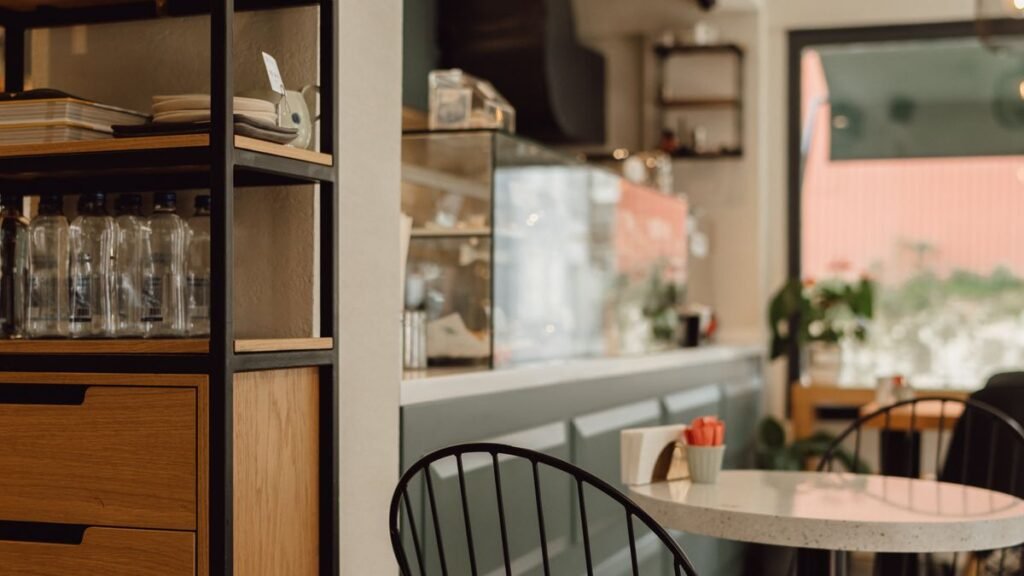
If you run a restaurant in Singapore, most of your new customers do not find you through your website first. They open Google Maps, type “Japanese restaurant near Tampines MRT” or “best nasi lemak Toa Payoh,” and they pick from the three results that appear in the Local Pack, which is the map-and-listing panel that sits above organic search results.
Quick Answer: Google Business Profile optimisation for Singapore restaurants means completing every field, uploading regular photos, and consistently collecting and responding to reviews, since most new customers now discover restaurants through Google Maps searches before ever visiting the website directly.
Google Business Profile (GBP) is the free tool Google gives every business to manage how it appears in those results. It controls your map pin, your opening hours, your photos, your review score, and the categories that tell Google what kind of restaurant you are. Getting it right is not optional for Singapore F&B businesses competing in a dense, mobile-first market.
In our experience working with Singapore restaurant clients, GBP is consistently the most underdeveloped asset we find. Owners claim the listing, fill in the basics, and then leave it untouched for months. Meanwhile, competitors who actively manage their profiles pull ahead in the Local Pack.
This guide covers every optimisation lever available inside GBP, in the order that moves the needle fastest. For the broader SEO picture, visit our restaurant SEO Singapore page, which covers the full strategy including local SEO Singapore components.
GBP Optimisation Priority Checklist for Singapore Restaurants
| Priority | Optimisation Task | Impact Level | Time Required |
|---|---|---|---|
| 1 | Primary category (specific cuisine type) | High | 5 minutes |
| 2 | Business name matches signage exactly | High | 5 minutes |
| 3 | Complete address and phone number | High | 5 minutes |
| 4 | Add 10+ high-quality interior/exterior photos | High | 30 minutes |
| 5 | Respond to all reviews (positive and negative) | High | Ongoing |
| 6 | Add menu link and full menu details | Medium | 30 minutes |
| 7 | Enable messaging and booking button | Medium | 15 minutes |
| 8 | Post weekly updates (offers, events, hours) | Medium | Ongoing |
| 9 | Add secondary categories (up to 9 additional) | Medium | 10 minutes |
| 10 | Fill all attributes (dine-in, outdoor seating, etc.) | Low | 15 minutes |
Completing priorities 1 to 5 alone moves most Singapore restaurants from invisible to competitive in the Local Pack.
Menu accuracy inside the Google Business Profile itself, not just on your website, is one of the most overlooked ranking factors for restaurants specifically. Google increasingly surfaces menu items directly in search results, and a profile with an outdated or incomplete menu section loses that visibility entirely to a competitor whose listing reflects what’s actually being served today. Updating the in-profile menu whenever your printed menu changes, rather than treating it as a one-time setup task, keeps this feature working in your favour instead of quietly working against you.
Q&A sections within the profile deserve regular attention too, since anyone can post a question and Google sometimes surfaces unanswered ones prominently in search results. Restaurants that seed their own profile with the questions customers actually ask, like parking availability or whether reservations are needed, and answer them proactively, control the narrative rather than leaving it to whatever answer a random user might eventually post instead.
This small, ongoing habit costs nothing beyond a few minutes a week and consistently outperforms a profile left static between updates.
Restaurants juggling multiple platforms, their own site, GBP, and delivery apps, benefit from designating one person to own this weekly update task, since split ownership is the most common reason it gets neglected.
Consistency in who owns this task, more than any single tactic, is what separates restaurants that maintain strong visibility from those that lose it slowly over time.
The single most common mistake we see across Singapore restaurant GBP profiles is the category selection. Most owners set their primary category to “Restaurant” and leave it there. This is too broad.
Google uses your primary category as a primary ranking signal for local searches. When someone searches “halal Korean BBQ Jurong,” Google is looking for profiles categorised as “Korean BBQ Restaurant” or “Korean Restaurant,” not just “Restaurant.” Choosing the wrong primary category is like asking Google to rank you for every cuisine at once, which means you rank well for none.
Here is how to set categories correctly:
In our cafe case study, the cafe’s primary GBP category was fixed to “Specialty Coffee Shop”, with “Brunch Restaurant” and “Café” as secondaries, alongside corrected hours, a Chope link and 68 new photos. In Month 1, its local pack position improved from 6-8 to 4-5. The specific category was the start, not the whole job.
After categories, verify your NAP consistency: Name, Address, Phone number. These must be identical across your GBP, your website footer, your Facebook page, and any food delivery platform listings. Even small differences, like “Jln” versus “Jalan,” create conflicting signals that suppress your local ranking.
For technical SEO work that complements your GBP optimisation, see our technical SEO services.
Google rewards active profiles. A profile with weekly photo uploads consistently outranks a profile where the last photo was added two years ago, even when other factors are equal. This is the freshness signal at work.
For restaurants, photos fall into three categories that each serve a different purpose:
Food photos drive click-through. Bright, well-lit images of your signature dishes, plated attractively, are the first thing a customer sees when they tap your profile. Aim for 10 to 15 high-quality food photos as a baseline, then add at least one new photo per week.
Ambience photos answer the “is this place right for my occasion” question. A group looking for a romantic anniversary dinner and a family looking for a noisy Sunday lunch are scanning for different things. Show your space honestly.
Team and behind-the-scenes photos build trust. Singapore diners, especially for heartland restaurants competing against chains, respond well to seeing the face behind the wok or the person making the kaya toast.
Beyond photos, use Google Posts to publish weekly updates: a weekend special, a new dish, a GSS promotion, a CNY set menu. Each post stays visible for seven days before archiving. Restaurants that post twice a week show measurably higher engagement on their profiles than those that do not.
In our experience working with Singapore restaurant clients, the restaurants that commit to weekly photo and post updates see Local Pack positions stabilise within two to three months. The restaurants that treat GBP as a set-and-forget listing keep losing ground to competitors who show up consistently.
Pair your GBP activity with structured local SEO work from Singapore SEO Agency.
Review score and review velocity are among the top three ranking factors in Google’s local algorithm. Your average star rating matters. How recently you received reviews matters. Whether you respond to reviews matters.
Here is the practical approach for Singapore restaurants:
Step one: build a request habit. Train your floor staff to ask for a review at bill presentation, not just verbally but with a printed QR code or a card that links directly to your GBP review page. The fewer steps between the satisfied customer and the review, the more reviews you collect.
Step two: respond to every review within 48 hours. For positive reviews, thank the customer by name if visible and mention one specific thing they raised. For negative reviews, acknowledge the experience, apologise without being defensive, and invite them to contact you directly. A business that responds well to negative reviews earns more trust from prospective customers reading those exchanges than a business with a clean slate of ignored five-star ratings.
Step three: never buy reviews or use review-gating tactics (showing only satisfied customers the review link). Google’s spam detection has become sophisticated enough to flag sudden unnatural review spikes, and the penalty for caught manipulation is a profile suspension that can take weeks to recover from.
Contrarian view: Many SEO guides tell restaurant owners to focus on getting to a 4.5-star average or above. In our experience, a restaurant sitting at 4.2 with 200 reviews and active owner responses frequently outranks a restaurant at 4.7 with 30 reviews and no responses. Volume and recency matter more than chasing a perfect score.
For a full picture of what drives restaurant visibility on Google, read our restaurant SEO case study from start to finish.
Once the fundamentals are solid, several underused GBP features offer an additional edge in a competitive Singapore market.
Q&A section: GBP allows anyone to post a question on your profile, and anyone can answer. Restaurant owners should pre-populate this section with the questions they know customers ask: “Is this restaurant halal-certified?”, “Do you accept reservations?”, “Is there parking nearby?”, “Do you offer a vegetarian menu?” Answer them yourself before anyone else does, and include your primary keyword naturally in at least one answer.
Attributes: GBP attributes let you flag specific features: outdoor seating, delivery available, takeaway, wheelchair accessible, live music, LGBTQ+ friendly. Singapore diners increasingly filter by attributes like “serves halal food” or “has outdoor seating.” Each relevant attribute you tick increases the searches for which your profile becomes eligible.
Menu section: Many restaurants fail to keep their GBP menu updated. An outdated menu listing a dish you no longer serve creates friction for customers and signals to Google that the profile is not actively maintained. Update your GBP menu every time your physical menu changes.
Messaging: Enable the messaging feature so customers can contact you directly from Maps. Respond within the 24-hour window Google tracks, because response time is published on your profile and affects click-through.
In our experience, restaurants that complete every relevant GBP attribute, not only the basics, show up in a wider range of searches. Each attribute is a filter match, and filter matches translate to visibility. Our restaurant case study’s GBP rebuild completed service options, reservation link, price range and accessibility features.
For SME restaurants that want structured support, our small business SEO services include GBP setup and ongoing management.
Google Business Profile optimisation is the highest-leverage activity a Singapore restaurant can do before spending a cent on ads. The right cuisine category, consistent fresh photos, a disciplined review strategy, and active use of Posts and attributes compound over time into a Local Pack presence that keeps delivering reservations and walk-ins without ongoing ad spend.
The restaurants that win on Google Maps are not necessarily the most well-known. They are the ones that treat GBP as a living asset, not a one-time setup task.
Ready to get your restaurant into the Local Pack? Review our SEO pricing. Then speak to our team at Singapore SEO Agency.
A Google Business Profile isn’t a set-and-forget listing for a restaurant – categories, menu items, photos, and hours all need periodic review as the business changes. Restaurants that update their profile only once, at opening, tend to fall behind competitors who keep adding fresh food photos, responding to reviews, and updating seasonal hours every few months. A profile still showing a discontinued dish, outdated hours, or old interior photos sends a confusing signal to both Google and hungry diners deciding where to go. Treating profile upkeep as a recurring task, rather than a one-time project completed at launch, is what keeps a restaurant’s listing visible and appealing in the Local Pack as the business itself evolves.
A simple quarterly reminder to photograph new dishes and update seasonal hours keeps the profile matching reality instead of quietly falling out of date the way most restaurants’ listings do within a year of opening.
Photos matter more than most restaurant owners expect – profiles with fresh, high-quality food photos updated regularly consistently outperform profiles with the same handful of images from opening day, since Google and diners both read recent photo activity as a signal of an active, well-run restaurant.
Set a recurring reminder rather than relying on memory.
It genuinely takes very little time each month.
Worth doing.
Want your restaurant ranking in the Google Maps Local Pack?
Singapore SEO Agency manages GBP optimisation and local SEO for F&B businesses across Singapore. We handle the categories, the photos, the review strategy, and the technical setup so you can focus on running your restaurant.
Get a free GBP audit and find out exactly what is holding your profile back.
Go to business.google.com, sign in with a Google account, search for your restaurant name, and click “Claim this business.” If your restaurant does not appear, select “Add your business to Google.” Google will send a verification postcard to your registered address, or may offer phone or email verification for some business types. Once verified, you have full control to edit all profile fields.
Choose the most specific cuisine category available, not just “Restaurant.” If you run a Cantonese dim sum restaurant, select “Dim Sum Restaurant.” If you run a halal nasi padang stall, select “Indonesian Restaurant” or “Halal Restaurant” depending on what Google offers. Add secondary categories for other cuisines or service types you offer, but keep the list to four or fewer to avoid diluting your primary signal.
Start with a minimum of 15 high-quality photos covering food, ambience, and your team. Add at least one new photo every week to maintain freshness signals. Profiles with more than 100 photos consistently attract more views and direction requests than profiles with fewer than 20. Quality matters: well-lit, in-focus food photography outperforms blurry smartphone shots.
Yes. Review quantity, average score, recency, and owner response rate all influence local rankings. A restaurant with 150 recent reviews and active responses will typically outrank one with 30 old reviews and no responses, even if the older profile has a slightly higher star average. Build a systematic habit of requesting reviews at point of service.
Yes, and the consequences are serious. Google’s spam detection flags unnatural review patterns, including sudden spikes, reviews from accounts with no prior activity, and clusters of reviews from the same IP address. Penalties range from review removal to profile suspension. Recovery from a suspension can take weeks and requires a formal reinstatement request. Never buy reviews.
Google Posts are short updates you publish directly on your GBP profile, visible to anyone who finds you on Google Maps or Search. For restaurants, use them to promote weekly specials, new menu items, seasonal promotions like CNY set menus or GSS deals, and events. Posts expire after seven days, so publishing twice a week maintains a constant visible presence. They also send a freshness signal to Google’s algorithm.
Update your hours immediately whenever they change, including for public holidays. Add at least one new photo per week. Publish Google Posts twice a week. Review and update your menu listing every time your physical menu changes. Respond to new reviews within 48 hours. Profiles that receive regular attention consistently outrank stagnant profiles in the Local Pack.
Yes, the core GBP listing is completely free. You can claim your profile, add photos, manage reviews, post updates, and use all standard features at no cost. Google does offer paid advertising through Google Ads (formerly Google AdWords) that can boost your visibility further, but the organic GBP optimisation covered in this guide requires no ad spend.
Flag each suspicious review using the “Report a review” option next to the review. Provide as much context as possible in your report. Simultaneously, leave a calm, professional response on the review itself so other readers can see your side. If the problem is systematic, escalate through Google’s Business Profile support portal. Do not respond aggressively, as other potential customers read every owner response.
Natalie leads SEO strategy at Singapore SEO Agency, helping local and regional businesses build organic search programmes that drive qualified leads. She specialises in technical SEO and content-led authority building for Singapore SMEs.
Get a free SEO audit for your Singapore website — we'll show you exactly where you stand, what's holding you back, and what it would take to rank on page 1.
Get Your Free SEO Audit →SEO vs SEM is usually the wrong question. Learn what the terms really mean and how to use ads and Search Console data to decide which searches to earn or buy.

Google Search Console login problems usually start with verification and ownership. Learn how to get in, fix access errors and offboard agencies safely.

The click through rate formula is clicks divided by impressions. Learn what each platform counts, the averaging trap and how to set it up in Google Sheets.

A click through rate means nothing on its own. Learn to compare CTR by position, query type and SERP features, and see what low CTR is really telling you.

What a google analytics certification proves, what it misses, how to verify one and the practical questions to ask before you hire a marketer or freelancer.

A domain authority checker only helps when you compare your site with the pages ranking for your searches. Learn to read Moz, Ahrefs and Semrush scores.
Fast, no obligation. We reply within 24 hrs.
Singapore’s specialist SEO agency for SMEs. We rank your business on Google — and only Google. No distractions, just results.
© 2026 Singapore SEO Agency. All rights reserved.