
Yoast SEO: A Practical Guide to Setting It Up Once and Writing for People
Yoast SEO helps most when its site-wide settings are right. See which settings to choose, what the traffic lights really mean and the mistakes to avoid.
From F&B to fintech, clinics to law firms, startups to enterprise. If your customers search on Google, we make sure they find you first, not your competitors.
One specialist team, focused only on the organic rankings that put you in front of ready-to-buy Singapore customers.
A clear, sequenced path from audit to rankings. You always know what we’re doing and why it matters for your leads.
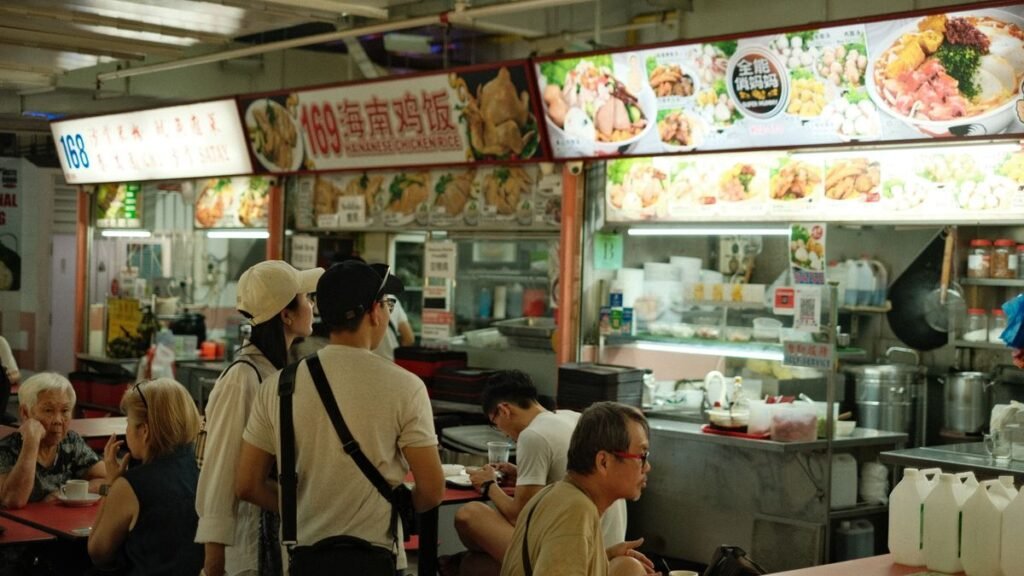
If Google Reviews are the social proof signal for local search, backlinks (links from other websites pointing to yours) are the authority signal for organic search. Link building for restaurants in Singapore is the practice of earning those links from relevant, trusted websites – so that Google understands your restaurant as a credible, established player in Singapore’s F&B scene.
Quick Answer: Link building for Singapore restaurants means earning backlinks from relevant, trusted websites such as food bloggers, local directories, and media coverage, which signal authority to Google alongside your review and Google Business Profile signals. Genuine, earned links from real local relevance outperform bulk directory submissions.
Most Singapore restaurant owners have never thought about backlinks. Their website exists, it has a menu and a contact page, and that is where their online investment stops. The restaurants that rank consistently in the top three organic results for their target keywords – not just in the Local Pack, but in the main search results – have almost always built up a meaningful backlink profile over time.
At SSA, our conclusion after running link building campaigns for Singapore restaurant and F&B clients is this: link quality beats link quantity. One link from TimeOut Singapore or Ladyironchef is worth more than fifty links from low-quality directories. Restaurants that earn links from Singapore’s most trusted food publications, lifestyle websites, and local media achieve lasting organic ranking improvements that are very difficult for competitors to replicate quickly.
This guide covers the practical tactics available to Singapore restaurants for earning high-quality backlinks. For the complete picture of how links fit into your overall local SEO strategy, see our full restaurant SEO framework.
Backlinks (also called inbound links) are links from other websites that point to your website. Google treats these as votes of confidence – a signal that other websites consider your restaurant trustworthy and worth directing their own readers to.
The value of a backlink depends on:
For Singapore restaurants, the most valuable backlinks come from: Singapore food media and blogs, Singapore lifestyle and travel publications, hotel concierge recommendation pages, and local directory platforms with significant traffic.
These are the highest-value link sources for Singapore restaurants. Coverage from Singapore’s major food publications provides both direct referral traffic and significant SEO authority.
Key Singapore food and lifestyle publications:
How to earn coverage:
Invite food bloggers and writers for a media meal: Reach out directly with a personalised invitation. Include your cuisine, your story, what makes your restaurant distinctive, and high-quality photos of your food. Be clear that you are not expecting a positive review – you are providing an experience and trusting their editorial independence.
Create a newsworthy angle: Media prefer to cover what is new or different. A restaurant opening, a seasonal menu launch, a new chef appointment, a unique cooking technique, a charity partnership, or an unusual ingredient sourcing story all make stronger pitches than “we would like coverage.”
Send quarterly media updates: Build relationships with food media by sending brief email updates when you have newsworthy developments. Do not pitch every week – quarterly is the right cadence for most restaurants.
In our experience, the Singapore food blogging community is accessible to restaurants that approach it professionally and authentically. Personal invitations with a specific angle tend to convert better than mass media releases.
Our law firm case study makes the relevance point from a different sector. The link work there was contributed articles on two Singapore legal information platforms, editorial mentions in Singapore SME resource articles and three directory submissions to Law Society-recognised directories, all editorially reviewed with no paid link placement. The page explains that sector-relevant sources carry stronger relevance signals than general business links. For a restaurant, the equivalent is the Singapore food publications and F&B platforms your diners actually read. Over that 7-month programme, the firm’s Domain Authority rose from 7 to 18.
After food media, the most accessible link building channel for Singapore restaurants is structured directory and platform listings.
Priority platforms for Singapore restaurant links:
| Platform | Link Type | Value |
|---|---|---|
| Hungrygowhere | Business listing link | High |
| TripAdvisor | Business listing link | High |
| Burpple | Business listing link | High |
| Chope | Partner restaurant link | High |
| Singapore Tourism Board directory | Government listing link | High |
| Yelp Singapore | Business listing link | Medium |
| Foursquare | Business listing link | Medium |
| OpenRice Singapore | Business listing link | Medium |
| TimeOut Singapore business listing | Directory link | High |
| Zomato Singapore | Business listing link | Medium |
These are “passive” links – they come from creating and claiming your listings on these platforms. They are not as powerful as editorial links from food media, but they are accessible to every Singapore restaurant and form the baseline of a healthy backlink profile.
A frequently overlooked link building channel for Singapore restaurants is the neighbourhood and hospitality ecosystem.
Opportunities:
A contrarian observation: most restaurant SEO guides focus almost entirely on food media links. In practice, a link from a high-occupancy hotel’s concierge recommendation page in your neighbourhood can generate more consistent referral traffic than a link from a national food publication, because the hotel’s guests are already in the area and actively looking for dining recommendations.
Participation in Singapore’s business and community ecosystem creates link opportunities:
Not all links help. Some can actively harm your rankings.
Avoid:
For a full technical assessment of your current backlink profile, see our technical SEO services.
Link building for Singapore restaurants is a long-term investment. The links you earn from Tier 1 food media and STB listings today will contribute to your organic rankings for years. The restaurants that dominate organic search for competitive F&B keywords in Singapore have almost always built up a meaningful link profile over 12-24 months of consistent outreach.
Start with your directory listings (Tier 2) – these are accessible immediately. Then begin building media relationships for Tier 1 coverage. If you want professional link building support, contact SSA to discuss our restaurant SEO and link building services.
For more on how Singapore SEO Agency approaches SEO services for Singapore restaurants, see our full service breakdown.
Our restaurant case study shows the relevance principle at the foundation level. For a 65-cover modern Asian restaurant in Tiong Bahru, the off-page work was consistent NAP (name, address, phone) submitted to 25 Singapore F&B directories, including HungryGoWhere, Burpple, Chope, STB listings and Yelp Singapore, with all entries verified and monitored for inconsistencies. Those citations went in during Months 1 to 3, alongside a full GBP rebuild, schema and review requests.
In that case study, by Month 3 the restaurant appeared in the top 3 of the local pack for 3 Tiong Bahru dining terms, and over 5 months monthly organic reservations rose from about 2 to 23, results of the whole programme. Every source was one diners actually use, which is the test to apply to any restaurant link.
In our experience building links for Singapore F&B businesses, the most effective tactic is rarely cold outreach. Coverage from TimeOut Singapore, HungryGoWhere and local food bloggers with genuine audiences can support both rankings and real reservations, because those are sources diners actually read. Editorial coverage of that kind works best on top of citation building rather than instead of it, since consistent directory listings are the foundation the restaurant case study above started from.
Link building for a restaurant looks different from most other industries, since the most valuable links often come from local food bloggers, neighbourhood directories, and event or community pages rather than traditional guest posts. A mention from a Singapore food blog covering the neighbourhood, a listing on a community events page for a local festival the restaurant participated in, or a feature in a “best of” roundup from a local publication all carry more relevant local signal than a generic high-authority link from an unrelated industry. Reaching out to local food writers with a genuine story, such as a new seasonal menu or a milestone anniversary, tends to earn coverage more reliably than a cold pitch asking for a link with nothing newsworthy behind it.
Track which of these local links actually drive referral traffic and reservations, not just their presence, since a handful of well-placed local mentions typically outperform dozens of low-relevance directory listings.
Keep it simple.
Ready to build the backlink profile that puts your restaurant on page one?
SSA manages link building campaigns for Singapore restaurants – from food media outreach to directory management and PR-driven link acquisition.
Book a link building consultation and see what a managed link building programme looks like for your restaurant.
Timing outreach around seasonal moments can meaningfully improve response rates. Food bloggers and local publications are far more likely to feature a restaurant during festive period round-ups, anniversary features, or new-opening coverage windows than during a quiet mid-year lull, so aligning outreach with these calendar moments often produces better placements for less effort.
It’s also worth tracking which existing customers have any media or influencer connections themselves. A genuine, low-pressure introduction from a regular customer who happens to know a local food writer frequently converts into coverage far more easily than a cold pitch, and it costs nothing beyond the relationship you’ve already built through good service.
Consistency in your business name, address, and phone number across every platform you’re linked from also matters more than most owners realise, since inconsistent citations can quietly undermine the very local trust signals that link building is meant to strengthen.
We build links for restaurant clients differently than for most other industries, and in our experience food blogger outreach and local media mentions earn far more relevant links, faster, than the generic guest-post routes that work for other verticals. Our team treats a single well-placed food write-up as worth more than a dozen generic directory links, because in our experience that is exactly how it performs.
A backlink is a link from another website pointing to your restaurant website. Google treats backlinks as votes of confidence – signals that other websites consider your restaurant trustworthy and worth referencing. Restaurants with more high-quality backlinks from relevant Singapore websites rank higher in organic search results. Backlinks are particularly important for ranking in the standard organic results below the Local Pack, where website authority is a major ranking factor.
There is no absolute number – it depends on your competition. For neighbourhood-level searches with low competition, 10-20 quality backlinks may be sufficient. For competitive terms like “best restaurant in Singapore CBD,” you would need to match the backlink profiles of the top-ranking sites, which typically have 50-200+ referring domains. The quality of links matters more than quantity: one link from TimeOut Singapore is worth more than 50 links from low-authority directory sites.
Reach out with a personalised, specific invitation – not a mass media release. Explain your restaurant’s concept, cuisine, and what makes it distinctive. Invite them for a complimentary meal at a time that suits their schedule. Include high-quality photos of your food. Be clear that you respect editorial independence and are not seeking a guaranteed positive review. Relationship building with Singapore food bloggers takes time – start with micro-bloggers who have engaged audiences before approaching major publications.
Yes, for the right directories. Listings on Hungrygowhere, TripAdvisor, Burpple, Chope, and the Singapore Tourism Board directory provide genuine link value and direct referral traffic. Generic global directories with no Singapore relevance add little value. The test is whether the directory is actually used by Singapore diners – if the answer is yes, the listing is worth building. If it exists only to sell links, avoid it.
Buying links violates Google’s Webmaster Guidelines and can result in a manual penalty that dramatically drops your search rankings. Paid link schemes are detected through unnatural pattern analysis and are not worth the risk. The correct approach is earning links through legitimate outreach, directory listings, PR, and media relationships. If an agency offers you “guaranteed high-DA links” for a flat fee, this is almost certainly a paid link scheme and should be avoided.
Google needs to crawl and index the linking page before the link has any effect – this typically takes a few days to a few weeks for major publications and directories. After a link is indexed, ranking improvements can appear within 2-8 weeks depending on the authority of the linking site and the competitiveness of your target keywords. Links from high-authority publications like TimeOut Singapore tend to produce faster and larger ranking movements than links from smaller blogs.
Only if the social media post includes a link to your website. Social media links are typically “nofollow” (a technical attribute that tells Google not to pass link authority), so they do not contribute directly to your backlink profile. However, social media coverage often leads to organic links – if a food journalist sees your Instagram post about a new dish, they may feature it with a website link. Social media exposure is a precursor to earned media links, not a substitute for them.
Anchor text is the clickable text of a backlink. For example, if a food blog links to your website using the text “best Thai restaurant in Tanjong Pagar,” that is your anchor text. Keyword-rich anchor text provides additional relevance signals for your target search terms. However, a natural backlink profile has varied anchor text – some branded (“Hana Kitchen”), some generic (“this restaurant”), some keyword-rich. If all your backlinks use the same exact keyword anchor text, it looks unnatural and can trigger a penalty. Build for variety.
This works best alongside a broader small business SEO strategy, supported by strong backlink building and reinforced with a solid technical SEO foundation. You can compare our SEO packages and pricing. To assess where your restaurant currently stands, get in touch directly.
Natalie leads SEO strategy at Singapore SEO Agency, helping local and regional businesses build organic search programmes that drive qualified leads. She specialises in technical SEO and content-led authority building for Singapore SMEs.
Get a free SEO audit for your Singapore website — we'll show you exactly where you stand, what's holding you back, and what it would take to rank on page 1.
Get Your Free SEO Audit →Yoast SEO helps most when its site-wide settings are right. See which settings to choose, what the traffic lights really mean and the mistakes to avoid.

Which free keyword research tool should a Singapore clinic, firm, contractor or tutor use? Combine five free tools to find your first 30-50 keywords. See how.

SEO vs SEM is usually the wrong question. Learn what the terms really mean and how to use ads and Search Console data to decide which searches to earn or buy.

Google Search Console login problems usually start with verification and ownership. Learn how to get in, fix access errors and offboard agencies safely.

The click through rate formula is clicks divided by impressions. Learn what each platform counts, the averaging trap and how to set it up in Google Sheets.

A click through rate means nothing on its own. Learn to compare CTR by position, query type and SERP features, and see what low CTR is really telling you.
Fast, no obligation. We reply within 24 hrs.
Singapore’s specialist SEO agency for SMEs. We rank your business on Google — and only Google. No distractions, just results.
© 2026 Singapore SEO Agency. All rights reserved.