
SEO vs SEM: Which Searches to Earn and Which to Buy
SEO vs SEM is usually the wrong question. Learn what the terms really mean and how to use ads and Search Console data to decide which searches to earn or buy.
From F&B to fintech, clinics to law firms, startups to enterprise. If your customers search on Google, we make sure they find you first, not your competitors.
One specialist team, focused only on the organic rankings that put you in front of ready-to-buy Singapore customers.
A clear, sequenced path from audit to rankings. You always know what we’re doing and why it matters for your leads.
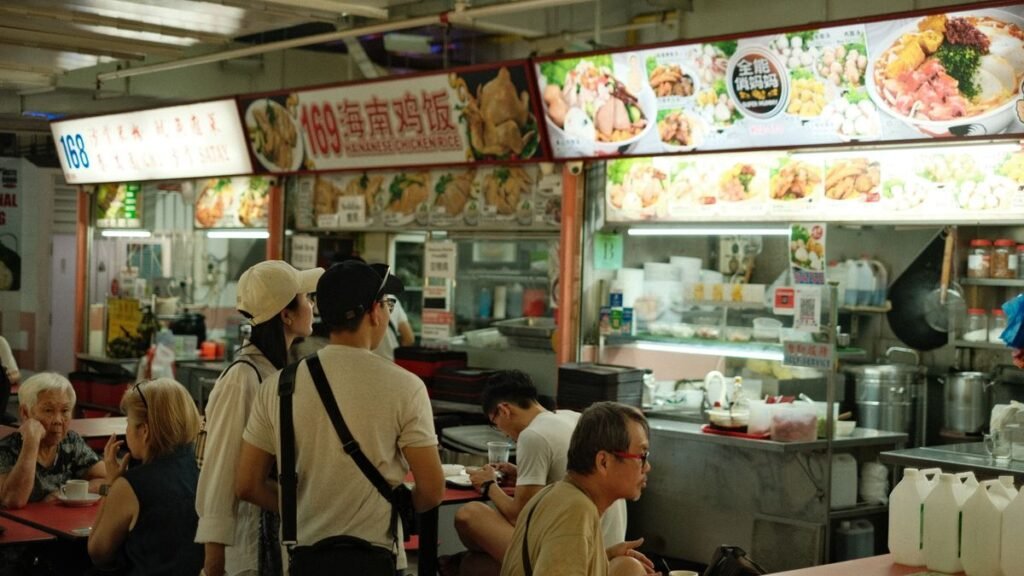
Most restaurant owners in Singapore think SEO is something tech companies do. It is not. Every time a diner searches “Japanese restaurant near Tanjong Pagar” or “best ramen Orchard Road,” Google is making a decision about which restaurants to show. SEO for restaurants in Singapore is the discipline of making sure your business appears in those moments, not your competitor two doors down.
Quick Answer: SEO for restaurants in Singapore means optimising your Google Business Profile, website, and review presence so diners searching for cuisine or location-based terms find you first. It combines Google Maps visibility, local content, and review management, and typically shows meaningful results within three to six months of consistent effort.
At Singapore SEO Agency (SSA), our original conclusion after working across the F&B space is this: restaurant SEO in Singapore is won or lost at the local level, not the national one. A ramen shop in Tanjong Pagar does not compete with every ramen shop in Singapore. It competes with the three closest, best-optimised alternatives. That means the strategies that matter most are hyper-local – your Google Business Profile, your suburb-level content, your review velocity.
This guide covers everything: local SEO fundamentals, on-page setup, Google Maps ranking, reviews, content, technical health, and link building. It is written for Singapore restaurant and F&B operators who are not marketers – every term is explained in plain English.
If you want to skip straight to a professional assessment, you can book an SEO audit to see exactly where your restaurant stands.
Most F&B owners in Singapore start with paid ads – a Facebook boost here, a Google Ads campaign there. The results are short-lived. The moment you stop paying, the traffic stops. SEO builds compounding value: a well-optimised restaurant website and Google Business Profile keep working for you at 2am when no one is approving ad spend.
In our experience working with Singapore restaurant clients, the owners who invest in SEO early tend to reduce their cost per new customer significantly within 12 months. Paid ads for F&B keywords in Singapore can cost $2-$8 per click. An organic ranking in the Local Pack (the Google Maps box at the top of search results) generates clicks at zero marginal cost once you have earned it.
The F&B landscape in Singapore is intensely competitive. There are over 7,000 licensed food establishments in Singapore, ranging from hawker stalls to fine dining. That density means diners search constantly – for cuisine type, neighbourhood, occasion, dietary requirements. The restaurants that win are the ones Google can understand clearly: what you serve, where you are, how well other diners rate you.
The three pillars of restaurant SEO in Singapore are:
Each pillar supports the others. A business with a strong GBP but a weak website will hit a ceiling. A business with a great website but no reviews will be outranked by competitors with social proof. The restaurant SEO services we offer at SSA are built around all three pillars working together.
Restaurants that treat SEO as a one-time setup rather than an ongoing habit tend to plateau within a few months. The businesses that keep climbing are the ones updating their Google Business Profile weekly, responding to every review, and refreshing menu pages whenever dishes change. None of this requires a large budget, just consistency applied over several months in a row.
Your Google Business Profile (GBP) – formerly Google My Business – is the single most important SEO asset a Singapore restaurant owns. It controls what appears when someone searches your name, and whether you appear in the Local Pack for relevant cuisine searches.
Setting up GBP correctly involves more than filling in your address. The category selection is critical. Most restaurant owners select “Restaurant” as their primary category. We have seen this cost businesses Local Pack positions repeatedly. If you run a Thai restaurant, your primary category should be “Thai restaurant.” If you run a Japanese restaurant, it should be “Japanese restaurant.” Google uses these categories to match your listing to cuisine-specific searches.
Your GBP should include:
Post regularly on GBP – at least once per week. Promotions, new menu items, seasonal specials. These posts signal to Google that your listing is active and maintained.
In our restaurant case study, a 65-cover modern Asian restaurant in Tiong Bahru, the GBP rebuild set the primary category to “Restaurant” and added Asian Restaurant and Contemporary Dining as secondary categories, alongside 44 photos, the full menu and 10 Q&As. Local pack movement began within 4 weeks, and by Month 3 the restaurant appeared in the top 3 for 3 Tiong Bahru dining terms. Choose your categories deliberately, including cuisine types, because a complete GBP is the highest-leverage fix available.
Your website needs to tell Google – and your potential diners – what you serve, where you are, and why you are worth visiting. On-page SEO refers to all the optimisations you make to the pages on your own website.
For a restaurant in Singapore, the most important pages to optimise are:
Every page should have a unique title tag (the text that appears in the browser tab and Google search results) and meta description (the summary text under your link in Google results). These should include your cuisine type and Singapore neighbourhood naturally.
In our experience, the most common on-page error we find on Singapore restaurant websites is the absence of a proper H1 heading. The H1 is the main headline on each page. It should include your primary keyword – for example, “Authentic Thai Cuisine in Tanjong Pagar, Singapore.” Many restaurant websites use decorative headings that tell Google nothing.
For help with everything your restaurant website needs, see our small business SEO service.
A contrarian point worth raising: many SEO guides recommend creating dozens of location pages targeting every Singapore neighbourhood. In our experience, this creates thin, near-identical content that Google penalises. A restaurant based in Tanjong Pagar should have deep, specific content about that location – not ten shallow pages targeting Tanjong Pagar, Buona Vista, Queenstown, and so on. One excellent page beats ten weak ones.
Your technical SEO also matters – page speed, mobile-friendliness, and schema markup (structured data that tells Google “this is a restaurant, here is the cuisine, here are the opening hours”). For help with the technical setup, talk to Singapore SEO Agency.
Google Reviews are not just a customer satisfaction tool. They are a direct ranking factor for local search. The number of reviews your restaurant has, your average rating, how recently reviews were posted, and whether you respond to them all influence where you appear in Google Maps results.
The restaurants that dominate Local Pack rankings in Singapore consistently have:
Getting more reviews is not about manipulation – it is about removing friction. A diner who had a great meal is willing to leave a review if you make it easy. QR codes on tables, a “review us on Google” card with the bill, a follow-up message to diners who book online – these are all legitimate, effective tactics.
For a real Singapore F&B example, see our cafe SEO case study.
Responding to negative reviews is particularly important in Singapore’s F&B market, where platforms like Hungrygowhere and Google are both in play. A measured, professional response to a one-star review signals to Google and to future diners that your business is attentive and accountable.
Most restaurants publish nothing beyond a menu. The restaurants that rank best on Google publish content that answers questions their target diners are searching for.
Content ideas for Singapore restaurant websites:
Content does not need to be long to be effective, but it needs to be specific to Singapore and to your restaurant’s context. Generic listicles with no local knowledge rank poorly. Content that reflects genuine expertise – your chef’s sourcing philosophy, your specific neighbourhood, the cultural context of your dishes – builds the kind of authority Google rewards.
To see how we approach content work with clients, read about how we work.
SEO is not a set-and-forget exercise. You need to measure what is working and what needs adjustment.
The free tools every Singapore restaurant owner should use:
The key metrics to track monthly:
| Metric | What It Measures | Where to Find It |
|---|---|---|
| Local Pack appearances | How often you appear in Maps results | GBP Insights |
| Organic clicks | Visits to your site from Google search | Google Search Console |
| Direction requests | Diners navigating to your restaurant | GBP Insights |
| Phone calls from GBP | Direct calls via your listing | GBP Insights |
| Average star rating | Trust signal for Maps ranking | GBP |
| Review count growth | Review velocity over time | GBP |
Most restaurant owners do not look at these numbers regularly. Setting a 30-minute monthly review of these metrics is enough to spot trends and make corrections before small problems become ranking drops.
DIY restaurant SEO is possible, but it takes consistent time and attention – something most operators are short of. If you are spending 60+ hours per week running your restaurant, outsourcing SEO to specialists means you get compounding results without pulling focus from operations.
At SSA, restaurant SEO designed specifically for Singapore F&B operators is part of our wider SEO services. We handle GBP management, on-page optimisation, review strategy, content creation, and link building – everything covered in this guide.
See what results look like in practice on our restaurant SEO case studies page.
| Approach | Monthly Cost (SGD) | Time Required | Result Timeline |
|---|---|---|---|
| DIY (owner-managed) | $0-$200 (tools) | 8-15 hours/month | 6-12 months |
| Freelancer | $800-$2,000 | 2-4 hours/month | 6-10 months |
| SEO agency (full service) | $1,500-$4,000 | 1-2 hours/month | 4-8 months |
The right choice depends on your budget, your time, and how competitive your neighbourhood and cuisine niche are. A hawker stall in a low-competition suburb can make significant progress with DIY effort. A restaurant in the CBD competing against 50 others for “Japanese restaurant Singapore CBD” needs a more resourced approach.
SEO for restaurants in Singapore is not about gaming Google. It is about communicating clearly what your restaurant offers and earning the trust signals – reviews, backlinks, engagement – that Google uses to decide who deserves top placement. Our core conclusion remains: local specificity wins. The restaurant that owns its neighbourhood, its cuisine niche, and its Google Business Profile will consistently outrank a restaurant that treats SEO as an afterthought.
Start with your GBP, fix your on-page basics, and build your review velocity. From there, content and links compound your results over time. If you want to shortcut the learning curve, contact SSA for a no-obligation consultation on what restaurant SEO looks like for your specific situation.
Ready to bring more diners through your door – without paying for every click?
SSA specialises in SEO for Singapore restaurants and F&B operators. We handle everything from Google Business Profile setup to content strategy, so you can focus on running your kitchen.
See our case studies, then ask for a free restaurant SEO audit – we will identify exactly where your biggest opportunities are and what it would take to act on them.
For Google Business Profile and Local Pack improvements, you can see movement in 4-8 weeks if you address high-priority issues like category selection and review velocity. For organic website rankings on competitive keywords, expect 4-6 months of consistent effort. The timeline depends on how competitive your specific cuisine type and neighbourhood are. A hawker stall in a low-competition suburb can rank faster than a restaurant in Orchard Road competing against well-established players.
Yes, particularly Google Business Profile optimisation, which is free to set up and maintain. Even a single-outlet hawker stall can significantly increase discovery by appearing in Local Pack results for relevant searches. The investment in time for basic GBP management – keeping hours updated, posting weekly, responding to reviews – is modest and the returns are measurable through direction requests and calls tracked in GBP Insights.
Claim and fully optimise your Google Business Profile immediately after opening. Before your website ranks for anything, your GBP can appear in Local Pack results for cuisine and neighbourhood searches. Ensure your business category is specific (not just “restaurant”), upload at least 20 quality photos, and actively solicit your first 20-30 reviews in the first 60 days of opening.
Professional SEO for Singapore restaurants typically ranges from $1,500 to $4,000 per month for a full-service agency engagement. Freelancers charge $800-$2,000 per month. DIY costs are primarily tool subscriptions ($0-$200/month) plus your own time. The right budget depends on how competitive your target keywords and location are. See our pricing page for SSA’s current service tiers.
Yes. While GBP alone can drive significant discovery for local searches, a website lets you rank for long-tail searches like “private dining room Singapore for 20 people” or “gluten-free Japanese restaurant near Orchard Road” that GBP alone cannot capture. A website also lets you collect reservations, tell your brand story, and build content authority over time.
Ask in person at point of service, use QR codes on tables or with the bill, and follow up with diners who have made online reservations. Never offer incentives (discounts, free items) in exchange for reviews – this violates Google’s policies and can result in review removal or account suspension. The most effective approach is simply making the process frictionless: a QR code that goes directly to your Google review page removes all barriers.
Always. Responding to negative reviews – professionally and without defensiveness – signals to Google that your business is actively managed. It also shows potential diners that you take feedback seriously. Keep responses brief, acknowledge the experience, and offer to resolve offline. Never argue publicly. Businesses that respond to all reviews, positive and negative, tend to perform better in Local Pack rankings than those that ignore them.
Start with your cuisine type plus Singapore (e.g., “Thai restaurant Singapore”), then add your neighbourhood (e.g., “Thai restaurant Tanjong Pagar”), then add occasion-based terms (e.g., “Thai restaurant for group dinner Singapore”). Long-tail keywords like “best Thai restaurant near Tanjong Pagar MRT” have lower search volume but much higher conversion intent – searchers using these are close to making a dining decision. If your restaurant also sells online, such as gift vouchers or packaged food, see our ecommerce SEO service.
It depends on your target diner. Restaurants targeting Chinese-speaking diners or tourists from China should consider Mandarin keywords and Simplified Chinese content. Halal restaurants targeting Malay-speaking diners may benefit from Malay-language content and local community platforms. For most English-medium F&B operators, English-language SEO is the primary focus, but bilingual GBP content – especially in the business description – can capture additional search volume.
Natalie leads SEO strategy at Singapore SEO Agency, helping local and regional businesses build organic search programmes that drive qualified leads. She specialises in technical SEO and content-led authority building for Singapore SMEs.
Get a free SEO audit for your Singapore website — we'll show you exactly where you stand, what's holding you back, and what it would take to rank on page 1.
Get Your Free SEO Audit →SEO vs SEM is usually the wrong question. Learn what the terms really mean and how to use ads and Search Console data to decide which searches to earn or buy.

Google Search Console login problems usually start with verification and ownership. Learn how to get in, fix access errors and offboard agencies safely.

The click through rate formula is clicks divided by impressions. Learn what each platform counts, the averaging trap and how to set it up in Google Sheets.

A click through rate means nothing on its own. Learn to compare CTR by position, query type and SERP features, and see what low CTR is really telling you.

What a google analytics certification proves, what it misses, how to verify one and the practical questions to ask before you hire a marketer or freelancer.

A domain authority checker only helps when you compare your site with the pages ranking for your searches. Learn to read Moz, Ahrefs and Semrush scores.
Fast, no obligation. We reply within 24 hrs.
Singapore’s specialist SEO agency for SMEs. We rank your business on Google — and only Google. No distractions, just results.
© 2026 Singapore SEO Agency. All rights reserved.