
Rank Tracking Tool: Set It Up So the Numbers Mean Something
A rank tracking tool reports one simulated search. Learn what it measures, why it differs from Search Console and how to set it up to mirror your customers.
From F&B to fintech, clinics to law firms, startups to enterprise. If your customers search on Google, we make sure they find you first, not your competitors.
One specialist team, focused only on the organic rankings that put you in front of ready-to-buy Singapore customers.
A clear, sequenced path from audit to rankings. You always know what we’re doing and why it matters for your leads.
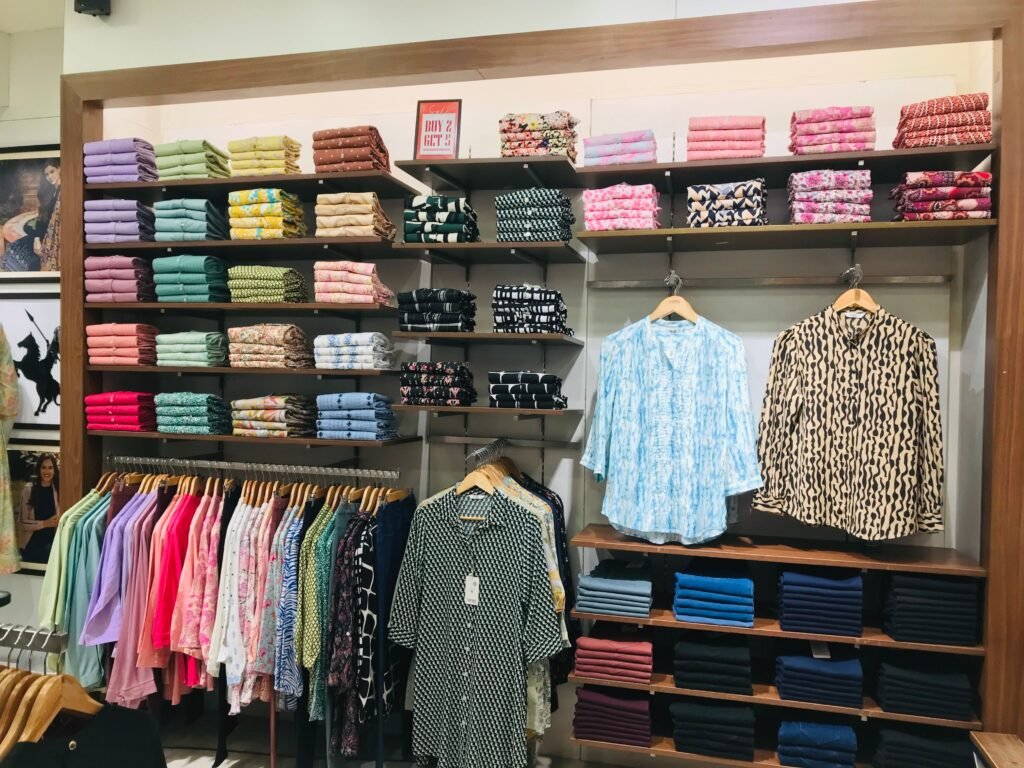
Quick answer: Shopify collection page SEO Singapore stores need focuses on genuine collection descriptions, careful handling of filtered navigation to avoid duplicate content, sensible pagination, and strong internal linking from collections down to individual products. Collections are often more valuable ranking assets than product pages themselves.
Collection pages, Shopify’s term for category pages, get far less SEO attention than product pages, yet they frequently rank for exactly the broad, high-volume search terms a Singapore store wants most, terms like “yoga mat Singapore” rather than a specific SKU name. Shopify collection page SEO Singapore businesses handle well tends to become the backbone of organic traffic, funnelling visitors down into individual products from a page that ranks for category-level intent. This guide covers collection-specific optimisation, distinct from the broader scope of our ecommerce SEO service and separate from product-level tactics such as titles, descriptions, and schema markup, which fall under a different part of a Shopify store’s overall SEO structure.
The instinct for most Singapore store owners is to spend all their SEO effort on individual product pages, since that is where the “buy” button lives. But collection pages typically capture the broader, higher-volume search terms in any category, since a shopper searching “running shoes Singapore” is looking for a range to browse, not one specific SKU.
Think about the actual buyer journey behind that kind of search. Someone typing “running shoes Singapore” into Google has not yet decided on a specific model, brand, or price point, which means they are not ready to land directly on a single product page. A collection page that welcomes that shopper with a relevant, well-organised range, alongside genuine guidance on what to look for, is far better matched to that stage of the buying decision than any individual product listing could be, and Google’s ranking behaviour tends to reflect that same logic.
When we audited a Shopify store’s collection pages, we typically found they had been left with Shopify’s default auto-generated title and no description at all, which is a significant missed opportunity given how much search volume sits at the category level rather than the product level. A well-optimised collection page can rank for dozens of related long-tail variations simultaneously, something a single product page structurally cannot do.
Treat each core collection as a page worth genuine investment: a written description, a considered title, and a logical set of products nested underneath it, rather than an automatically generated container that exists only to organise your product grid. This is typically one of the first structural gaps we flag during an SEO consulting and audit engagement with a new Shopify client, precisely because it is invisible in the admin dashboard until someone actually checks the live pages against a search results page.
A collection description is prime real estate that most Shopify themes place either above or below the product grid, and it is one of the few places on a category page where you can add genuinely unique text content, since the product grid itself is just a list of items that also appear elsewhere on your site. Without it, a collection page is essentially a container of duplicate signals borrowed from your product pages, with almost nothing on the page itself that Google can use to understand what makes this particular grouping relevant to a specific search.
A useful collection description for a Singapore audience does more than restate the category name. For a “waterproof jackets” collection, for example, it might mention Singapore’s tropical climate and frequent sudden downpours, note what to look for when buying (breathability matters as much as waterproofing in humidity), and briefly guide a shopper toward relevant subcategories. This gives Google genuine text to index and gives shoppers a reason to trust that you understand their specific buying context, not just a generic international audience.
Keep descriptions substantial enough to add real value, generally at least 150-250 words for your priority collections, though it is far better to write 150 genuinely useful words than 400 padded ones. We have seen Singapore stores consistently either skip this entirely or paste in a thin, generic paragraph that could apply to any store in any country, which wastes the opportunity entirely. Our about page goes into more detail on how we approach this kind of Singapore-specific content work across the ecommerce accounts we manage.
This is the most technically important part of collection SEO, and also the part most likely to be handled with an overly blunt solution. It is also the part most likely to be misunderstood by a store owner without a technical background, since the problem is largely invisible in Shopify’s admin panel and only becomes obvious once you look at how Google Search Console is actually indexing your filtered URLs.
Shopify’s filtering system, whether native or through an app, generates URL parameters when a shopper filters a collection by size, colour, or price, for example yourstore.sg/collections/jackets?filter.size=large. Each unique filter combination technically creates a new URL, and if left unmanaged, this can generate hundreds of near-duplicate page variations that confuse Google about which version of the page actually matters, a problem generally referred to as duplicate content or crawl budget waste (the limited number of pages Google will bother crawling on your site within a given period).
The standard fix is applying canonical tags (code that points a filtered variant back to its main, unfiltered collection URL as the “real” version) to filtered pages, which most Shopify filter apps handle automatically, or reasonably easy to configure manually.
Here is the contrarian point worth making: many guides tell you to noindex every single filtered collection URL to avoid duplicate content entirely, treating it as a blanket rule. That advice often backfires in Singapore because some specific filter combinations, like “waterproof jacket women large” or “running shoes men size 9”, represent genuine, valuable long-tail search intent with real search volume behind them. Rather than a blanket noindex rule, it is worth identifying which filter combinations actually correspond to real search demand and allowing those specific ones to be indexed with their own optimised title and description, while canonicalising the rest back to the main collection.
This is a genuinely technical decision, closer to the kind of work our technical SEO team does than something a store owner should attempt to configure by trial and error, since getting the canonical implementation wrong can accidentally deindex pages you actually wanted to keep. It is worth checking your current filter setup against Google Search Console’s coverage report periodically, since a sudden spike in “duplicate, Google chose different canonical” warnings is usually the first visible sign that filtered navigation has started working against you rather than for you.
Large Shopify collections with more than Shopify’s default 36 or 48 products per page split across multiple paginated pages, using URLs like yourstore.sg/collections/jackets?page=2. How you handle this affects both crawl efficiency and how deep your best products sit within the site structure.
Where possible, keep priority collections shallow, ideally within one or two pages of pagination, by using well-organised subcollections rather than one enormous flat category with ten paginated pages. This also improves the shopper experience, since almost nobody browsing a Singapore ecommerce store clicks through to page seven of a product grid, and it mirrors the same shallow-architecture principle we apply across small business SEO engagements more broadly, regardless of platform.
Ensure your theme implements pagination correctly with sensible link structures between pages so Google’s crawler can move through your full catalogue efficiently, rather than treating each paginated page as an orphaned, disconnected URL. If your store has grown organically over time without ever revisiting its collection structure, it is common to find collections that have quietly grown to five or six pagination pages, diluting the ranking strength of products buried deep on page four or five.
An “infinite scroll” or “load more” style browsing experience, popular on some Shopify themes for its perceived modern feel, deserves particular scrutiny here. If it is implemented in a way that never generates crawlable, indexable URLs for products further down the collection, those products can end up effectively invisible to Google regardless of how good the individual product page content is. Before adopting this kind of browsing pattern, confirm with your theme developer or app provider that it still generates proper paginated URLs behind the scenes, even if the visible user experience feels continuous.
Collection pages function as one of the most important internal linking hubs on a Shopify store, and how deliberately you structure that linking has a real effect on which products actually get crawled, indexed, and ranked. A newly added product that only exists inside one collection, with no other internal links pointing to it, can take considerably longer to get discovered and indexed than one that is reachable from several relevant pages across your site.
Beyond the automatic product grid, look for opportunities to link contextually within your collection description to related subcollections or standout products, using descriptive anchor text rather than generic “click here” links. This reinforces topical relevance for both the linking and linked pages, and helps distribute ranking authority from your strongest collection pages down to newer or lower-authority products that might otherwise struggle to get discovered.
We found the same pattern repeatedly in our technical audits of Singapore Shopify stores: collections link to products, but products rarely link back up to related collections or across to complementary ones, leaving a large amount of easy internal linking value unclaimed. Cross-linking a “yoga mats” collection to a related “yoga blocks” collection, for instance, helps both pages and mirrors genuinely useful browsing behaviour. For businesses managing large catalogues where this becomes a genuinely complex information architecture problem, our team handles this kind of structural work directly as part of a broader engagement, and our ecommerce SEO case study shows the kind of traffic gains that come from getting internal linking structure right.
Field notes: In our ecommerce case study, the store’s category pages had no written content at all. We rewrote the 15 top-revenue categories as content-first landing pages with a product selection guide, buying criteria and an FAQ section, averaging 720 words each. The first category page reached position 4 by Months 3-5, and two reached #1 by Month 9. That store ran on WooCommerce, but Shopify collections play exactly the same role.
| Collection SEO element | Common mistake | Better approach |
|---|---|---|
| Description | None, or thin generic paragraph | 150-250 words, Singapore-specific context |
| Filtered URLs | All indexed or all blanket noindexed | Canonicalise low-value filters, index high-demand ones |
| Pagination | Deep, 5+ pages per collection | Shallow, well-organised subcollections |
| Internal linking | One-directional, collection to product only | Cross-linked between related collections and products |
| Title tag | Shopify default, unedited | Keyword-relevant, matches real search phrasing |
Our B2B ecommerce SEO case study shows the same principle with category pages. The Ubi wholesale kitchenware supplier’s site started as a single catalogue with no category pages. We rebuilt it into 14 dedicated category pages, from commercial cookware to bakeware, each with full product specifications, materials and certifications, minimum order quantities, lead times and a trade enquiry form, then added 6 industry vertical pages. By Months 4-5, category and vertical pages were reaching page 1, and over eight months keywords ranking on page 1 rose from 5 to 32 and monthly trade enquiries from 5 to 28.
Of everything we review in a Shopify SEO audit, collection pages are consistently the most under-invested part of the site relative to how much traffic potential they hold. Our position is that a Singapore store should treat its top ten to fifteen collections with the same care as its top-selling products, because a single well-optimised collection page can outperform a dozen individual product pages combined in terms of organic reach. If your collection structure has grown messy over time, our ecommerce SEO services team can map out a cleaner architecture. Contact us to review your collection pages.
In our experience, Shopify collection pages are consistently under-optimised compared to individual product pages, even though collection pages often carry more genuine ranking potential for broader, higher-volume search terms. We’ve seen stores leave the default auto-generated collection description entirely blank, missing an opportunity to rank for the exact category-level searches customers use before they’ve settled on a specific product. Our team recommends writing a substantial, genuinely useful description for every priority collection page, positioned above or below the product grid depending on the theme, covering what the collection includes and how to choose between the options within it. We recommend linking collection pages into the main navigation with descriptive anchor text rather than burying them under generic dropdown labels, since navigation placement strongly influences how much internal link equity a collection page receives. In our clients’ stores, collection pages with genuine buying-guide content consistently outrank competitor collection pages that rely on the product grid alone, particularly for comparison-style searches where shoppers are still deciding between options rather than searching for one specific product by name.
Yes, a genuine written description, ideally 150-250 words for your priority collections, gives Google unique text content to index and gives shoppers context about your range. Leaving it blank or using Shopify’s auto-generated default is one of the most common and easily fixed SEO mistakes on Singapore Shopify stores.
It depends on the specific filter. High-demand combinations with genuine search volume, like a specific size and product type together, are often worth indexing with their own title and description. Low-value or rarely searched combinations should generally be canonicalised back to the main collection to avoid duplicate content issues.
There is no fixed rule, but keeping priority collections within one or two pagination pages generally works better for both SEO and shopper experience than one flat collection with five or more pages. Splitting a large collection into well-organised subcollections is usually more effective than deep pagination.
When shoppers filter a collection by size, colour, or price, Shopify can generate a new URL for each combination, creating many near-identical page variations. Left unmanaged, this confuses Google about which version to rank and wastes crawl budget, the limited number of pages Google bothers crawling on your site within a given period.
Yes, and it often should, since collection pages typically target broader, higher-volume search terms like a general product category, while individual product pages target more specific, lower-volume searches. A well-optimised collection can capture significantly more total search traffic than any single product page beneath it.
Restructure gradually, keep old collection URLs working with 301 redirects if you rename or merge collections, and update your internal links and navigation menu to reflect the new structure at the same time. Sudden, unplanned restructuring without redirects is the most common cause of ranking loss during this kind of project.
No, only your priority, highest-value collections should sit in the main navigation, generally keeping the total to a manageable number so both shoppers and Google can understand your site’s structure quickly. Lower-priority or highly specific collections can still exist and be linked contextually without cluttering the primary menu.
Yes, cross-linking related collections, such as linking a yoga mats collection to a yoga blocks collection, helps distribute ranking authority across your site and mirrors genuinely useful browsing behaviour. Many Singapore Shopify stores link collections down to products but rarely link collections to each other, leaving this value unclaimed.
Based on patterns across the accounts we manage, initial movement often appears within four to eight weeks for lower-competition collection terms, with more competitive category terms taking three to six months to show meaningful ranking improvement as Google reassesses relevance over repeated crawls.
For SEO purposes, several well-defined, focused collections generally outperform one enormous flat collection, since each focused collection can target a more specific search term and receive its own tailored description. The right number depends on catalogue size, but err toward more specific subcollections once a category exceeds roughly 50-60 products.
Either position can work for SEO purposes, since Google reads the full page content regardless of visual placement. Above the grid tends to perform slightly better for shopper engagement because it sets context before browsing begins, while below the grid keeps the visual focus on products first, which some Singapore fashion and beauty stores prefer for conversion reasons.
Yes, a well-structured, well-indexed collection page maintains its ranking history year-round, which means it can start capturing seasonal search demand for events like Great Singapore Sale or year-end sales immediately, rather than needing to build ranking authority from scratch each time a seasonal campaign page is created fresh.
If your Shopify collection pages are running on default titles with no descriptions, get in touch for a free SEO consultation and we will show you exactly which collections have the most untapped potential. Book your free audit.
Natalie leads SEO strategy at Singapore SEO Agency, helping local and regional businesses build organic search programmes that drive qualified leads. She specialises in technical SEO and content-led authority building for Singapore SMEs.
Get a free SEO audit for your Singapore website — we'll show you exactly where you stand, what's holding you back, and what it would take to rank on page 1.
Get Your Free SEO Audit →A rank tracking tool reports one simulated search. Learn what it measures, why it differs from Search Console and how to set it up to mirror your customers.

Google Search Console submit sitemap steps by platform, what each status means, and what to leave out so Google spends its attention on pages you want found.

Google Search Console help for busy owners: what each email and warning usually means, which ones to ignore, and where to get free help before you pay anyone.

Domain authority is a useful filter for weak sites but a poor sales promise. Learn why scores move on their own and what to ask before you buy links or SEO.

Paying for an SEO keyword research tool? Test its Singapore data on 20 keywords you know, see why KD differs by vendor, and pick one tool you can stick with.

Whats bounce rate, and how is it different from exits, engagement time or dwell time? Learn what each one really answers and what to ask your SEO agency.
Fast, no obligation. We reply within 24 hrs.
Singapore’s specialist SEO agency for SMEs. We rank your business on Google — and only Google. No distractions, just results.
© 2026 Singapore SEO Agency. All rights reserved.