
Google Analytics Website Traffic: Why the Numbers Never Match
Google Analytics website traffic is a consented sample, not a head count. See where visits come from, why tools disagree and which number to trust each month.
From F&B to fintech, clinics to law firms, startups to enterprise. If your customers search on Google, we make sure they find you first, not your competitors.
One specialist team, focused only on the organic rankings that put you in front of ready-to-buy Singapore customers.
A clear, sequenced path from audit to rankings. You always know what we’re doing and why it matters for your leads.
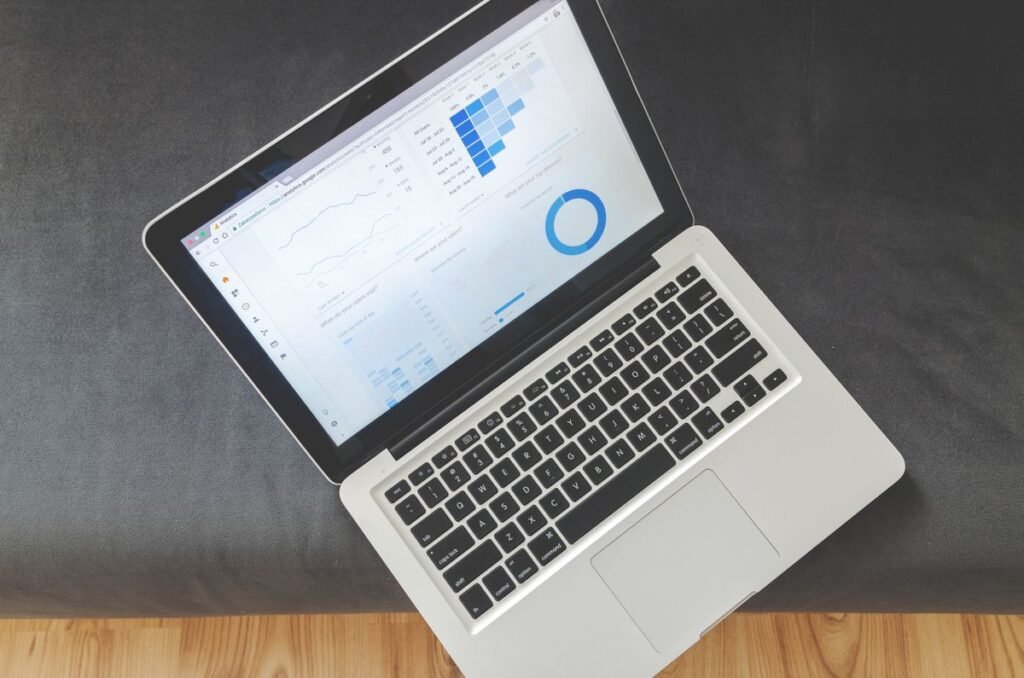
Quick answer: Comparing seo vs google ads retail singapore shop owners face is really a question of timeline and cost structure, not which one is “better.” Google Ads delivers traffic immediately but stops the moment spending stops. SEO takes months to build but keeps generating traffic without ongoing per-click cost. Most retailers benefit from running both, sequenced deliberately.
Retail shop owners frequently ask whether they should invest in SEO or Google Ads, as though the two are competing options where picking one means abandoning the other. This framing misses how differently the two channels actually behave. Understanding seo vs google ads retail singapore businesses genuinely need to weigh comes down to two fundamentally different cost structures and timelines, not a simple better-or-worse comparison. This guide breaks down where each channel wins, where they overlap, and how to sequence both if budget allows, tied to our SEO services for retail clients. In our experience working with Singapore retail clients, the businesses that get the most value treat SEO and Google Ads as complementary tools solving different problems, not as rival options competing for the same budget line.
Google Ads (Google’s pay-per-click advertising platform) puts your shop at the top of search results immediately, the moment a campaign goes live, for as long as you keep paying for each click. This is the core tradeoff: Google Ads traffic is rented, not owned. Pause the campaign, and the traffic disappears within hours, regardless of how well the campaign performed while it was running.
SEO (search engine optimisation, the practice of improving your organic, unpaid search visibility) builds toward traffic that continues arriving without a per-click cost once rankings are achieved, but takes meaningfully longer to produce results, typically months rather than days. A product page that ranks organically on page 1 keeps generating traffic every day without an ongoing per-visitor charge, which is the fundamental economic advantage SEO holds over paid advertising in the long run.
Most agencies pitch these as an either-or decision based on budget size, recommending Google Ads for tight budgets and SEO for larger ones. In Singapore, that framing frequently backfires for retailers, because it ignores that Google Ads becomes proportionally more expensive over time in competitive retail categories as cost-per-click rises, while SEO’s cost stays relatively fixed regardless of how much traffic it eventually generates, once foundational rankings are achieved.
Google Ads is the clearer choice when a retailer needs traffic immediately and cannot wait months for organic results to build. A new shop launch, a time-limited promotion, or a specific seasonal push around GSS, 11.11, or 12.12 are all scenarios where the immediacy of paid traffic outweighs the longer timeline SEO requires, since the opportunity itself is time-bound and organic rankings would not build in time to capture it.
Google Ads also offers precise, immediate control over targeting: which specific search terms trigger your ad, which locations see it, and exactly how much budget gets spent per day. This kind of granular data pairs well with our local SEO services approach, which uses similar location-level insight to prioritise where organic effort matters most. This level of granular control is valuable for a retailer testing which product categories or search terms actually convert before committing longer-term SEO effort toward those same terms, effectively using paid search as a fast, data-driven research tool for a future organic strategy.
Field notes: In our ecommerce case study, the Singapore home and lifestyle store was spending heavily on paid social to drive sales it should have been receiving organically, with organic revenue at only S$8,400 a month. After nine months of indexation, schema, category and content work, organic revenue reached S$28,600 a month. Paid channels work best when they are not covering for organic gaps that can be fixed.
SEO becomes the stronger long-term investment once a retailer has enough runway, financially and in terms of patience, to wait for organic results to compound. Once a product or category page achieves a strong organic ranking, it continues generating traffic without an ongoing per-click charge, meaning the effective cost per visitor declines steadily over time as the initial investment keeps paying returns month after month.
This compounding effect is the single biggest structural advantage SEO holds over Google Ads for retailers thinking beyond a single quarter. A shop that stops investing in Google Ads sees traffic drop to zero almost immediately. A shop that pauses SEO investment after building strong rankings typically sees a much slower decline, since rankings built through genuine content depth, technical health, and backlinks tend to hold for a meaningful period even without continuous new investment, though ongoing maintenance is still recommended to defend that position against competitors who keep working.
When we audited retail accounts that had run Google Ads exclusively for over a year with no SEO investment, the issue was consistently the same: total dependence on a channel where cost-per-click had risen steadily each year as competition in their category intensified, with zero organic traffic acting as a safety net if the ad budget ever needed to be cut or paused.
| Factor | Google Ads | SEO |
|---|---|---|
| Time to first traffic | Immediate (same day) | 6-12+ weeks |
| Cost structure | Per-click, ongoing | Upfront/monthly investment, compounding |
| Traffic when spending stops | Drops to zero quickly | Declines gradually, often holds |
| Typical monthly cost (SGD, small retailer) | 800 – 3,000+ (ad spend + management) | 800 – 4,500 (agency-managed) |
| Long-term cost per visitor | Stays flat or rises with competition | Tends to decrease over time |
| Best for | Immediate needs, testing, seasonal spikes | Sustainable, compounding visibility |
Cost-per-click for competitive retail categories in Singapore, such as fashion or electronics, has generally trended upward over recent years as more retailers compete for the same paid placements, which is worth factoring into a long-term budget comparison. A retailer spending SGD 2,000 a month on Google Ads today may need to spend meaningfully more for the same traffic volume in two years if competition continues intensifying, whereas a comparable SEO investment tends to produce a more stable, and often improving, cost-per-visitor trend over the same period as rankings mature. Our technical SEO service ensures the organic side of this comparison is built on a genuinely solid foundation, not a site that would underperform regardless of the channel driving traffic to it.
The strongest approach for most Singapore retailers with adequate budget is running SEO and Google Ads simultaneously, deliberately sequenced rather than treated as competing priorities. Google Ads can cover the immediate traffic gap while SEO builds in the background, and Google Ads performance data can directly inform SEO priorities, since search terms that convert well in paid campaigns are strong candidates for dedicated organic content and page optimisation.
Our used car dealer case study shows organic search building a lead channel without paid ads. A single-location dealer on Ubi Avenue had a brochure website with no individual vehicle pages. Over six months, the programme built 14 make/model pages, COE and financing guide series, and a rebuilt Google Business Profile with systematic review requests. Organic enquiries grew from 11 to 37 a month, make/model keywords on page 1 from 0 to 11, and the programme paid back its cost from transaction revenue attributable to organic leads before the end of month 4. The case study also notes that paid search can supplement during the 3 to 4 month period before organic rankings establish.
Retailers exploring this combined approach should review our ecommerce SEO services page, which covers how we sequence organic and paid data together during a retail engagement.
Our ecommerce SEO case study also gives a broader picture of how a store that had been spending heavily on paid social to drive sales built organic search into a stronger revenue channel of its own.
A brand-new shop with zero existing online presence often benefits from starting with a modest Google Ads campaign to generate early traffic and sales data while SEO groundwork, which naturally takes longer to show results, builds in parallel. Waiting for SEO alone to produce meaningful traffic for a shop with no prior visibility can mean months with very little revenue from search, which is a real risk for a new business managing cash flow carefully.
An established retailer with reasonable existing organic visibility should generally weight investment toward SEO, since the compounding return on further organic investment often outpaces the returns from scaling an already-mature Google Ads account further, particularly in categories where cost-per-click has already climbed to reflect intense competition.
Highly seasonal retailers, or those running specific time-bound promotions, should lean on Google Ads for the promotional window itself, since SEO cannot realistically be timed precisely enough to peak during a two-week sale, while using the rest of the year to build organic visibility that compounds ahead of the next seasonal spike. This does not mean SEO has no role during a seasonal spike at all. Retailers who prepare category pages, promotional content, and technical readiness in the weeks leading up to GSS or 11.11 often see organic traffic contribute a meaningful share of total seasonal sales alongside paid campaigns, even though organic alone rarely peaks as sharply or as reliably as a well-timed paid campaign can during a short, specific window. Our small business SEO services team helps retailers work out this exact balance based on their specific business stage and cash flow situation, rather than defaulting to a one-size-fits-all recommendation.
A factor often left out of the SEO versus Google Ads conversation is how Singapore shoppers actually behave when they see both an ad and an organic result for the same shop. Many shoppers, particularly those in categories like homeware, fashion, and specialty retail where trust and research matter before a purchase, show some degree of ad skepticism, scrolling past the labelled “Sponsored” results to click an organic listing instead, especially for considered purchases rather than urgent, immediate needs.
This does not mean ads are ineffective, since plenty of high-intent, ready-to-buy searches convert well directly from a paid listing, particularly for well-known brands or urgent needs. But it does mean a retailer relying purely on Google Ads for a category where shoppers research extensively before buying may be leaving a meaningful share of trust-driven organic clicks on the table, clicks that would have gone to their organic listing if one existed and ranked reasonably well.
We often see this when we review retail search results: a shop appearing at the very top as a paid ad, while a smaller, better-optimised competitor appeared directly below in the organic results and captured a meaningful share of clicks from shoppers who specifically skipped past the sponsored listing. Having both a strong ad presence and a solid organic listing for the same search term captures both types of shopper behaviour, the ones who click ads readily and the ones who deliberately avoid them, rather than only capturing one group and losing the other entirely to a competitor.
Retailers running both SEO and Google Ads sometimes worry the two channels compete against each other for the same search real estate, effectively paying twice for the same click if their organic and paid listings both appear for an identical term. In practice, having both present for the same high-value term is rarely wasteful, since it maximises total visible space on the results page and captures shoppers regardless of which type of listing they prefer to click.
The more common inefficiency is duplicated content effort rather than duplicated spend: a marketing team writing separate ad copy and separate landing page content for the same product without ever cross-referencing what messaging is actually converting in each channel. In our experience working with Singapore retail clients, the strongest performers treat ad copy testing as a fast, cheap way to learn what messaging resonates, then feed those same winning angles into product page copy and meta descriptions for SEO, rather than running the two channels as entirely separate workstreams with no shared learning between them.
Retailers managing both channels with a small internal team, or with separate agencies for each, should build in a simple monthly cross-check: which search terms are performing well in Ads, and does the organic content for those same terms reflect the messaging that is actually converting. This single habit alone tends to improve both channels’ performance more than treating SEO and Google Ads insights as belonging to two entirely separate silos within the business.
We run both channels for retail clients and in our experience the honest comparison is rarely either-or; the businesses that do best treat Ads as the bridge while SEO compounds in the background. Our clients who cut Ads spend too early, before organic has built enough of a base, usually see a dip in store traffic that takes months to recover from.
Not necessarily cheaper in absolute terms, but the cost structure differs meaningfully. SEO’s cost tends to stay relatively fixed while traffic compounds over time, while Google Ads cost per visitor stays ongoing and can rise as competition increases, making SEO typically more cost-efficient over a longer time horizon.
Most new shops benefit from starting with a modest Google Ads campaign for immediate traffic and sales data, while building SEO in parallel for longer-term, more sustainable visibility. Relying on SEO alone in the earliest months often means very limited traffic while rankings are still building.
Yes, significantly. Search term reports from Google Ads show exactly which queries lead to actual sales, not just clicks, giving a factual basis for which product categories or terms deserve priority SEO investment rather than guessing based on assumed demand.
No. Google Ads and organic rankings are determined by entirely separate systems, and running paid ads has no direct negative or positive effect on organic ranking position. Any perceived correlation usually comes from a business investing in both channels simultaneously, not a causal link between them.
This varies by scale, but a reasonable starting combined budget for a small to mid-sized retailer is often SGD 1,500 to SGD 4,000 per month total, split between Google Ads spend and SEO investment, adjusted based on which channel is currently underperforming relative to goals.
Traffic from Google Ads drops close to zero almost immediately once campaigns are paused, since paid placements only appear while actively funded. This is the core tradeoff against SEO, where traffic typically declines more gradually even after investment slows or stops.
Both can benefit, but the campaign type differs. Physical shops often benefit from location-targeted or Local Services-style campaigns driving in-store visits, while online-only retailers typically run Shopping or Search campaigns focused directly on product purchases and conversions.
It is possible for specific, targeted terms, particularly branded or long-tail searches, but competing on broad category terms against marketplaces with large advertising budgets is difficult. Most small retailers see better returns focusing Google Ads spend on their own branded and niche terms rather than broad competitive categories.
A useful signal is rising cost-per-click on your core terms combined with existing organic content already ranking reasonably well for related terms. When paid traffic is getting more expensive while organic momentum is building, shifting incremental budget toward SEO often produces a better long-term return.
Run the two channels on different clocks. Ads are the seasonal lever, because you can lift budgets three to four weeks before a peak, capture the demand spike, and pull spending back afterwards with no lasting consequence. SEO is the preparation, and that work has to happen months earlier: seasonal landing pages built and indexed well ahead of the season, gift guide or hamper content published the quarter before, and stock availability signals kept current. A common and expensive mistake is publishing a Chinese New Year page in January. It will not rank in time. Build it once, keep it at the same address year after year, and refresh it each autumn.
It does. If you stock brands people already search for, organic visibility on brand and product pages is often achievable, though you will be competing with the brand’s own site and the marketplaces. Ads on your own retailer name are usually cheap insurance against competitors bidding on it, while ads on the brand names themselves may breach your distribution agreement, so check the terms before bidding.
If you are unsure how to split your marketing budget between SEO and Google Ads, Singapore SEO Agency offers a free SEO audit that includes an honest view of where organic investment would genuinely pay off. Book your free audit.
SEO versus Google Ads for a retail business in Singapore is not really a competition between two rival channels, it is a question of matching each channel’s strengths to a specific business need and timeline. Google Ads earns its place when immediate traffic matters more than long-term cost efficiency. SEO earns its place when a retailer has the patience to build toward traffic that compounds without an ongoing per-click cost. The retailers who get the most value from their marketing budget rarely pick one exclusively, they sequence both deliberately based on what stage their business is at. Our pricing page outlines what a combined or standalone SEO investment looks like for a retail business at any stage.
Natalie leads SEO strategy at Singapore SEO Agency, helping local and regional businesses build organic search programmes that drive qualified leads. She specialises in technical SEO and content-led authority building for Singapore SMEs.
Get a free SEO audit for your Singapore website — we'll show you exactly where you stand, what's holding you back, and what it would take to rank on page 1.
Get Your Free SEO Audit →Google Analytics website traffic is a consented sample, not a head count. See where visits come from, why tools disagree and which number to trust each month.

Google analytics consulting services for Singapore SMEs: what consultants do, indicative SGD costs, deliverables to demand and red flags. Buy the right scope.

Bounce rate in GA4 is not the old Universal Analytics number. Learn what it measures now, why old benchmarks fail and how to judge each page by its job.
Yoast SEO helps most when its site-wide settings are right. See which settings to choose, what the traffic lights really mean and the mistakes to avoid.
Which free keyword research tool should a Singapore clinic, firm, contractor or tutor use? Combine five free tools to find your first 30-50 keywords. See how.

SEO vs SEM is usually the wrong question. Learn what the terms really mean and how to use ads and Search Console data to decide which searches to earn or buy.
Fast, no obligation. We reply within 24 hrs.
Singapore’s specialist SEO agency for SMEs. We rank your business on Google — and only Google. No distractions, just results.
© 2026 Singapore SEO Agency. All rights reserved.