
Bounce Rate: A Practical Guide After the GA4 Change
Bounce rate in GA4 is not the old Universal Analytics number. Learn what it measures now, why old benchmarks fail and how to judge each page by its job.
From F&B to fintech, clinics to law firms, startups to enterprise. If your customers search on Google, we make sure they find you first, not your competitors.
One specialist team, focused only on the organic rankings that put you in front of ready-to-buy Singapore customers.
A clear, sequenced path from audit to rankings. You always know what we’re doing and why it matters for your leads.
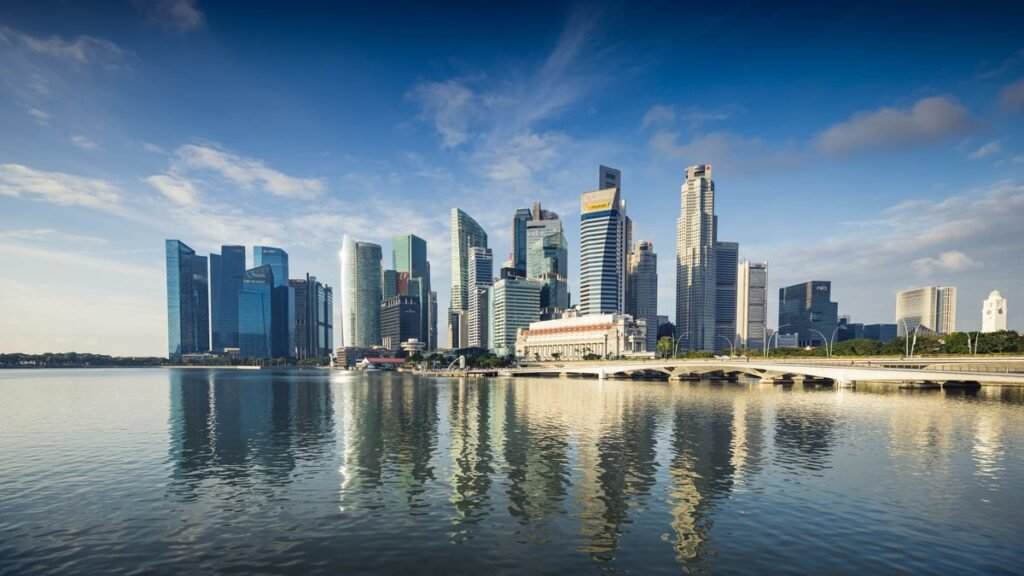
Quick Answer: For most Singapore SMEs, SEO produces higher long-term ROI than social media marketing because it captures intent-based demand – people actively searching for what you sell. SEO vs social media in Singapore is not always either/or, but if budget forces a choice, SEO builds compounding, durable organic traffic while social media requires constant content creation to maintain visibility.
This is one of the most common budget questions we hear from Singapore SME owners. Both SEO and social media feel like they should work. Both require investment. Both produce some form of visibility. The confusion comes from conflating awareness (what social media does well) with demand capture (what SEO does well).
The decision matters because these are different budget buckets with different ROI profiles, different content requirements, and different timelines. Making the wrong choice for your business type can mean 12 months of activity with weak returns. Our small business SEO service is built for exactly this trade-off.
We help Singapore businesses make this decision based on their specific customer journey. See how different industries approach it at our industry SEO pages.
Understanding the mechanism of each channel makes the budget decision clearer.
SEO captures existing demand. When someone searches “bridal makeup Singapore” on Google, they have already decided they want bridal makeup – they are looking for a provider. SEO positions your business in front of that existing intent. The quality of this traffic is extremely high because the user is already in the buying journey.
Social media creates demand. An Instagram Reel showing a before/after bridal makeup transformation creates awareness and desire in someone who was not actively searching. This is “interruption-based” marketing. It works, but the conversion path is longer – from awareness to consideration to intent to search to purchase.
For businesses selling products or services with clear search demand (people actively Google for them), SEO’s intent-capture advantage is significant. For businesses in categories with low search demand but high visual appeal (new product categories, lifestyle brands, aspirational products), social media may be more effective at the top of the funnel.
The practical rule: if people already search for what you sell on Google, SEO should be your primary investment. If people do not know to search for your product yet, social media builds the category awareness that eventually generates search demand. We’ve found that Singapore beauty and aesthetics businesses, in particular, benefit from a sequenced approach – social media builds the aspirational brand, but beauty SEO captures the buyer when intent is highest.
Field Notes: Our beauty case study shows what search captures once people know what they want. The Dempsey Hill day spa started with a single “Treatments” page and about 3 organic bookings a month. After 8 treatment landing pages were built and the Google Business Profile was rebuilt with 54 photos, 6 treatment terms reached page 1 by Months 3-4, and monthly bookings from organic reached 21 by month 5. Social media can build the desire, but these were people searching for a specific treatment, which is why the intent was higher.
The two channels reward fundamentally different kinds of patience. Social media delivers visibility quickly but that visibility decays within days as the algorithm buries older posts, meaning the investment has to be repeated constantly just to maintain the same level of reach. SEO content, once ranking, keeps generating traffic for months or years with comparatively little ongoing maintenance. Businesses with a genuinely limited budget and a long time horizon tend to see a better cumulative return from SEO, while those needing to move fast around a launch or seasonal promotion often get more immediate value from social spend instead.
The two channels also differ in who they reach at what stage of buying. Social media tends to reach people who aren’t actively searching for your service yet, requiring you to interrupt their scroll with something compelling enough to stop for. SEO reaches people already typing a relevant search into Google, meaning the intent is already there and the content simply needs to answer the question well, which is generally a lower bar to convert than an interruption-based format.
Recognising this difference in buyer intent helps explain why the same budget often performs so differently depending on which channel it’s spent through.
In practice, most Singapore SMEs with any meaningful budget end up running both channels simultaneously rather than picking one exclusively, using social for immediate visibility while SEO compounds quietly in the background.
Recognising this is often more useful than treating the decision as a strict either-or choice between the two channels from the outset.
| Factor | SEO | Social Media Marketing |
|---|---|---|
| Monthly cost (managed) | SGD 800-3,000 | SGD 1,000-4,000 |
| Content required | Blog posts, service pages | Daily/weekly posts, Stories, Reels |
| Results timeline | 3-6 months | Immediate awareness, slow conversion |
| Results durability | Compounding, persistent | Fades quickly without posting |
| Lead intent level | High (active search) | Low-medium (passive discovery) |
| Measurability | High (rankings, traffic, leads) | Medium (reach, engagement, DMs) |
| Paid amplification needed | Low (organic focus) | High (organic reach declining) |
| Long-term cost trajectory | Decreasing per lead | Flat or increasing |
Social media management in Singapore from a competent agency runs SGD 1,500-4,000/month for content creation, posting, and basic community management. This excludes paid social advertising budget. Organic social media reach on Facebook and Instagram has declined significantly over the past five years – most posts reach 2-5% of your followers without paid boosting.
This is a critical number: if your follower count is 2,000 and organic reach is 4%, your post is seen by 80 people. For most Singapore SMEs, this is not a meaningful traffic channel without paid amplification.
Social media genuinely wins in specific contexts for Singapore businesses:
Highly visual product or service categories. Beauty, food and beverage, interior design, fashion, and wedding services benefit enormously from Instagram and TikTok because the purchase decision is heavily influenced by visual content. A Singapore user browsing Instagram for renovation inspiration who sees your portfolio and follows through is a real conversion path. Our beauty SEO results show SEO capturing treatment-specific searches, with organic bookings growing from about 3 to 21 a month.
Community-led businesses. Fitness studios, education centres, and lifestyle brands that build community around their service benefit from Facebook Groups and Instagram communities in ways that SEO does not replicate.
Short purchase cycles with impulse decisions. F&B, event tickets, and daily consumer products benefit from social media’s ability to create immediate desire. A promoted Instagram post for a Saturday lunch special can fill tables same-day. That said, even restaurant SEO delivers compounding value that social media alone cannot replicate.
New category launches. When there is no existing search demand for your product, social media builds the awareness that eventually creates search demand.
The honest observation: Singapore SMEs, on average, significantly overinvest in social media relative to their measurable returns, and underinvest in SEO.
This happens for understandable reasons. Social media produces visible, shareable outputs – a post you can show your team, a follower count that goes up, engagement that feels like progress. SEO produces invisible technical work and content that accumulates quietly before producing results. The psychological reward of social media is immediate; the financial reward of SEO is delayed but larger.
We regularly review the analytics of Singapore businesses that spend heavily on social media management while neglecting organic search, and when we look at what a comparable investment in search would have produced, the lost opportunity is usually significant. Our cafe case study is a clear example: the Tiong Bahru specialty coffee and brunch cafe had an Instagram following of 4,200 but almost no new customer acquisition from Google. After its Google Business Profile was corrected and rebuilt as the first step of a local SEO programme, monthly organic covers moved from 12 to 22 by Months 2-3 and reached 35 by month 4.
The recommendation: do not abandon social media if it is working for your business. But audit your conversion data honestly. If social media spend is not traceable to revenue, consider rebalancing toward SEO services that produce intent-based, measurable leads.
For most Singapore SMEs, SEO produces better long-term ROI than social media marketing because it captures intent at the moment of purchase decision. Social media is most effective for visual categories, community building, and new product launches. The ideal is both, in proportion to where your customers actually convert. If budget forces a choice, follow the intent.
Client Scenario: A Singapore Beauty Clinic Compares Both Channels
Our aesthetic clinic case study shows what search can add for a treatment business. The single-location Novena clinic, with 3 aesthetic doctors, started with 390 monthly organic visitors and 4 monthly organic enquiries. Over 6 months, 8 SMC-compliant procedure education pages, a rebuilt Google Business Profile, doctor profile pages and patient education content took monthly organic enquiries to 22 and organic visitors to 1,143. A social audience can be real without converting. Search captures intent-driven visitors who are ready to book, not just ready to follow.
Want to understand which channel is driving actual revenue for your business? Singapore SEO Agency offers a free SEO audit that maps your current organic opportunity against your competition. Get your free audit.
Rather than treating SEO and social media as competing budget lines, the businesses that get the most value from both channels use them to reinforce one another deliberately. Content originally created for SEO purposes – a detailed guide, a genuinely useful how-to article – can be repurposed into a series of social posts that extend its reach, while social media engagement and shares occasionally translate into inbound links and citations that support the original content’s search performance.
This does not mean the two channels become interchangeable or that spending on one automatically produces gains in the other – search engines do not directly count social shares as a ranking factor, so any SEO benefit from social activity is indirect, flowing through increased visibility, brand searches, and the occasional resulting link rather than a direct algorithmic boost. But treating content creation as a single upstream investment that feeds both channels, rather than commissioning entirely separate content for each, meaningfully reduces the combined cost of running both well.
A structural risk specific to social media, and one that rarely gets enough attention in Singapore marketing planning, is how completely platform algorithm changes can alter organic reach overnight. A business that built a substantial following and reach on a particular platform can see that reach collapse within weeks following an algorithm update aimed at pushing businesses toward paid promotion – a risk that does not exist in the same way for SEO, where Google’s core ranking principles change far more gradually and predictably.
This asymmetry is a strong argument for treating organic social media reach as inherently temporary and platform-dependent, while treating a well-built SEO content library as a more durable owned asset that is not subject to a single platform’s business incentives changing overnight. Businesses that build their entire customer acquisition strategy around organic social reach alone are taking on a real, underappreciated platform-dependency risk.
For most Singapore small and mid-sized businesses without a specific reason to prioritise brand awareness or community building above direct customer acquisition, a reasonable starting allocation is roughly 60 to 70 percent of digital marketing budget toward SEO and content, with the remainder toward organic and paid social media focused specifically on retention, community engagement, and customer service rather than pure top-of-funnel awareness.
Businesses in visually driven categories – fashion, food and beverage, beauty, lifestyle – reasonably shift this split further toward social media given how well those categories perform on visual platforms, but even then, we would caution against abandoning SEO entirely, since a share of every audience continues to search directly for products and services regardless of how strong a brand’s social media presence has become.
Whichever split you choose, revisit it every 6 to 12 months against actual enquiry data rather than gut feel or which channel simply feels more active day to day – the platform generating the most visible daily engagement is not always the one actually converting into paying customers for your specific business. Track enquiries and sales back to source wherever your tools allow it, and let that data, rather than intuition about which platform feels more exciting to manage, drive next year’s budget conversation between these two genuinely complementary but fundamentally different channels.
Most Singapore businesses we have worked with are surprised, once they actually pull the data, by how differently their two channels are really performing compared to how it felt while managing them day to day – a gap that is precisely why a data-led annual review matters so much for getting this particular decision right. Build that review into your regular business planning calendar, rather than leaving it to whenever a budget renewal happens to prompt the conversation, and a fixed annual check-in done well is enough to keep the decision honest year after year.
Set a fixed date on your calendar for this review each year, and treat it with the same seriousness as any other major recurring business decision.
A: For most Singapore SMEs, SEO should be the primary investment if their customers search for their product or service on Google. SEO captures intent-based demand from people actively looking to buy, which converts at higher rates than social media-driven awareness. Social media excels for visual categories, community-building, and products with strong impulse purchase behaviour.
A: Costs are comparable at the managed service level. Social media management from Singapore agencies runs SGD 1,500-4,000/month, while SEO retainers run SGD 800-3,000/month. The difference is in ROI structure: SEO builds compounding organic traffic over time. Social media requires consistent spend to maintain visibility, and organic reach without paid boosting is very low (2-5% of followers).
A: Yes, and they work best together. Social media builds awareness and brand familiarity. When awareness leads to Google searches, strong SEO captures that search intent. Businesses that invest in both channels often see their social media audience converting through organic search – meaning the social investment is reinforced by the SEO foundation.
A: Social media can produce immediate awareness from day one, though conversion is slower. SEO typically takes 3-6 months to produce measurable organic traffic and leads. Social media results fade quickly when you stop posting. SEO results compound and persist, continuing to generate traffic with reduced ongoing investment once rankings are established.
A: Organic social media reach has declined significantly. Most Facebook and Instagram posts now reach 2-5% of followers without paid promotion. For Singapore SMEs, organic social is most valuable for community management, customer retention, and supporting paid social campaigns – not for primary customer acquisition. If you expect organic social to drive significant new business without paid amplification, the results will likely disappoint.
A: Visual and lifestyle categories with high social engagement – beauty salons, restaurants, bakeries, interior designers, fashion boutiques – often find Instagram and TikTok drives meaningful discovery. New product launches without existing search demand also benefit from social. For these businesses, a combined approach with social media as the top-of-funnel channel and SEO capturing the follow-through search is most effective.
A: Set up UTM parameters on all social media links in your bio and posts, connect to Google Analytics 4, and track goal completions (enquiries, bookings, purchases) by traffic source. If social media traffic has a high bounce rate and low conversion rate compared to organic search traffic, that is data to guide your budget reallocation.
A: In our experience, organic search leads tend to convert at a noticeably higher rate than social media-driven enquiries. This is because organic search captures intent at the point of purchase decision, while social media creates awareness in people who may not be ready to buy. The size of the gap varies by category and should be measured in your own analytics, but the intent advantage of SEO is consistent.
Natalie leads SEO strategy at Singapore SEO Agency, helping local and regional businesses build organic search programmes that drive qualified leads. She specialises in technical SEO and content-led authority building for Singapore SMEs.
Get a free SEO audit for your Singapore website — we'll show you exactly where you stand, what's holding you back, and what it would take to rank on page 1.
Get Your Free SEO Audit →Bounce rate in GA4 is not the old Universal Analytics number. Learn what it measures now, why old benchmarks fail and how to judge each page by its job.
Yoast SEO helps most when its site-wide settings are right. See which settings to choose, what the traffic lights really mean and the mistakes to avoid.
Which free keyword research tool should a Singapore clinic, firm, contractor or tutor use? Combine five free tools to find your first 30-50 keywords. See how.

SEO vs SEM is usually the wrong question. Learn what the terms really mean and how to use ads and Search Console data to decide which searches to earn or buy.

Google Search Console login problems usually start with verification and ownership. Learn how to get in, fix access errors and offboard agencies safely.

The click through rate formula is clicks divided by impressions. Learn what each platform counts, the averaging trap and how to set it up in Google Sheets.
Fast, no obligation. We reply within 24 hrs.
Singapore’s specialist SEO agency for SMEs. We rank your business on Google — and only Google. No distractions, just results.
© 2026 Singapore SEO Agency. All rights reserved.